Learn what every symbol on the card means.Full credits and sources at beakbrain.com/symbols
 RockyCup nestSmall · 55 g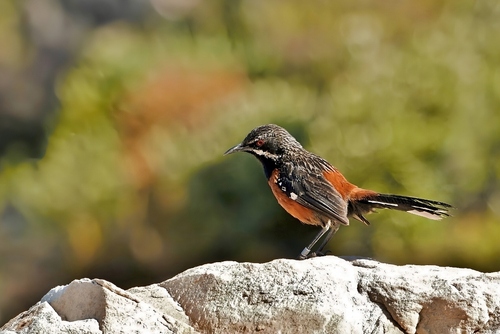
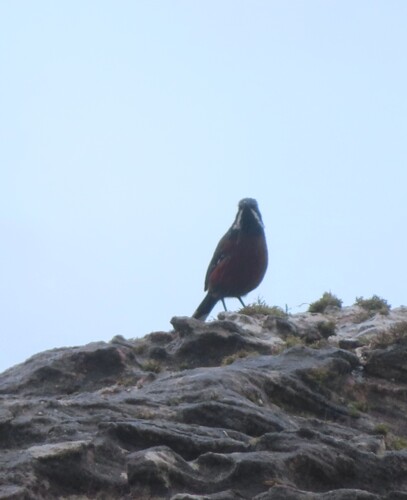
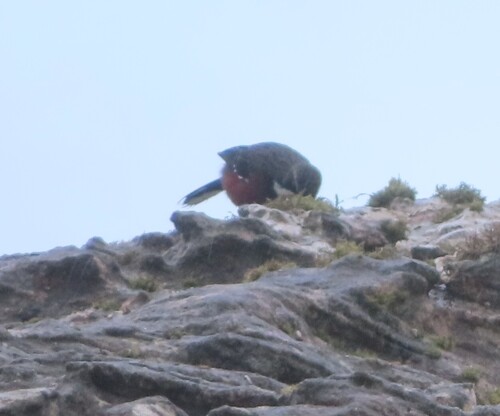
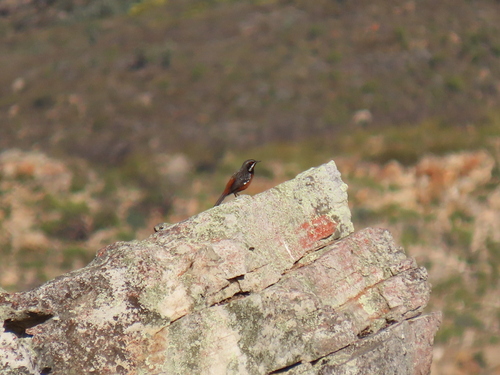


ID tip
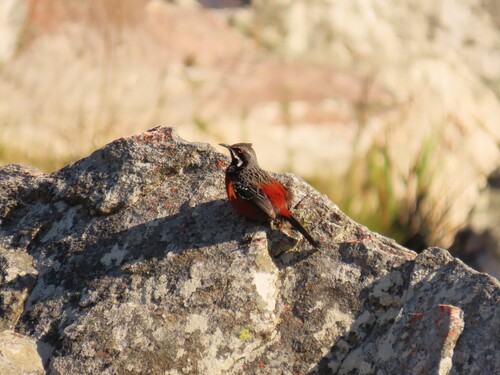
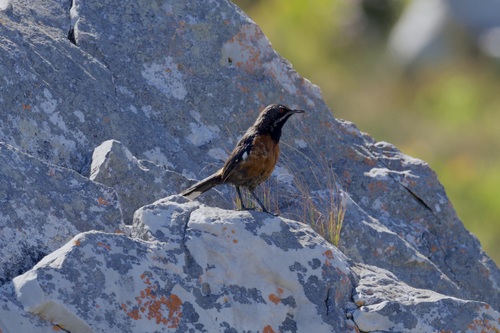
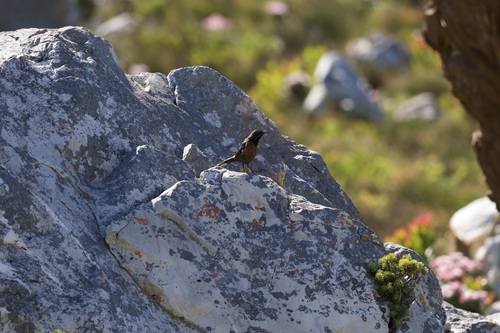
This rockjumper is 23–25 cm long with a long black tail and strong legs. The male has a dark grey and black head with a thin white supercilium and a broad white moustache (malar stripe). The back and wings are dark grey, and the underparts and rump are rufous red. The female and juvenile have a paler grey head, upperparts and wings, a duller head pattern, an orange rump, and buff underparts. The call varies from 1-4 piercing whistles to a series of trills. Adults have bright red eyes, while juveniles have black eyes until mature.
Text from Wikipedia, licensed CC BY-SA 4.0.
When to see the Cape Rockjumper
One bar for each month, and every month is filled: this bird is recorded here in all twelve. The wide bar is October, the month with the most records.
Where to see the Cape Rockjumper
The map shades 1 country with regular records. Everything unshaded has no records. Countries are listed below the map.
About the Cape Rockjumper
The Cape rockjumper or rufous rockjumper is a medium-sized insectivorous passerine bird endemic to the mountain Fynbos of southernmost South Africa.
Text adapted from Wikipedia, licensed CC BY-SA 4.0.
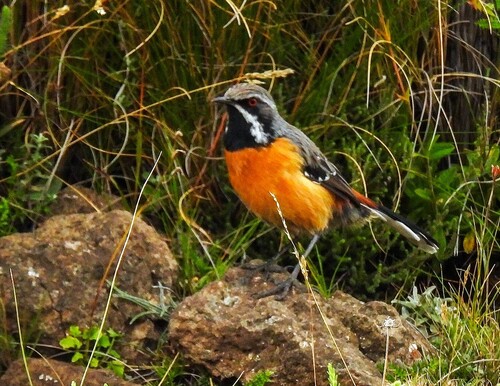
Easily confused with
Learn the Cape Rockjumper in the BeakBrain App
Photo and call practice. Coming soon to iPhone and Android.
Play today's Daily BirdEvery photo and recording on this page is credited to its author under the licence shown. Spotted a problem with this page, or have a better photo? Contribute.