Learn what every symbol on the card means.Full credits and sources at beakbrain.com/symbols
 ForestCavity nestSmall · 29 g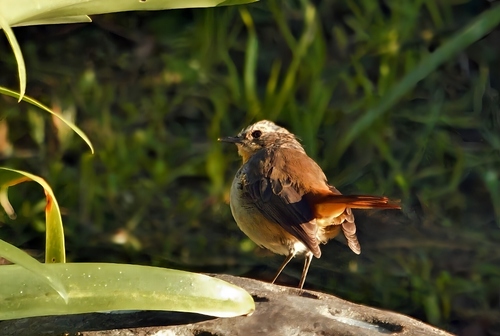


ID tip
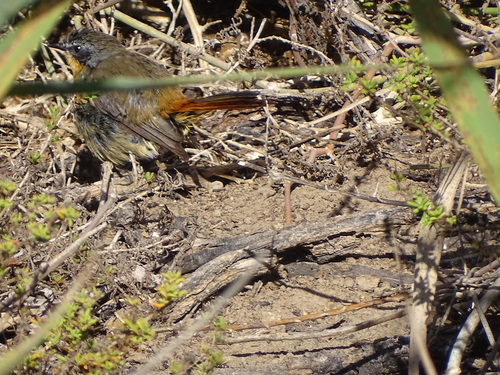
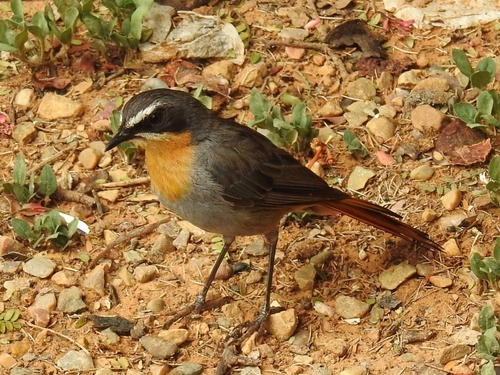
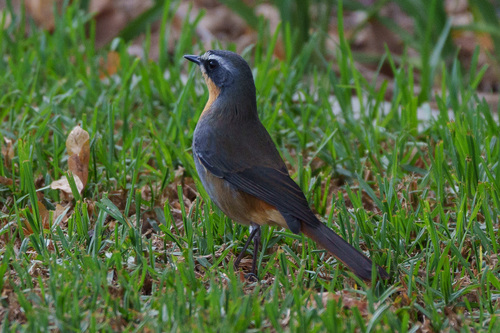
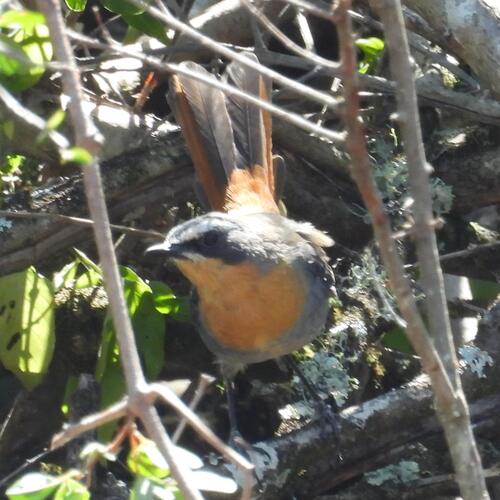
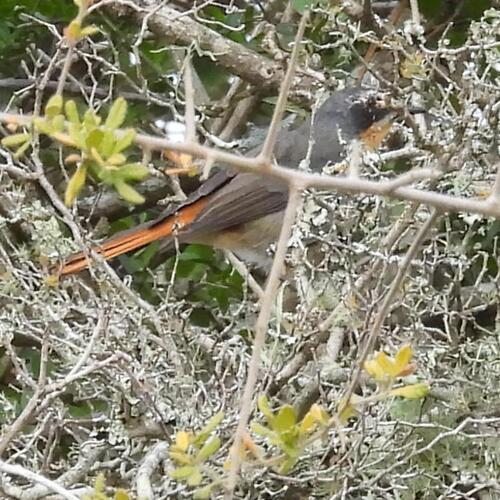
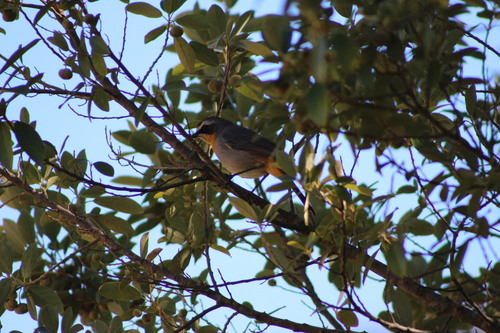
The sexes are similar. The Cape robin-chat measures 16–17 cm from bill tip to tail tip and weighs 28 g. The adult's upper parts are grey, with the mantle and secondary feathers tinged brownish olive. The blackish lores and ear coverts are separated from the crown by a prominent white supercilium. The chin, throat, central breast, rump, upper tail coverts and outer tail feathers are orange. The breast plumage moults to a deeper orange in colour for the non-breeding season. The central tail feathers are greyish-brown, and obscures the bright rufous outer tail feathers when the tail is closed.
Text from Wikipedia, licensed CC BY-SA 4.0.
When to see the Cape Robin-Chat
One bar for each month, and every month is filled: this bird is recorded here in all twelve. The wide bar is October, the month with the most records.
Where to see the Cape Robin-Chat
The map shades 13 countries with regular records. Everything unshaded has no records. Countries are listed below the map.
About the Cape Robin-Chat
The Cape robin-chat is a small passerine bird of the Old World flycatcher family Muscicapidae. It has a disjunct range from South Sudan to South Africa.
Text adapted from Wikipedia, licensed CC BY-SA 4.0.
Easily confused with
 White-throated Robin-ChatDessonornis humeralisThe white-throated robin-chat or white-throated robin is a species of bird in the family Muscicapidae.
Archer's Ground RobinDessonornis archeriArcher's ground robin or Archer's robin-chat, is a species of bird in the family Muscicapidae.
White-throated Robin-ChatDessonornis humeralisThe white-throated robin-chat or white-throated robin is a species of bird in the family Muscicapidae.
Archer's Ground RobinDessonornis archeriArcher's ground robin or Archer's robin-chat, is a species of bird in the family Muscicapidae.
 Olive-flanked Ground RobinDessonornis anomalusThe olive-flanked ground robin, also known as the olive-flanked robin-chat, is a species of bird in the family Muscicapidae.
Learn the Cape Robin-Chat in the BeakBrain App
Photo and call practice. Coming soon to iPhone and Android.
Play today's Daily BirdEvery photo and recording on this page is credited to its author under the licence shown. Spotted a problem with this page, or have a better photo? Contribute.