Learn what every symbol on the card means.Full credits and sources at beakbrain.com/symbols
 ShrublandCup nestSmall · 30 g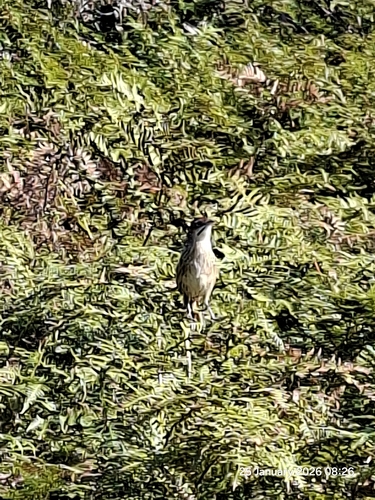
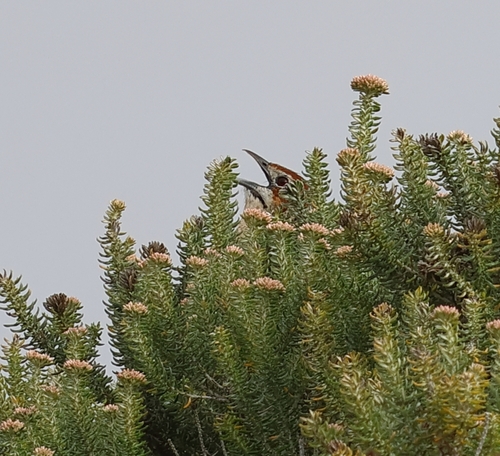
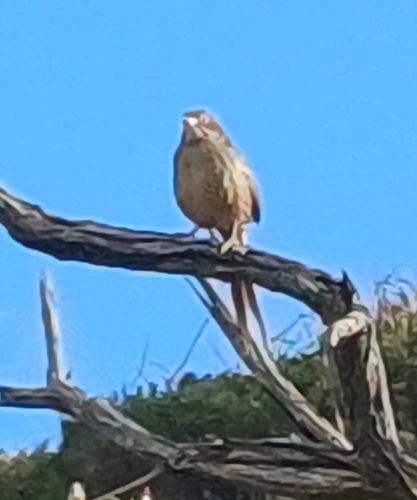
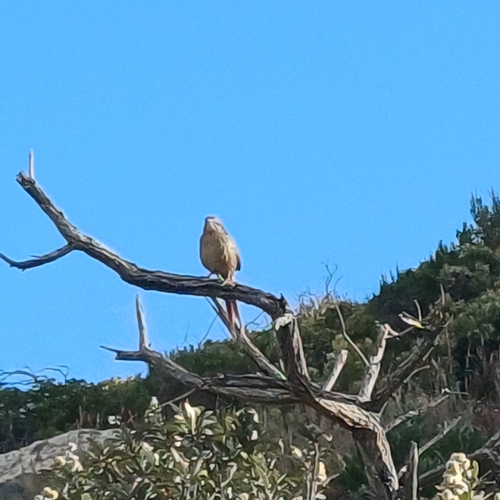


ID tip
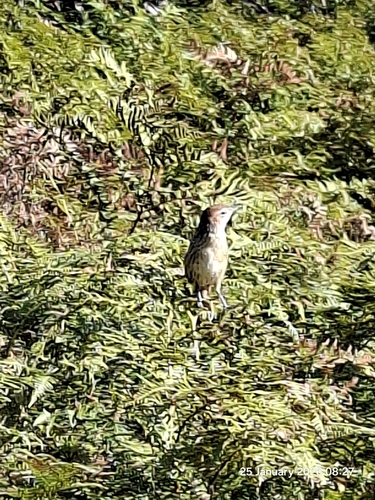
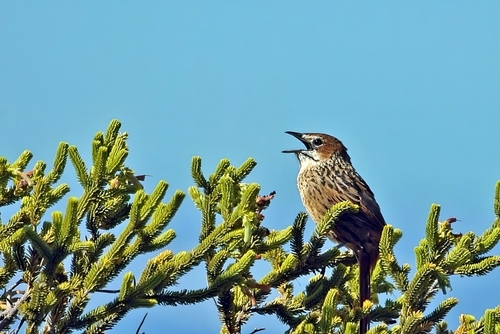
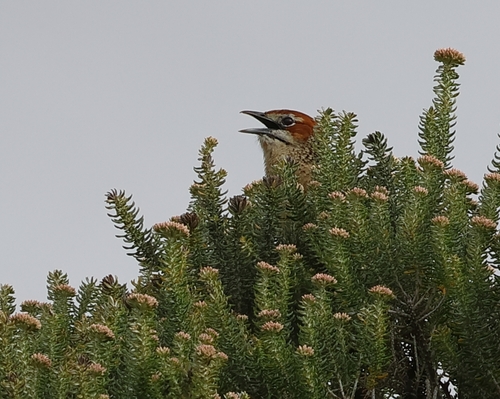
The Cape grassbird is 19 to 23 cm (7.5 to 9.1 in) long and weighs 27–34 g (0.95–1.20 oz). Its crown and face sides are rufous, except for white around the eye, and it has black malar and moustachial stripes on its white throat. The upperparts are brown with heavy streaking and the long tail is a lighter brown while the underparts are whitish with blackish spotting. The sexes are similar, but the juvenile has a streaked cap and is duller than the adult. The song is jangling and musical, and the call is a nasal pheeeo.
Text from Wikipedia, licensed CC BY-SA 4.0.
When to see the Cape Grassbird
One bar for each month, and every month is filled: this bird is recorded here in all twelve. The wide bar is December, the month with the most records.
Where to see the Cape Grassbird
The map shades 5 countries with regular records. Everything unshaded has no records. Countries are listed below the map.
About the Cape Grassbird
The Cape grassbird or Cape grass warbler is an African warbler found in southern Africa. It is the only species placed in the genus Sphenoeacus.
Text adapted from Wikipedia, licensed CC BY-SA 4.0.
Easily confused with
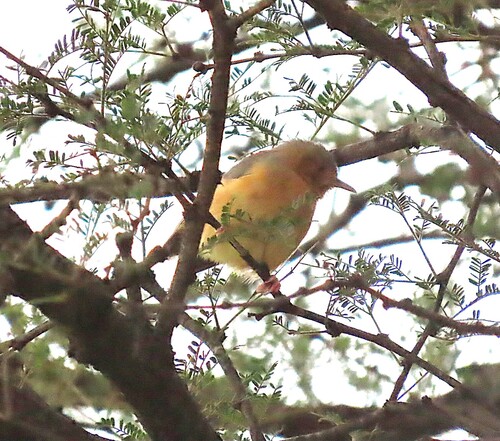 Red-faced CrombecSylvietta whytiiThe red-faced crombec is a species of African warbler, formerly placed in the family Sylviidae.
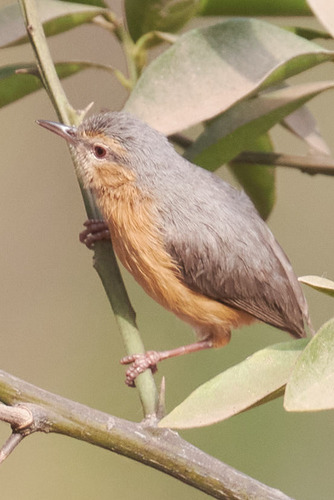 Northern CrombecSylvietta brachyuraThe northern crombec is a species of African warbler, formerly placed in the family Sylviidae.
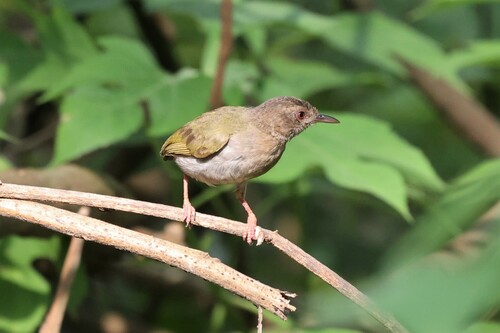 Green CrombecSylvietta virensThe green crombec is a species of African warbler, formerly placed in the family Sylviidae.
Learn the Cape Grassbird in the BeakBrain App
Photo and call practice. Coming soon to iPhone and Android.
Play today's Daily BirdEvery photo and recording on this page is credited to its author under the licence shown. Spotted a problem with this page, or have a better photo? Contribute.