Learn what every symbol on the card means.Full credits and sources at beakbrain.com/symbols
 ShrublandCup nestSmall · 39 g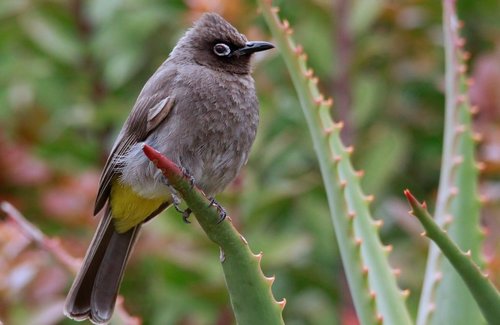
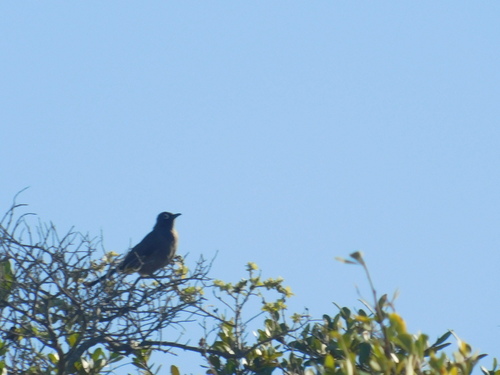

ID tip
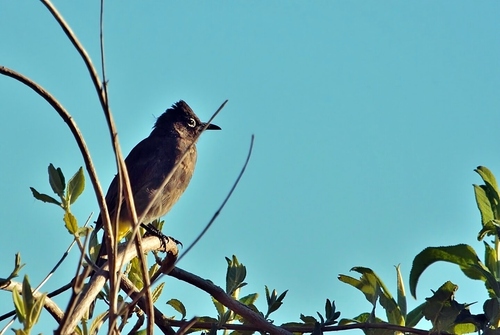
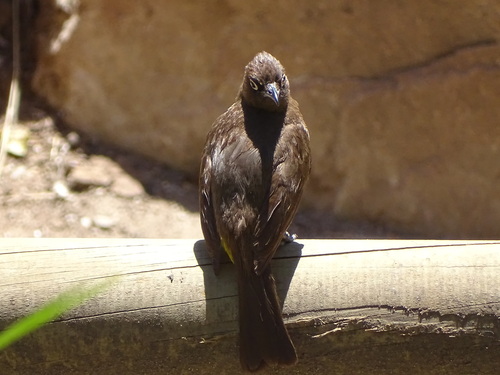
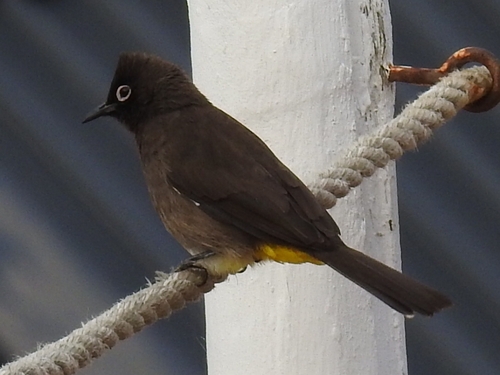
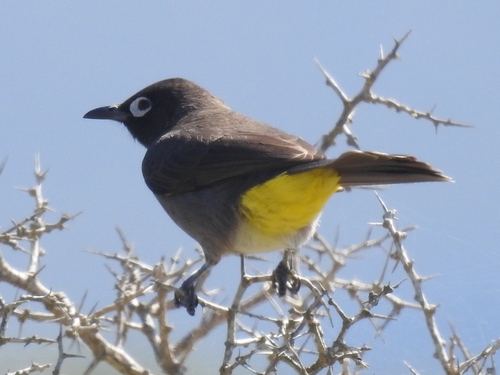
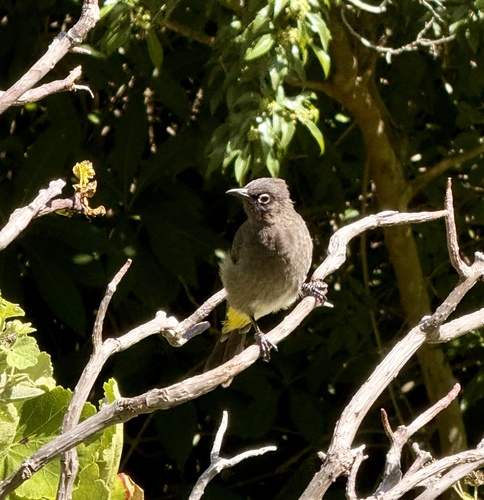
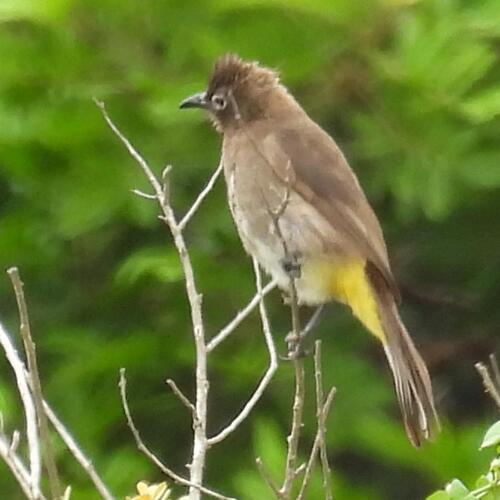
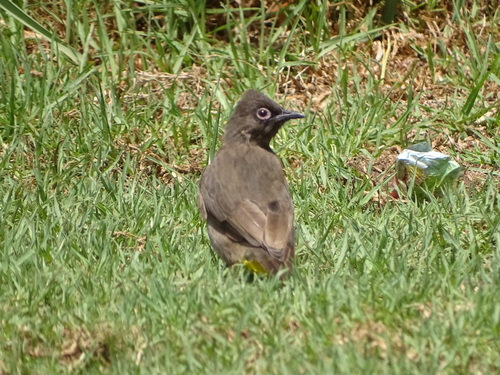
The Cape bulbul is 19–21 cm (7.5–8.3 in) long, mainly dull, blackish brown with a diagnostic white eye-ring, and yellow undertail coverts. The head has a small crest. The short, straight bill, legs and feet are black and the iris is dark brown. The sexes are similar in plumage. This species is much darker than the other South African bulbuls, and differs in the eye ring colour and brown lower belly, whereas the other dark bulbuls have a pale lower belly. The dark belly helps to identify juveniles, which lack the distinctive eye ring of the adult.
Text from Wikipedia, licensed CC BY-SA 4.0.
When to see the Cape Bulbul
One bar for each month, and every month is filled: this bird is recorded here in all twelve. The wide bar is October, the month with the most records.
Where to see the Cape Bulbul
The map shades 2 countries with regular records. Everything unshaded has no records. Countries are listed below the map.
About the Cape Bulbul
The Cape bulbul is a member of the bulbul family of passerine birds. It is an endemic resident breeder in coastal bush, open forest, gardens and fynbos in western and southern South Africa. This species nests mainly in the southern spring from September to November. The nest is a thick-walled cup concealed by foliage in a small tree or shrub.
Text adapted from Wikipedia, licensed CC BY-SA 4.0.
Easily confused with
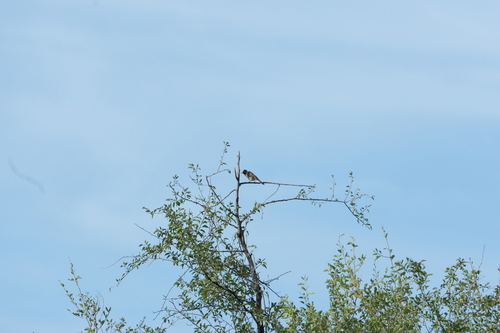 African Red-eyed BulbulPycnonotus nigricansThe African red-eyed bulbul ranges from 19 to 21 centimeters (7-8 inches) in length and weighs 30-48 grams (1-1.7 ounces).
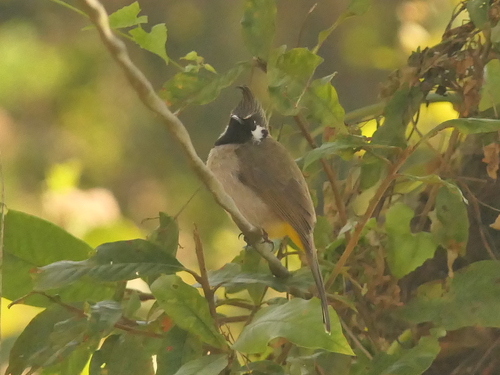 Himalayan BulbulPycnonotus leucogenysThe Himalayan bulbul is about 18 cm in length, with a wingspan of 25.5–28 cm and an average weight of 30 g.
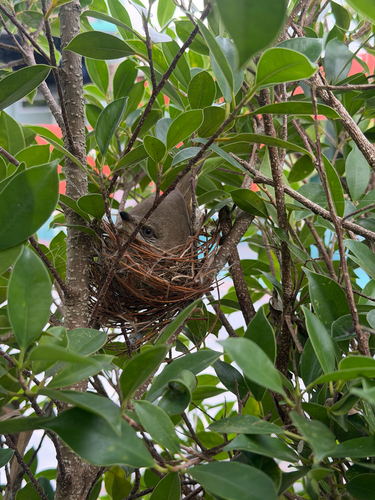 Ayeyarwady BulbulPycnonotus blanfordiThe Ayeyarwady bulbul is a member of the bulbul family of passerine birds.
Side by side: African Red-eyed Bulbul vs Cape Bulbul · Cape Bulbul vs Himalayan Bulbul
Learn the Cape Bulbul in the BeakBrain App
Photo and call practice. Coming soon to iPhone and Android.
Play today's Daily BirdEvery photo and recording on this page is credited to its author under the licence shown. Spotted a problem with this page, or have a better photo? Contribute.