Learn what every symbol on the card means.Full credits and sources at beakbrain.com/symbols
 WoodlandCup nestTiny · 10 g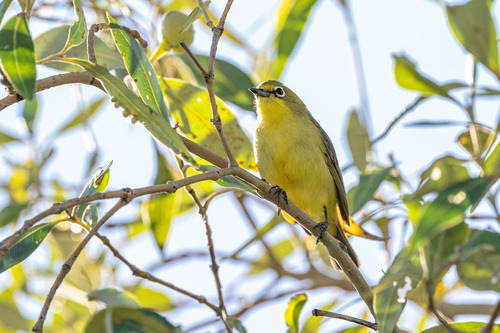
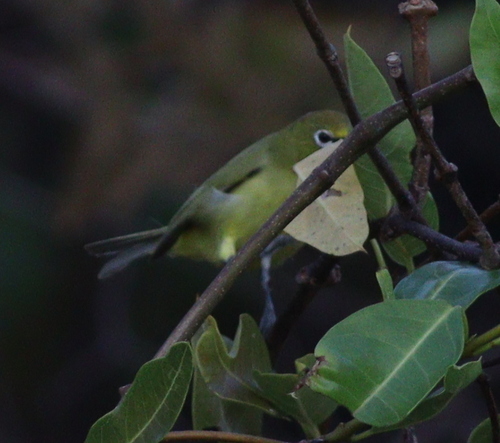
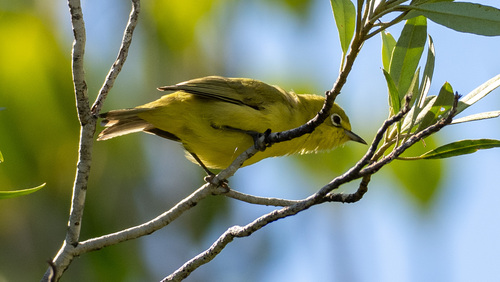
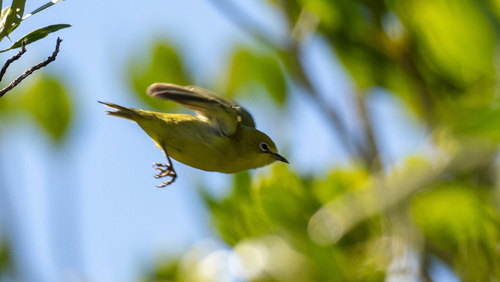
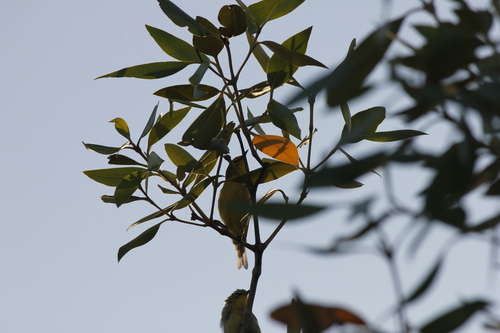
ID tip
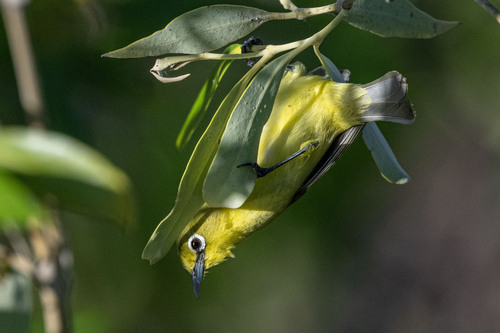
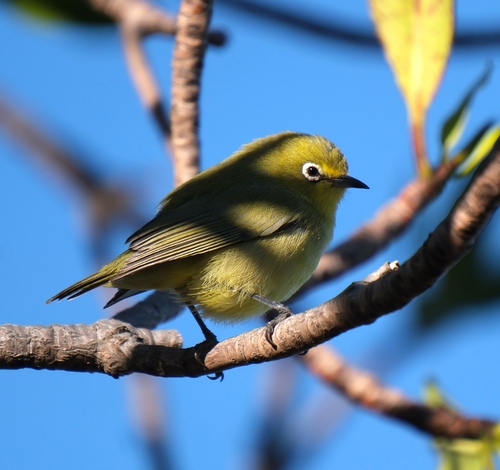
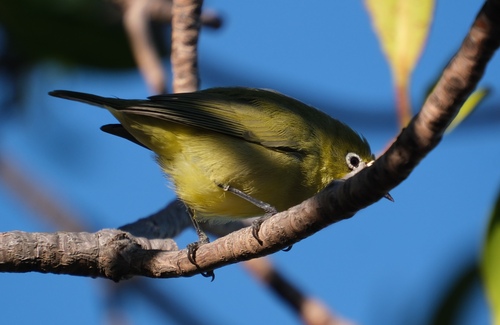
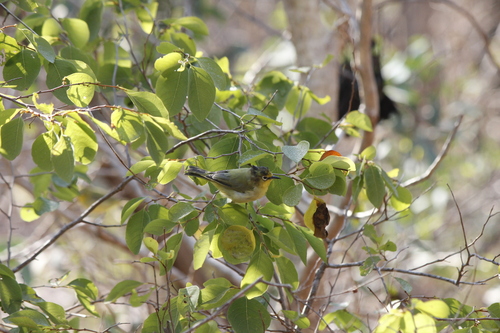
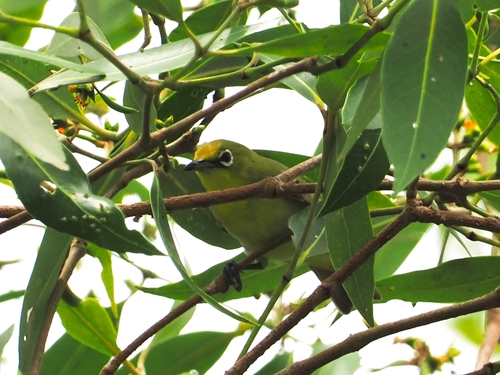
Zosterops luteus is a small white-eye with a bright olive back and yellow underparts and lores. It has a characteristic ring of silver-white feathers around its eyes, with a dark loral stripe. It is a nectar feeder with a short, sharp beak and a brush-tipped tongue similar to the honeyeaters. The bird is 100–110 mm long, with a wingspan of 52–59 mm, a bill of 13-16mm and weighs between 6.5 and 11.0 grams.
Text from Wikipedia, licensed CC BY-SA 4.0.
When to see the Canary White-eye
One bar for each month. Filled bars are the 9 months with records; pale bars are months with none. The wide bar is August, the month with the most records.
Where to see the Canary White-eye
The map shades 1 country with regular records. Everything unshaded has no records. Countries are listed below the map.
About the Canary White-eye
The canary white-eye or yellow white-eye is a species of white-eye endemic to northern Australia in subtropical or tropical mangrove forests. Its common name reflects the circle of white feathers around its eye.
Text adapted from Wikipedia, licensed CC BY-SA 4.0.
Easily confused with
 Northern Yellow White-eyeZosterops senegalensisA small yellow bird with a prominent white eye ring surrounding a dark eye.
 Green White-eyeZosterops stuhlmanniThe green white-eye is a bird species in the family Zosteropidae.
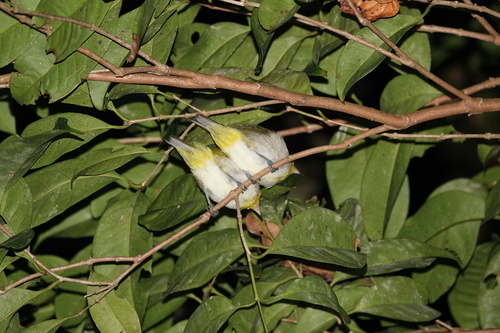 Lowland White-eyeZosterops meyeniThe lowland white-eye is a species of bird in the family Zosteropidae.
Side by side: Canary White-eye vs Orange River White-eye · Canary White-eye vs Northern Yellow White-eye
Learn the Canary White-eye in the BeakBrain App
Photo and call practice. Coming soon to iPhone and Android.
Play today's Daily BirdEvery photo and recording on this page is credited to its author under the licence shown. Spotted a problem with this page, or have a better photo? Contribute.