Learn what every symbol on the card means.Full credits and sources at beakbrain.com/symbols
 GrasslandCup nestSmall · 27 g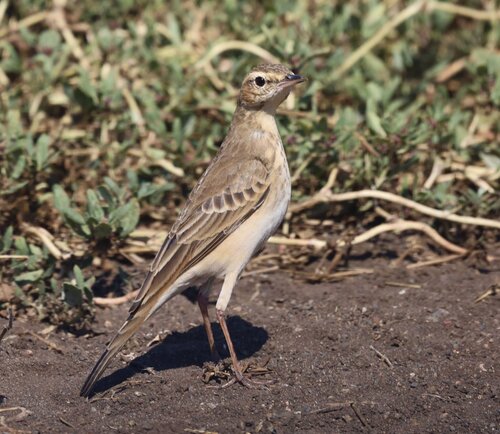
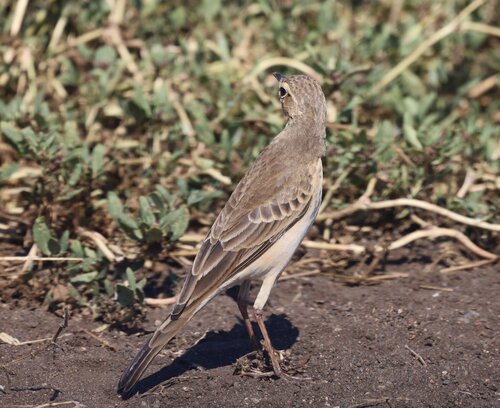
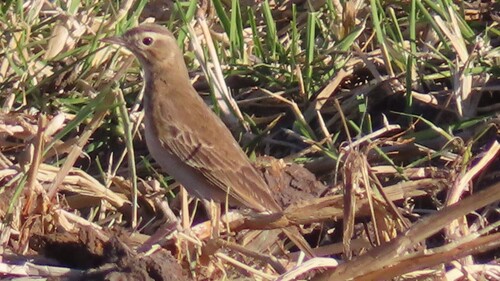
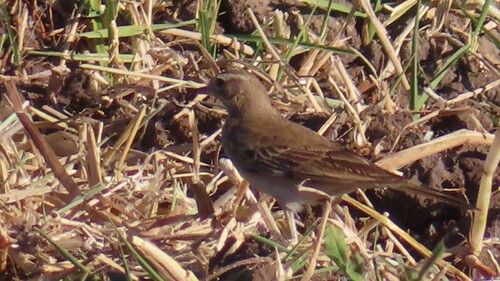
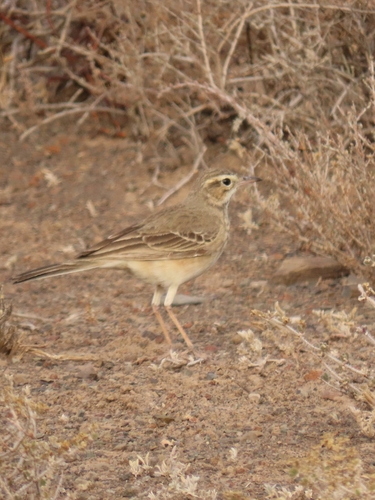
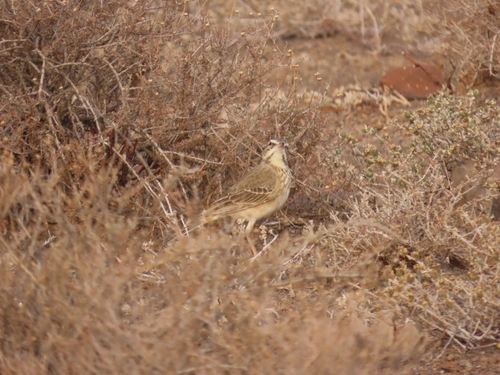

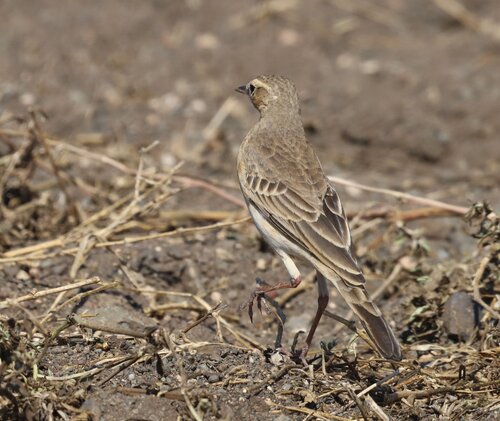
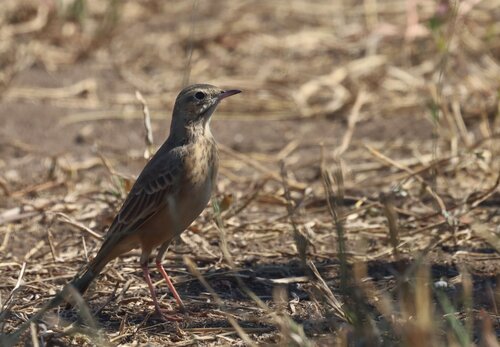
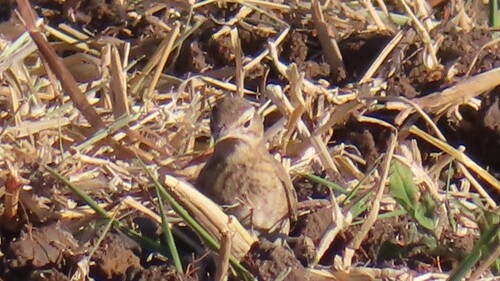
ID tip
Its length is 16–18 cm (6.3–7.1 in), and its weight is 23–36.6 g (0.81–1.29 oz). It is often confused with the plain-backed pipit because both species have plain upperparts. The upperparts of the buffy pipit are paler and buffier than the plain-backed pipit. The buffy pipit has a pale supercilium, and its lower mandible has a pinkish base. It has faint markings on the breast, and the belly and flanks are buffy. The juvenile has mottles.
Text from Wikipedia, licensed CC BY-SA 4.0.
When to see the Buffy Pipit
One bar for each month, and every month is filled: this bird is recorded here in all twelve. The wide bar is December, the month with the most records.
Where to see the Buffy Pipit
The map shades 9 countries with regular records, and 4 more in a lighter tone where the bird turns up only as a stray. Everything unshaded has no records. Countries are listed below the map.
Recorded as a rare visitor in Kenya, Congo - Kinshasa, Tanzania, Mozambique.
About the Buffy Pipit
The buffy pipit is a species of bird in the Motacillidae family. It is found in plains and open countryside in southern and eastern Africa. The IUCN has assessed its conservation status as being of least concern.
Text adapted from Wikipedia, licensed CC BY-SA 4.0.
Easily confused with
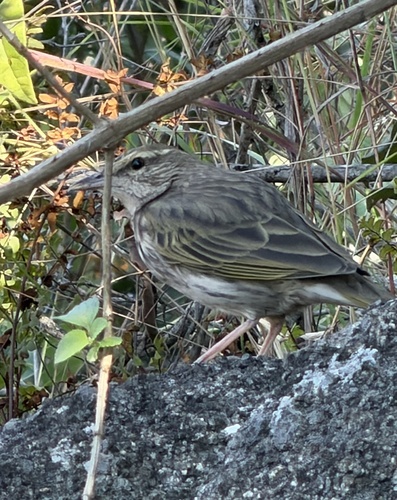 Striped PipitAnthus lineiventrisIt is a large pipit, ranging from 17 to 18 centimeters in length and weighing 31-37 grams.
 Blyth's PipitAnthus godlewskiiHeard, Chris (1995) Unravelling the mystery Birdwatch 41:20-24
Page, Doug (1997) From the Rarities Committee's files: problems presented by a pale Blyth's Pipit British Birds 90(10):404-409
Blyth's PipitAnthus godlewskiiHeard, Chris (1995) Unravelling the mystery Birdwatch 41:20-24
Page, Doug (1997) From the Rarities Committee's files: problems presented by a pale Blyth's Pipit British Birds 90(10):404-409
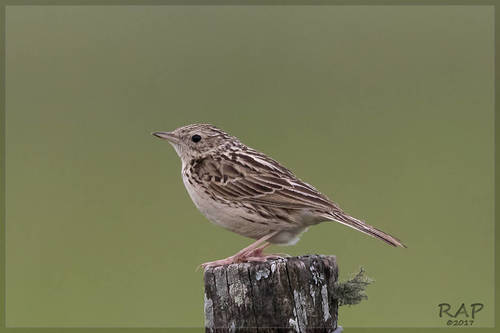 Hellmayr's PipitAnthus hellmayriHellmayr's pipit is about 14 to 16 cm (5.5 to 6.3 in) long.
Side by side: Blyth's Pipit vs Buffy Pipit · Buffy Pipit vs Striped Pipit · Buffy Pipit vs Hellmayr's Pipit
Learn the Buffy Pipit in the BeakBrain App
Photo and call practice. Coming soon to iPhone and Android.
Play today's Daily BirdEvery photo and recording on this page is credited to its author under the licence shown. Spotted a problem with this page, or have a better photo? Contribute.