Learn what every symbol on the card means.Full credits and sources at beakbrain.com/symbols
 GrasslandCup nestSmall · 49 g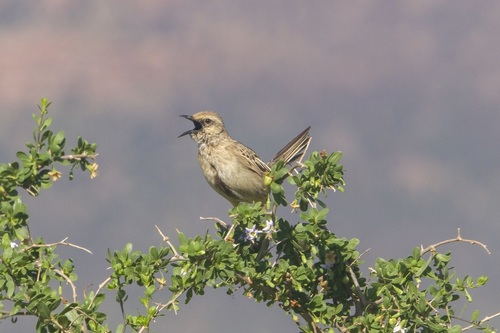

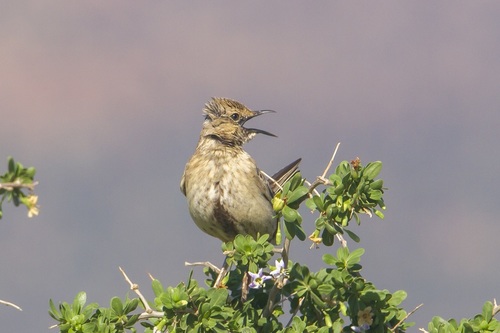
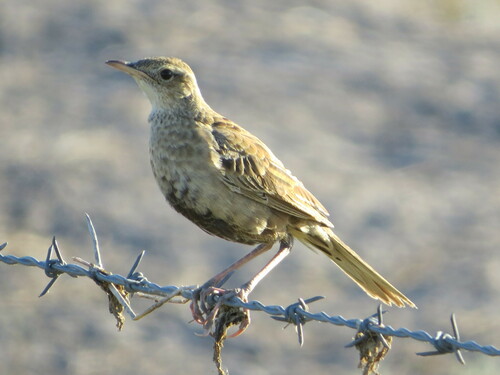
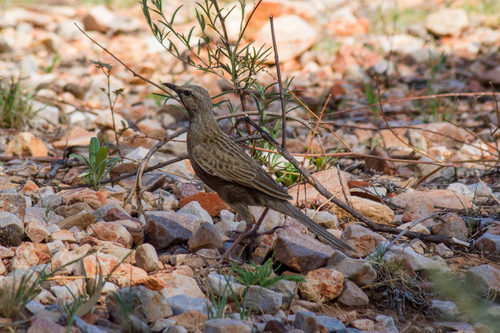
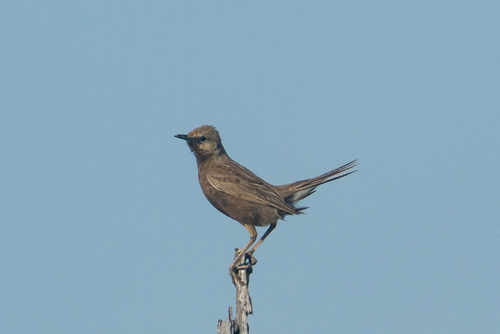
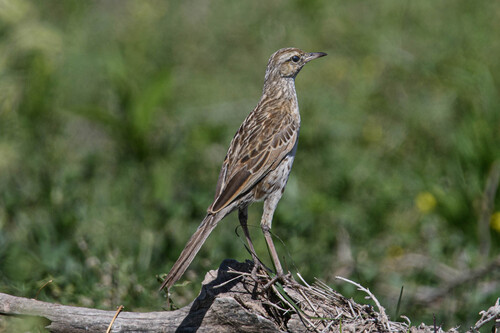
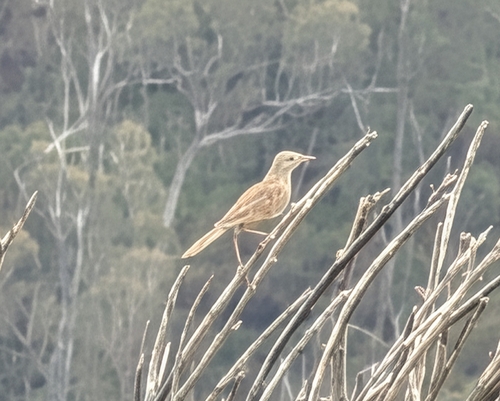
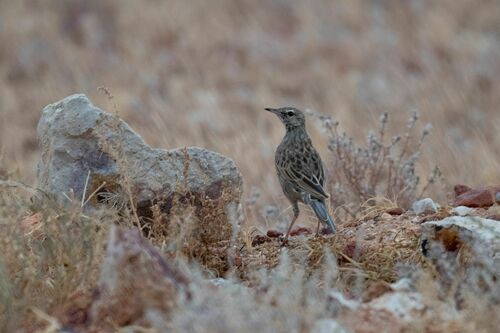
ID tip
Male brown songlarks are 23–25 cm long versus 18–19 cm for females and may weigh 2.3 times as much. The average weight of males was listed as 74.8 g (2.64 oz) and that of females is 32.4 g (1.14 oz). They are probably the most sexually dimorphic passerine in the world in size difference, as well as likely the largest species in the family Locustellidae. In general, the birds have a dusky pale-streaked with darker brown plumage and pale eyebrows. The underparts are brownish-white in the female, darker brown in the male. Breeding males may display a cinnamon colour.
Text from Wikipedia, licensed CC BY-SA 4.0.
When to see the Brown Songlark
One bar for each month. Filled bars are the 8 months with records; pale bars are months with none. The wide bar is October, the month with the most records.
Where to see the Brown Songlark
The map shades 1 country with regular records. Everything unshaded has no records. Countries are listed below the map.
About the Brown Songlark
The brown songlark, also Australian songlark, is a small passerine bird found throughout much of Australia. A member of the family Locustellidae, this species is notable for sexual size dimorphism, among the most pronounced in any bird. It is a moderate-sized bird of nondescript plumage; the female brownish above and paler below, the larger male a darker brown.
Text adapted from Wikipedia, licensed CC BY-SA 4.0.
Easily confused with
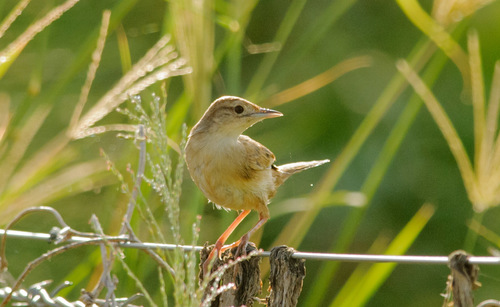 Tawny GrassbirdCincloramphus timoriensisThe tawny grassbird is a medium sized grassbird with a wingspan of 56-69mm, a stout bill 14-17mmand weighs around 13-25g.
 Rufous SonglarkCincloramphus mathewsiThe rufous songlark is a medium brown passerine songbird with a pattern of streaks on its feathers.
 Papuan GrassbirdCincloramphus macrurusThe Papuan grassbird is a species of typical grassbird in the family Locustellidae.
Side by side: Brown Songlark vs Rufous Songlark · Brown Songlark vs Tawny Grassbird
Learn the Brown Songlark in the BeakBrain App
Photo and call practice. Coming soon to iPhone and Android.
Play today's Daily BirdEvery photo and recording on this page is credited to its author under the licence shown. Spotted a problem with this page, or have a better photo? Contribute.