Learn what every symbol on the card means.Full credits and sources at beakbrain.com/symbols
 ForestCup nestTiny · 12 g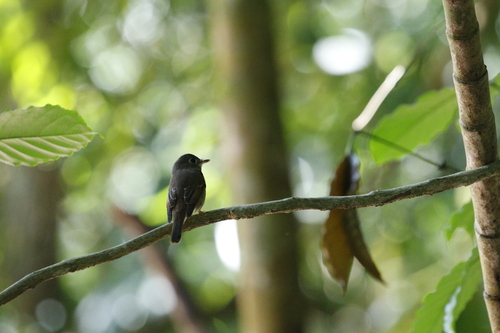
ID tip
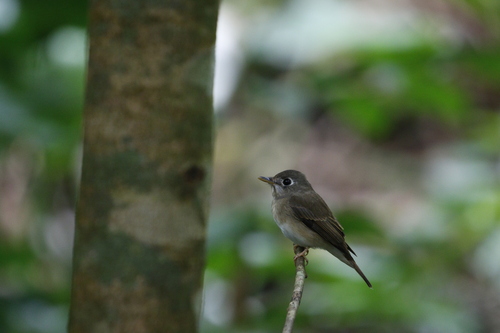
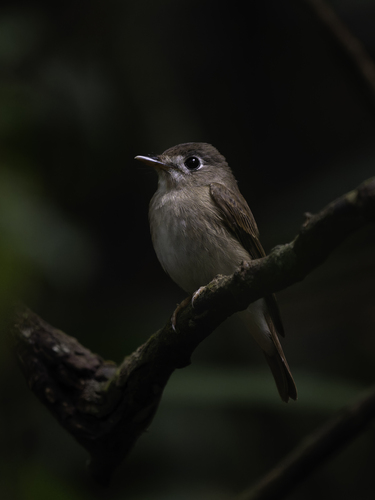
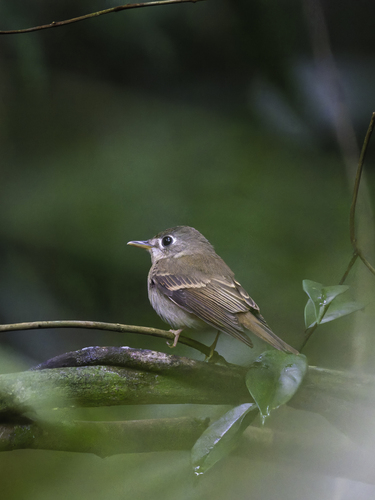
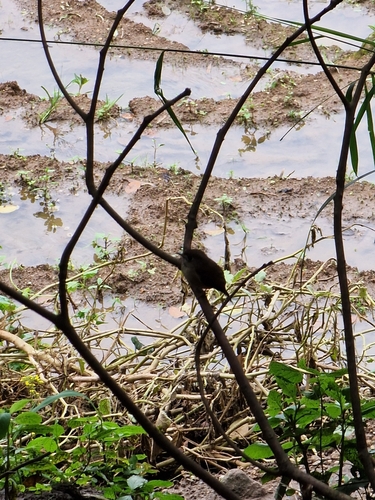
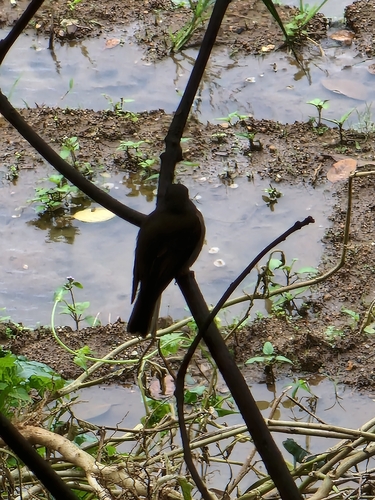
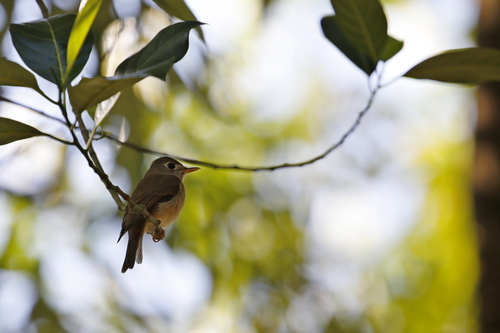
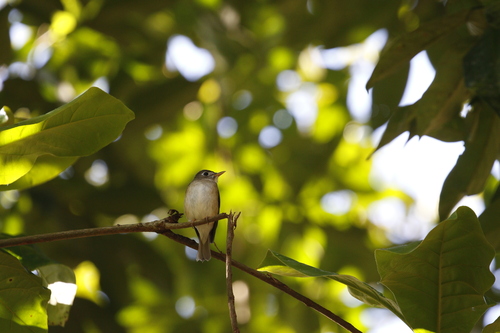
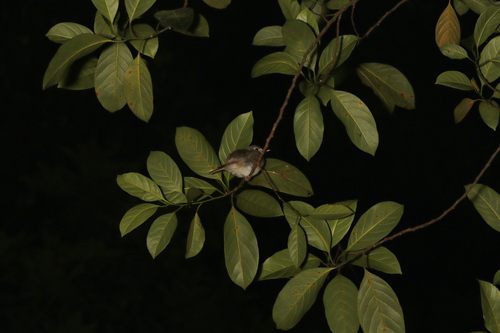
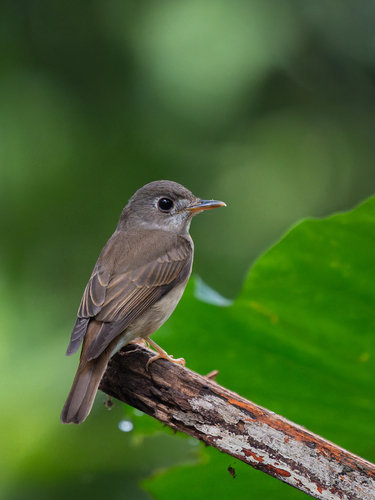
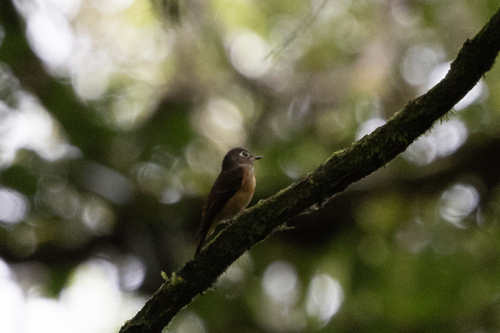
The brown-breasted flycatcher is 13–14 cm in length and weighs between 10 and 14 g. The overall colour of the upper parts is olive brown. Some of the feather shafts are darker. The upper tail coverts are brighter rufous as are the edges of the flight feathers. The tail feathers have rufous on the outer webs. The lores are pale and the eye ring is conspicuous. The chin and throat are white while the breast and sides of the body are pale brown. The middle of the body to the vent is buffy white.
Text from Wikipedia, licensed CC BY-SA 4.0.
When to see the Brown-breasted Flycatcher
One bar for each month. Filled bars are the 6 months with records; pale bars are months with none. The wide bar is February, the month with the most records.
Where to see the Brown-breasted Flycatcher
The map shades 15 countries with regular records, and 1 more in a lighter tone where the bird turns up only as a stray. Everything unshaded has no records. Countries are listed below the map.
Recorded as a rare visitor in Cambodia.
About the Brown-breasted Flycatcher
The brown-breasted flycatcher or Layard's flycatcher is a small passerine bird in the flycatcher family Muscicapidae. The species breeds in north eastern India, central and Southern China and northern Burma and Thailand, and migrates to southern India and Sri Lanka. It forages for insects below the forest canopy, often close to the forest floor.
Text adapted from Wikipedia, licensed CC BY-SA 4.0.
Easily confused with
 Dark-sided FlycatcherMuscicapa sibiricaThe dark-sided flycatcher is 13 to 14 cm (5.1 to 5.5 in) in overall length.
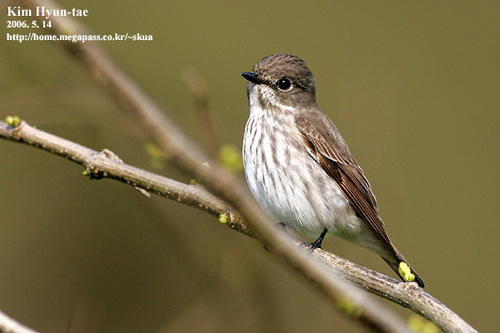 Grey-streaked FlycatcherMuscicapa griseistictaBradshaw, C.; Jepson, P. J.; Lindsey, N. J. (1991).
 Ferruginous FlycatcherMuscicapa ferrugineaThe ferruginous flycatcher is a species of bird in the family Muscicapidae.
Side by side: Asian Brown Flycatcher vs Brown-breasted Flycatcher · African Dusky Flycatcher vs Brown-breasted Flycatcher · Brown-breasted Flycatcher vs Dark-sided Flycatcher · Brown-breasted Flycatcher vs Grey-streaked Flycatcher
Learn the Brown-breasted Flycatcher in the BeakBrain App
Photo and call practice. Coming soon to iPhone and Android.
Play today's Daily BirdEvery photo and recording on this page is credited to its author under the licence shown. Spotted a problem with this page, or have a better photo? Contribute.