Learn what every symbol on the card means.Full credits and sources at beakbrain.com/symbols
 ShrublandCup nestTiny · 5 g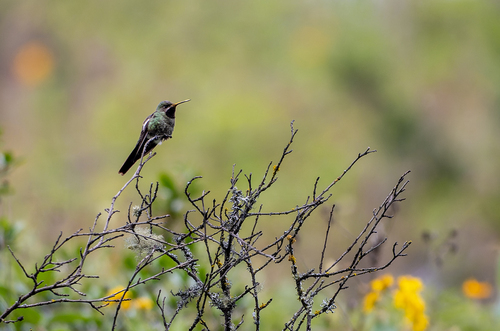
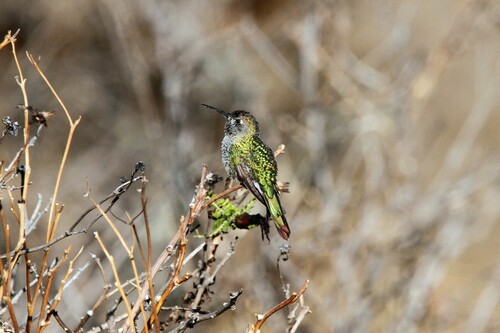
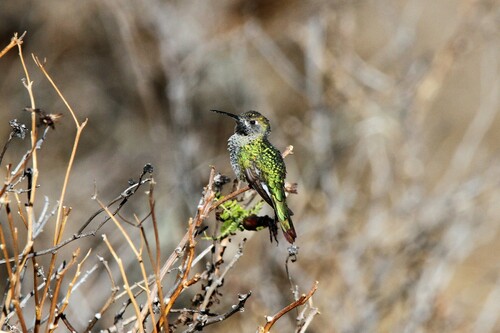
ID tip
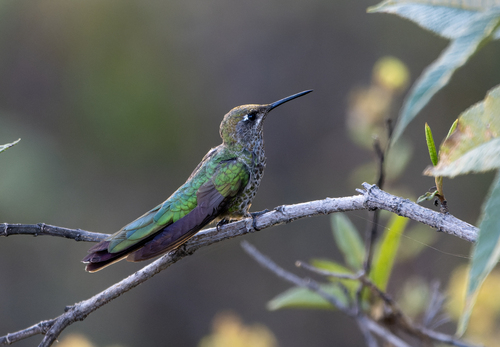
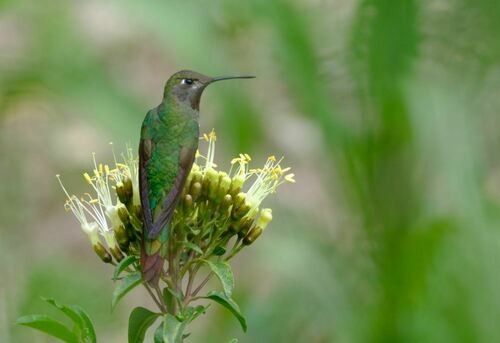
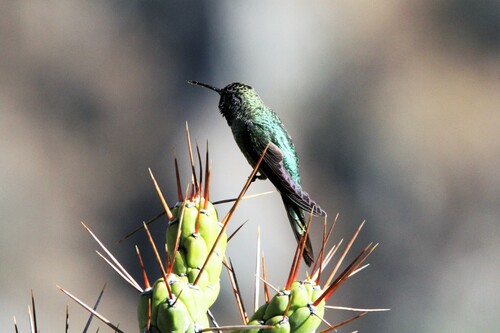
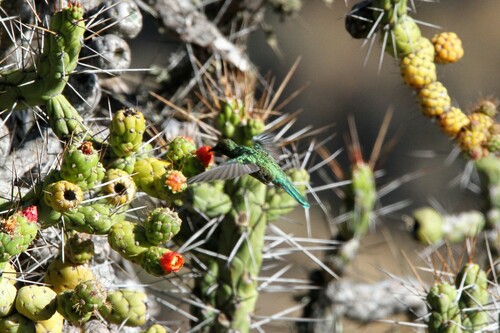
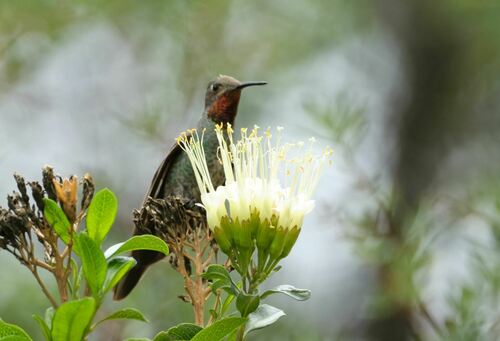
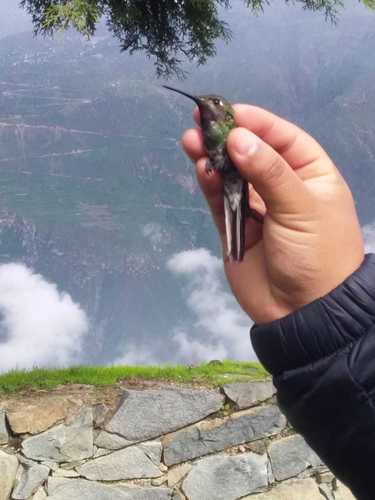
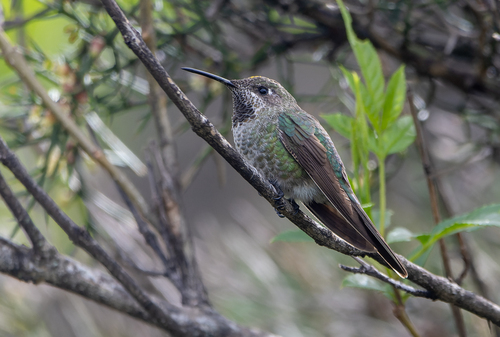
The bronze-tailed comet is 11 to 13 cm (4.3 to 5.1 in) long and weighs about 4.8 g (0.17 oz). Adult males have dark bronzy green upperparts. Their tail is somewhat long and deeply forked and its central feathers are bronzy green. The upper surface of the other tail feathers are steel blue or purplish becoming bronze at the ends; their undersides are entirely steel blue. They have a white spot behind the eye. The gorget is large and rosy violet to rosy purple, and the rest of the underparts are bronze green. Adult females are similar to the males but duller. Voice: The bronze-tailed comet's apparent song is "a short trill that rises in pitch and then descends". While foraging it makes ""a dry, rapid chatter: tcht or tchtcht.
Text from Wikipedia, licensed CC BY-SA 4.0.
When to see the Bronze-tailed Comet
One bar for each month, and every month is filled: this bird is recorded here in all twelve. The wide bar is November, the month with the most records.
Where to see the Bronze-tailed Comet
The map shades 1 country with regular records. Everything unshaded has no records. Countries are listed below the map.
About the Bronze-tailed Comet
The bronze-tailed comet is a species of hummingbird in the "coquettes", tribe Lesbiini of subfamily Lesbiinae. It is endemic to Peru.
Text adapted from Wikipedia, licensed CC BY-SA 4.0.
Easily confused with
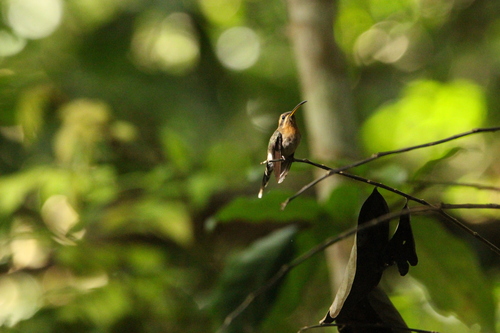 Minute HermitPhaethornis idaliaeThe minute hermit is one of the world's smallest birds.
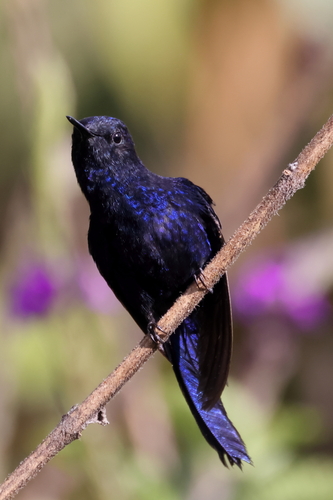 Royal SunangelHeliangelus regalisThe royal sunangel is 10 to 12 cm (3.9 to 4.7 in) long and weighs 3.4 to 4.5 g (0.12 to 0.16 oz).
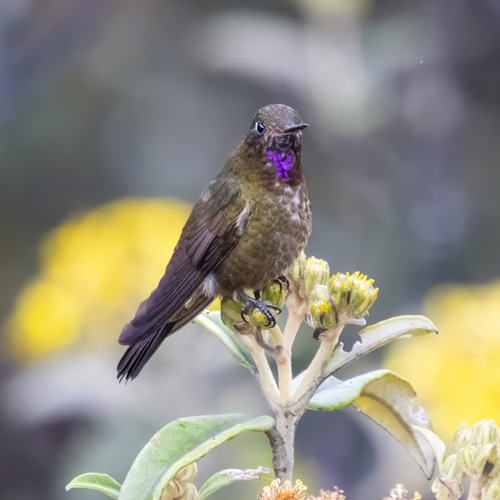 Violet-throated MetaltailMetallura baroniThe violet-throated metaltail is 10 to 11 cm (3.9 to 4.3 in) long.
Learn the Bronze-tailed Comet in the BeakBrain App
Photo and call practice. Coming soon to iPhone and Android.
Play today's Daily BirdEvery photo and recording on this page is credited to its author under the licence shown. Spotted a problem with this page, or have a better photo? Contribute.