Learn what every symbol on the card means.Full credits and sources at beakbrain.com/symbols
 ShrublandMedium · 66 g
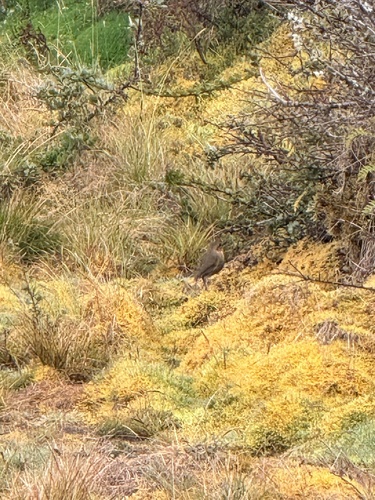
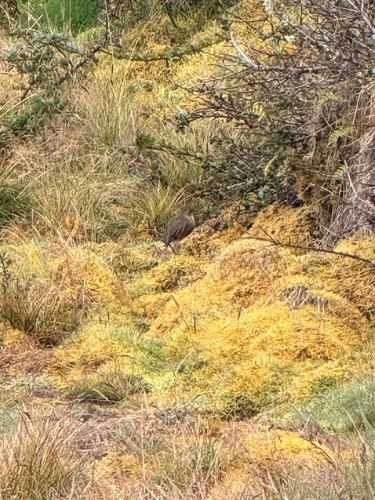
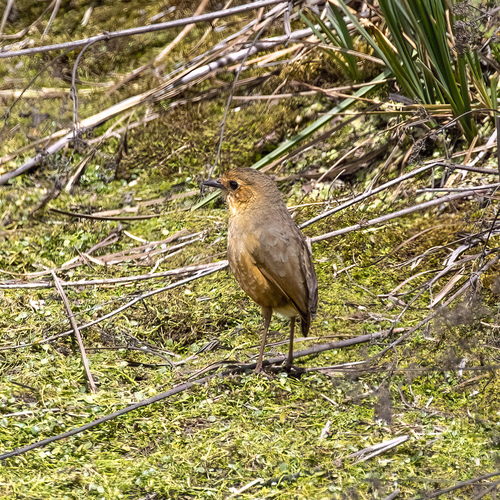
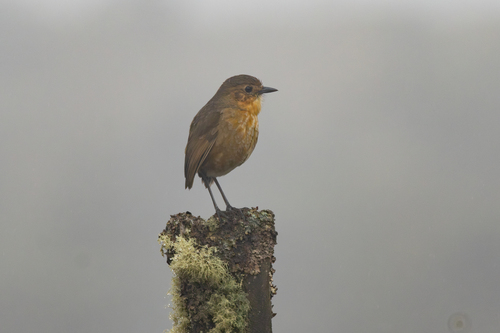
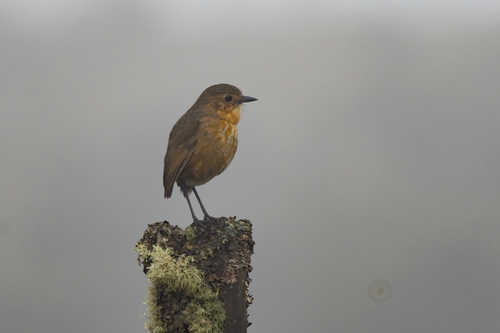
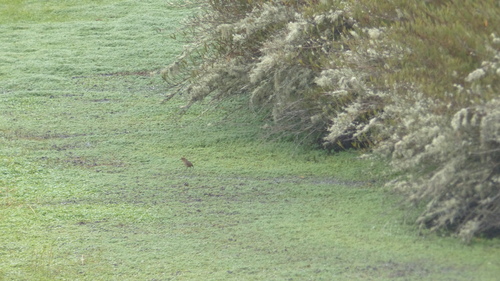
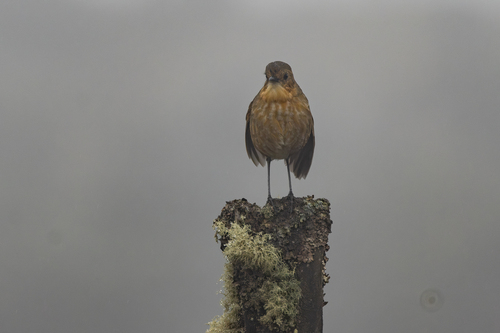
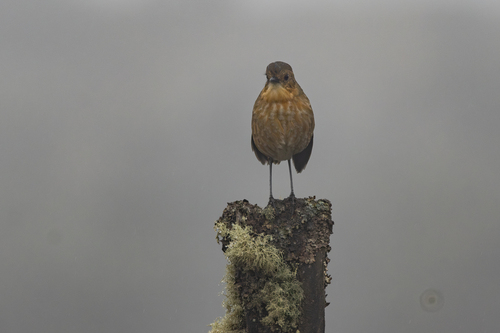
ID tip
The Boyaca antpitta is about 16 cm (6.3 in) long and apparently weighs between 45 and 60 g (1.6 and 2.1 oz). The sexes have the same plumage. Adults have pale buff lores and are whitish around the eye on an otherwise olive brown to rufous olive face. They have mostly pale brown to olive brown crown, nape, back, wings, and tail. Their crown and back have a slight gray wash and their rump is browner, almost clay-colored. Their primaries have pale buff leading edges and blackish to blackish olive trailing vanes. Their chin and throat are whitish. Voice: Despite its generally open habitat, the Boyaca antpitta is more often heard than seen. Its vocalization was the principal reason it was recognized as a species. Its song is "an initial overslurred note, a short pause, and then 3‒5 notes in a stuttered series" that lasts about 1.0 to 1.5 seconds. Its call is a single repeated note.
Text from Wikipedia, licensed CC BY-SA 4.0.
When to see the Boyaca Antpitta
One bar for each month, and every month is filled: this bird is recorded here in all twelve. The wide bar is March, the month with the most records.
Where to see the Boyaca Antpitta
The map shades 1 country with regular records. Everything unshaded has no records. Countries are listed below the map.
About the Boyaca Antpitta
The Boyaca antpitta, or northern tawny antpitta, is a species of bird in the family Grallariidae. It is endemic to Colombia.
Text adapted from Wikipedia, licensed CC BY-SA 4.0.
Easily confused with
 Chami AntpittaGrallaria alvareziGrallaria antpittas are a "wonderful group of plump and round antbirds whose feathers are often fluffed up...they have stout bills very short tails".
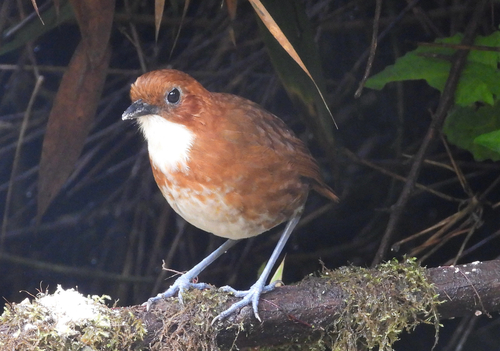 Red-and-white AntpittaGrallaria erythroleucaGrallaria antpittas are a "wonderful group of plump and round antbirds whose feathers are often fluffed up...they have stout bills very short tails".
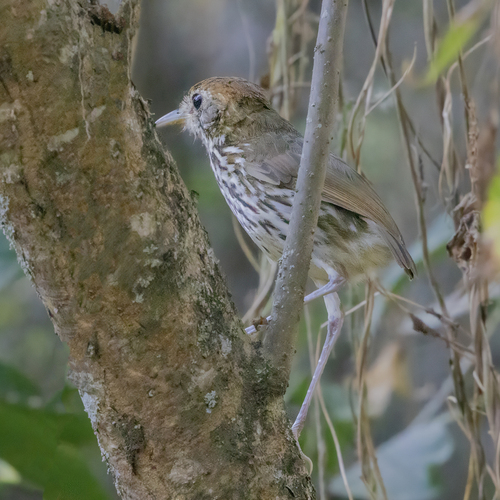 Watkins's AntpittaGrallaria watkinsiGrallaria antpittas are a "wonderful group of plump and round antbirds whose feathers are often fluffed up...they have stout bills very short tails".
Learn the Boyaca Antpitta in the BeakBrain App
Photo and call practice. Coming soon to iPhone and Android.
Play today's Daily BirdEvery photo and recording on this page is credited to its author under the licence shown. Spotted a problem with this page, or have a better photo? Contribute.