Learn what every symbol on the card means.Full credits and sources at beakbrain.com/symbols
 ForestHuge · 1.8 kg


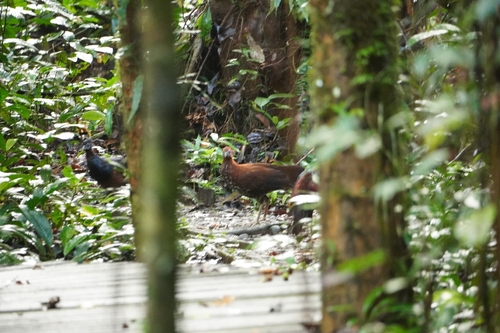
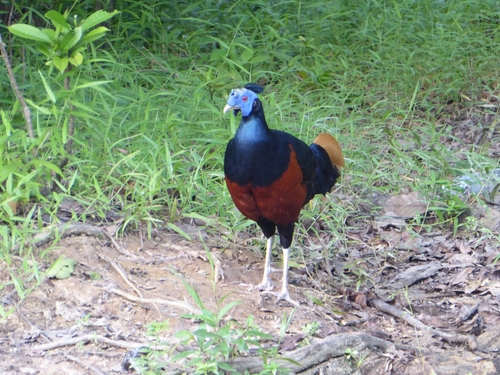
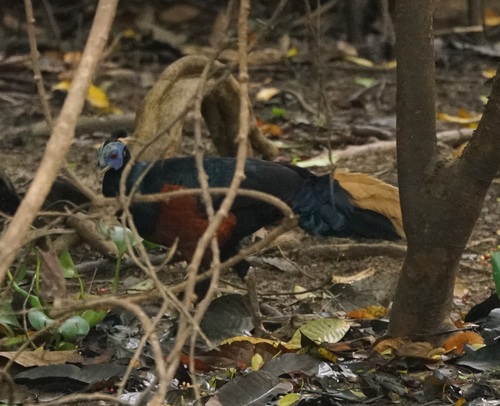
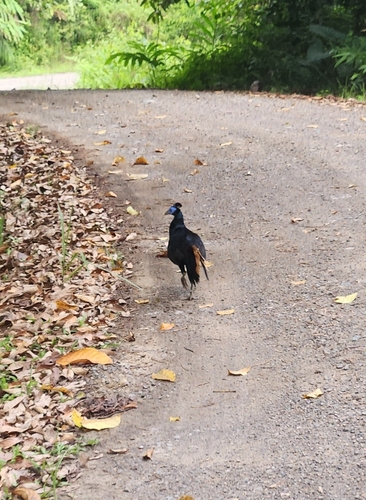
ID tip
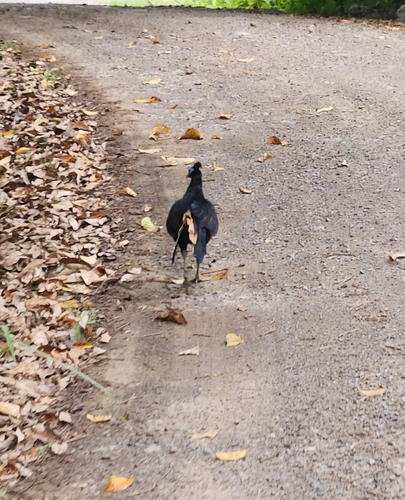
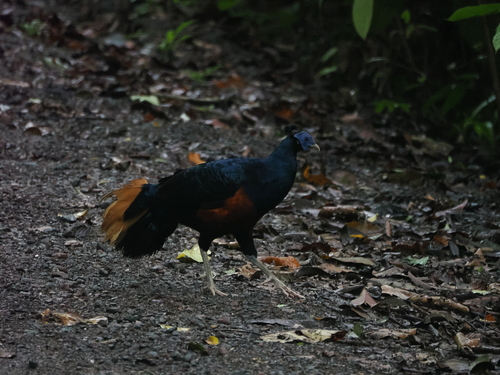
The Bornean crested fireback maintains a similar body plan to most other species in Galliformes (heavy bodied ground-dwellers). Similar to other species in the genus Lophura, L. ignita has strong coloration, with a dark plumage contrasting vibrant accents. Voice: Bornean crested firebacks have extensive vocalizations. Cornell Lab identified the following divisions: Squeal: "Loud squeals or piping whistles" with variable, but usually shrill, notes. These calls are exclusive to males during intrasexual conflict or other aggressive activity and usually lasts for 0.6–1.0 seconds. Squirrel call: A snapping note similar to that of the squirrel.
Text from Wikipedia, licensed CC BY-SA 4.0.
When to see the Bornean Crested Fireback
One bar for each month. Filled bars are the 10 months with records; pale bars are months with none. The wide bar is July, the month with the most records.
Where to see the Bornean Crested Fireback
The map shades 5 countries with regular records. Everything unshaded has no records. Countries are listed below the map.
About the Bornean Crested Fireback
The Bornean crested fireback, Lophura ignita, is a large, sexually dimorphic, and distinctly-coloured pheasant of the family Galliformes endemic to the rainforests of Borneo and the surrounding islands. It is a non-migrating omnivorous species, often seen in groups of 5–6 in the rainforest lowlands. As of 2020 they were classified as Vulnerable by the IUCN due to population decline from habitat loss and deforestation, hunting, and trapping for the cage bird trade.
Text adapted from Wikipedia, licensed CC BY-SA 4.0.
Easily confused with
 Siamese FirebackLophura diardiThe Siamese fireback, also known as Diard's fireback, is a fairly large, approximately 80 cm (31 in) long, pheasant.
 Silver PheasantLophura nycthemeraThis is a relatively large pheasant, with males of the largest subspecies having a total length of 120 to 125 cm (47 to 49 in), including a tail up to 75 cm (30 in), while the males of the smallest subspecies barely reach 70 cm (28 in) in total length, including a tail around 30 cm (12 in).
 Bulwer's PheasantLophura bulweriBulwer's pheasant is sexually dimorphic.
Learn the Bornean Crested Fireback in the BeakBrain App
Photo and call practice. Coming soon to iPhone and Android.
Play today's Daily BirdEvery photo and recording on this page is credited to its author under the licence shown. Spotted a problem with this page, or have a better photo? Contribute.