Learn what every symbol on the card means.Full credits and sources at beakbrain.com/symbols
 ForestPlatform nestLarge · 308 g


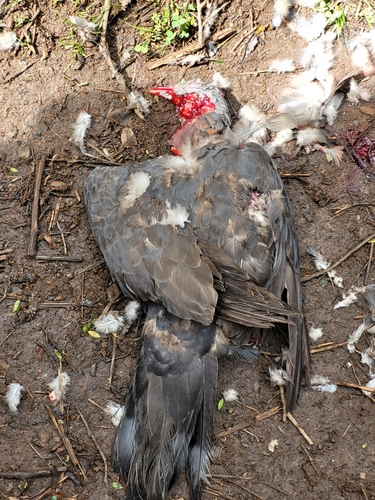

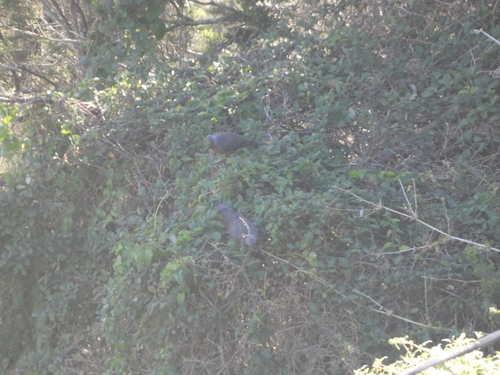

ID tip
Larger than the common pigeon, a length of 36 cm to 38 cm. It is a large dark grey pigeon. At 37–40 cm, it looks like a very dark wood pigeon. Its dark grey, rather than brown, plumage and the dark bands on the grey tail distinguish it from the other pigeon endemic to the Canary Islands, the laurel pigeon. It is a basically dark grey bird, with a pinkish breast. It lacks any white markings, which together with its darker plumage distinguishes it from the other species. With red beak, most intense at the tip.
Text from Wikipedia, licensed CC BY-SA 4.0.
When to see the Bolle's Pigeon
One bar for each month. Filled bars are the 11 months with records; pale bars are months with none. The wide bar is December, the month with the most records.
Where to see the Bolle's Pigeon
The map shades 1 country with regular records. Everything unshaded has no records. Countries are listed below the map.
About the Bolle's Pigeon
Bolle's pigeon, Bolle's laurel pigeon or dark-tailed laurel pigeon is a species of pigeon in the genus Columba that is endemic to the Canary Islands, Spain. This bird is named after the German naturalist Carl Bolle, who was the first to distinguish it from the laurel pigeon. This wood pigeon is endemic to the laurel forest habitat.
Text adapted from Wikipedia, licensed CC BY-SA 4.0.
Easily confused with
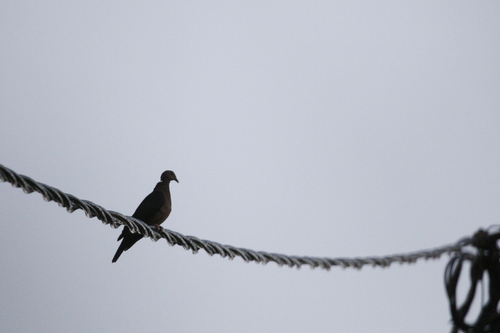 Sri Lanka Wood PigeonColumba torringtoniaeThe Sri Lankan wood pigeon or Ceylon wood pigeon is a pigeon which is an endemic resident breeding bird in the mountains of Sri Lanka.
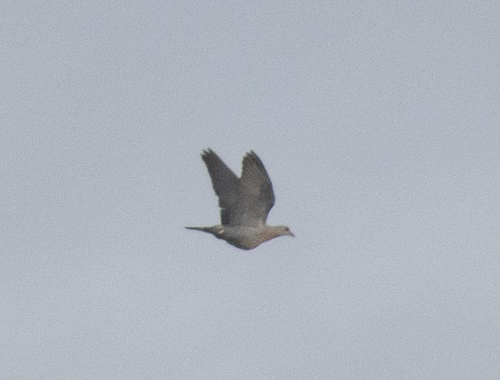 Afep PigeonColumba unicinctaThe afep pigeon is 35–36 cm (13.8–14.2 in) length and weighs between 356–490 g (12.6–17.3 oz).
 Laurel PigeonColumba junoniaeThe laurel pigeon is a dark brown and grey bird of 40 cm; it resembles a very dark wood pigeon.
Learn the Bolle's Pigeon in the BeakBrain App
Photo and call practice. Coming soon to iPhone and Android.
Play today's Daily BirdEvery photo and recording on this page is credited to its author under the licence shown. Spotted a problem with this page, or have a better photo? Contribute.