Learn what every symbol on the card means.Full credits and sources at beakbrain.com/symbols
 GrasslandScrapeLarge · 1.4 kg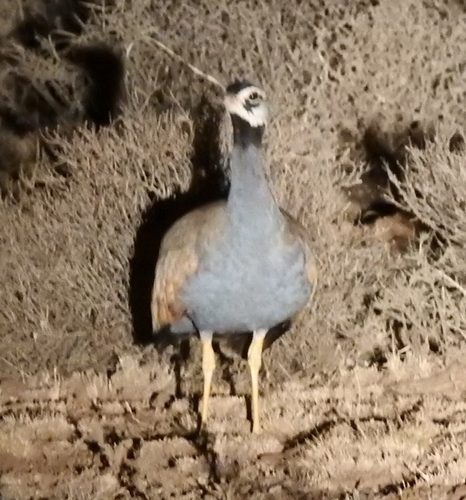

ID tip
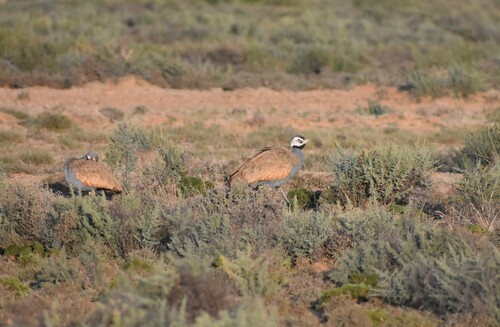
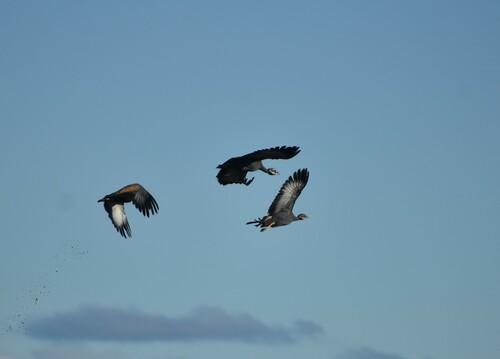
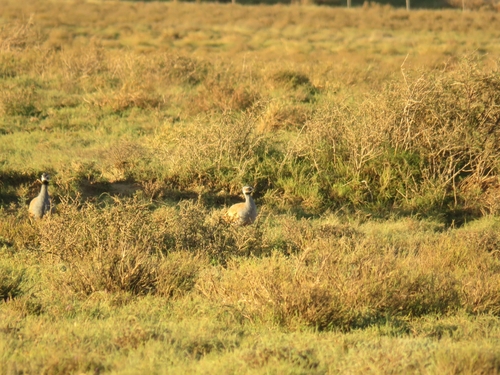
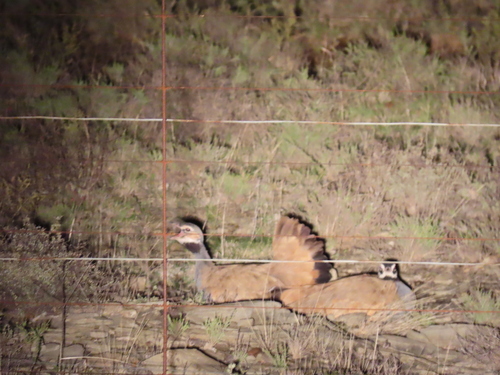
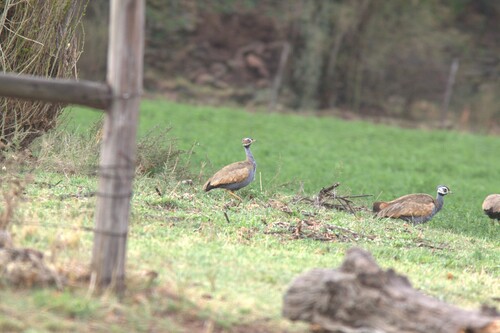
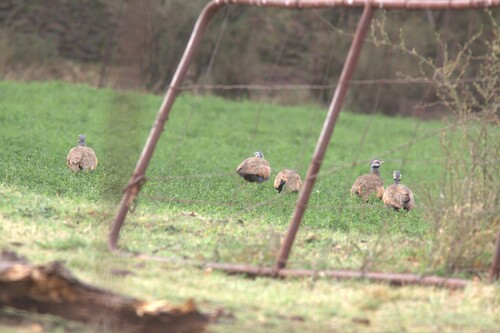
Korhaans are ground-dwelling birds with sturdy bodies, large heads and long necks, long legs and short toes. The blue korhaan is a fairly large bird growing to a total length of 50 to 58 cm (20 to 23 in). The forehead and crown are black, while the sides of the head are white. In males, the back, wings and tail are brown but the neck, throat, breast and belly are bluish-grey. Females are similar in colouring but the neck and underparts are a duller grey and the ear coverts are buff. The legs and feet are yellow.
Text from Wikipedia, licensed CC BY-SA 4.0.
When to see the Blue Korhaan
One bar for each month, and every month is filled: this bird is recorded here in all twelve. The wide bar is July, the month with the most records.
Where to see the Blue Korhaan
The map shades 2 countries with regular records. Everything unshaded has no records. Countries are listed below the map.
About the Blue Korhaan
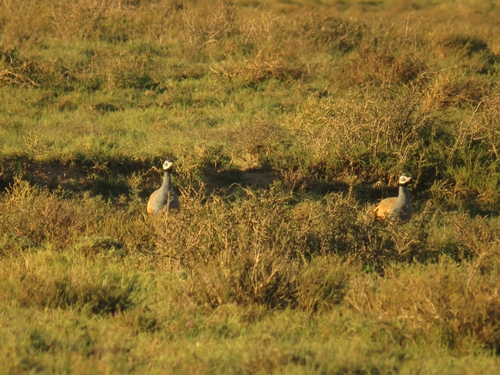
The blue korhaan or blue bustard is a species of bird in the family Otididae which is native to South Africa. Its call is a series of frog-like croaks, usually uttered in flight. Its natural habitat is plateau grassland, dry shrubland, arable land and pastureland. Its preferred habitat is one with short grassland and flat topography.
Text adapted from Wikipedia, licensed CC BY-SA 4.0.
Easily confused with

Side by side: Blue Korhaan vs White-bellied Bustard
Learn the Blue Korhaan in the BeakBrain App
Photo and call practice. Coming soon to iPhone and Android.
Play today's Daily BirdEvery photo and recording on this page is credited to its author under the licence shown. Spotted a problem with this page, or have a better photo? Contribute.