Learn what every symbol on the card means.Full credits and sources at beakbrain.com/symbols
 ForestCavity nestLarge · 492 g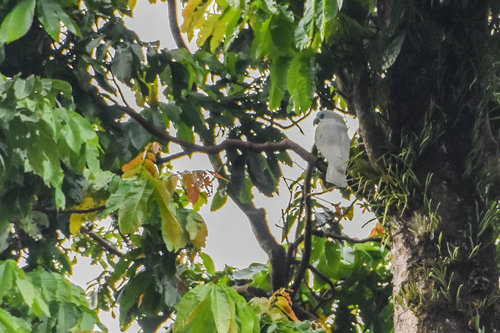

ID tip
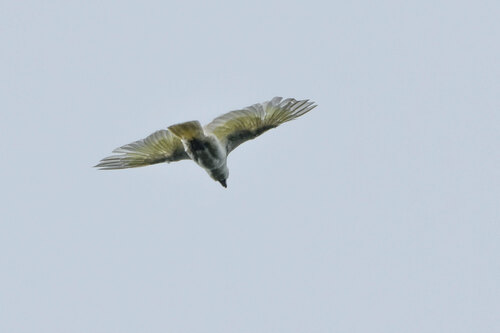
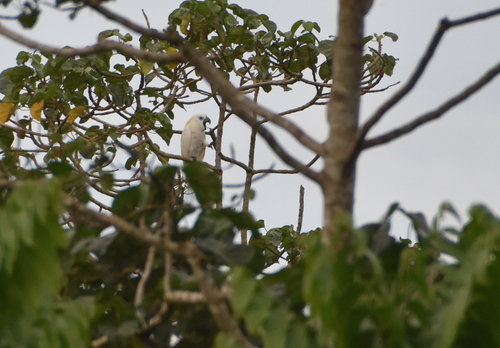
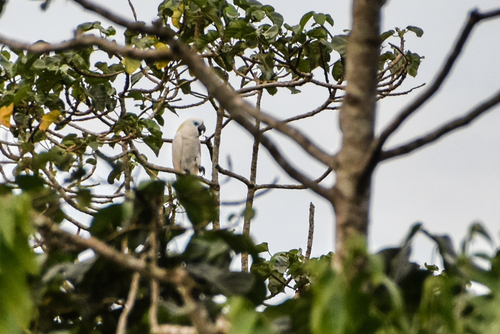
The blue-eyed cockatoo is a large, about 50-cm-long, mainly white cockatoo with an erectile yellow and white crest, a black beak, dark grey legs, and a light blue rim of featherless skin around each eye, that gives this species its name. The sexes are very similar in appearance. Some males have dark brown irises and some females have reddish-brown irises, but this small difference is not always reliable as a sex indicator.
Text from Wikipedia, licensed CC BY-SA 4.0.
When to see the Blue-eyed Cockatoo
One bar for each month. Filled bars are the 4 months with records; pale bars are months with none. The wide bar is July, the month with the most records.
Where to see the Blue-eyed Cockatoo
The map shades 1 country with regular records. Everything unshaded has no records. Countries are listed below the map.
About the Blue-eyed Cockatoo
The blue-eyed cockatoo is a large, mainly white cockatoo about 50 cm (20 in) long with a mobile crest, a black beak, and a light blue rim of featherless skin around each eye that gives this species its name.
Text adapted from Wikipedia, licensed CC BY-SA 4.0.
Easily confused with
 White CockatooCacatua albaThe white cockatoo is around 46 cm (18 in) long, and weighs about 400 g (14 oz) for small females and up to 800 g (28 oz) for big males.
 Salmon-crested CockatooCacatua moluccensisThe salmon-crested cockatoo, also known as the Moluccan cockatoo, is a cockatoo endemic to the Seram archipelago in eastern Indonesia.
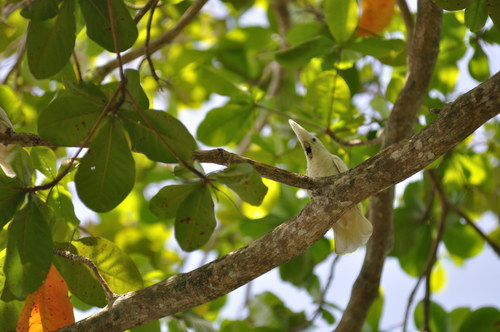 Solomons CorellaCacatua ducorpsiiThe Solomons corella is about 30 cm (12 in) long.
Learn the Blue-eyed Cockatoo in the BeakBrain App
Photo and call practice. Coming soon to iPhone and Android.
Play today's Daily BirdEvery photo and recording on this page is credited to its author under the licence shown. Spotted a problem with this page, or have a better photo? Contribute.