Learn what every symbol on the card means.Full credits and sources at beakbrain.com/symbols
 RiverineCavity nestLarge · 830 g



ID tip
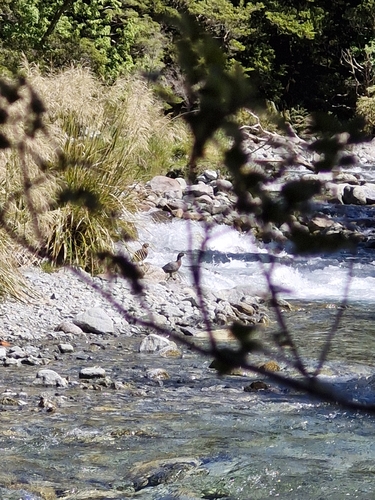
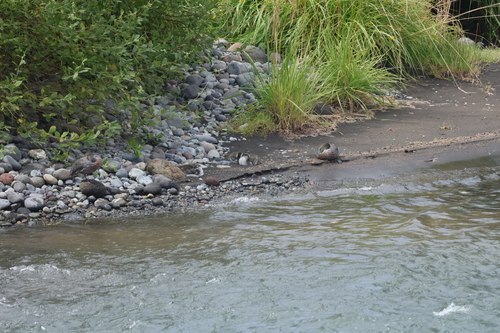
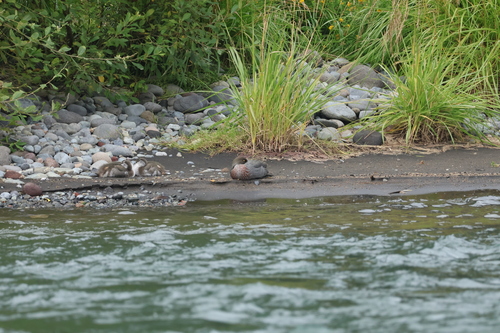
The blue duck is 50–55 cm (20–22 in) long and varies in weight by sex. Females are smaller than males, weighing 680–870 g (24–31 oz), whereas the males weigh 820–970 grams (29–34 oz). The plumage is a dark slate-grey with a greenish sheen on the head, a chestnut-flecked breast. The outer secondaries are tipped with white and the inner ones have black margins. The plumage of the two sexes are mostly the same, although the female has slightly less chestnut in the chest. Voice: The male's call is a high-pitched whistle. The female's call is a rattling growl or low-pitched grating notes.
Text from Wikipedia, licensed CC BY-SA 4.0.
When to see the Blue Duck
One bar for each month. Filled bars are the 7 months with records; pale bars are months with none. The wide bar is November, the month with the most records.
Where to see the Blue Duck
The map shades 1 country with regular records. Everything unshaded has no records. Countries are listed below the map.
About the Blue Duck
The blue duck or whio is a member of the duck, goose and swan family, Anatidae and is endemic to New Zealand. It is the only individual species belonging to the genus Hymenolaimus. Its closest relatives are the ducks in the genus Sarkidiornis.
Text adapted from Wikipedia, licensed CC BY-SA 4.0.
Easily confused with
 Sunda TealAnas gibberifronsThe Sunda teal, also known as the Bebek cokelat or Itik benjut, is a dabbling duck found in open wetlands in Indonesia and Timor-Leste.
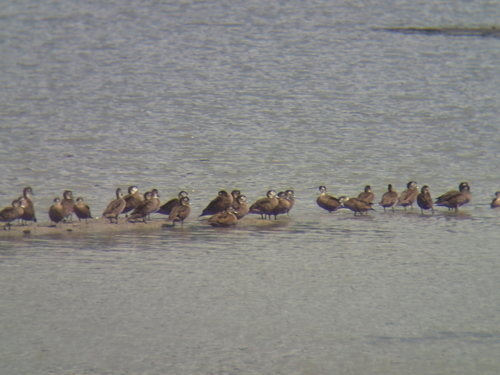 Andaman TealAnas albogularisThe species is dark brown with buffy markings.
 Baer's PochardAythya baeriThe Baer's pochard is 41–47 cm (16–19 in) long with a 70–79 cm (28–31 in) wingspan.
Learn the Blue Duck in the BeakBrain App
Photo and call practice. Coming soon to iPhone and Android.
Play today's Daily BirdEvery photo and recording on this page is credited to its author under the licence shown. Spotted a problem with this page, or have a better photo? Contribute.