Learn what every symbol on the card means.Full credits and sources at beakbrain.com/symbols
 ForestCup nestSmall · 32 g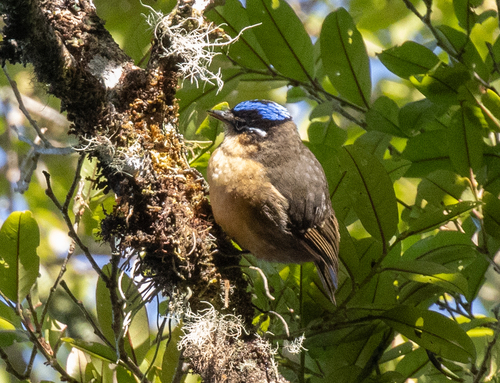


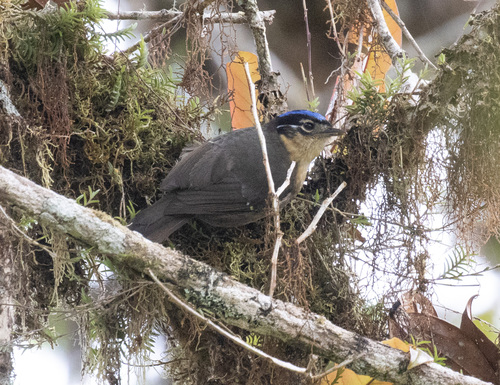
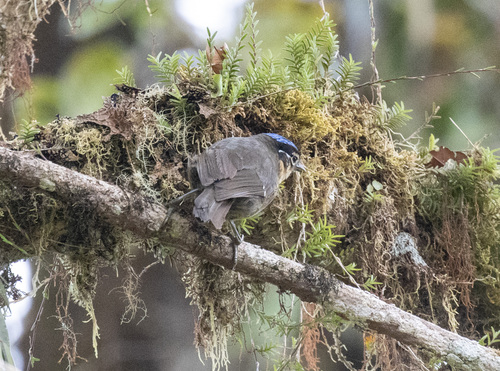
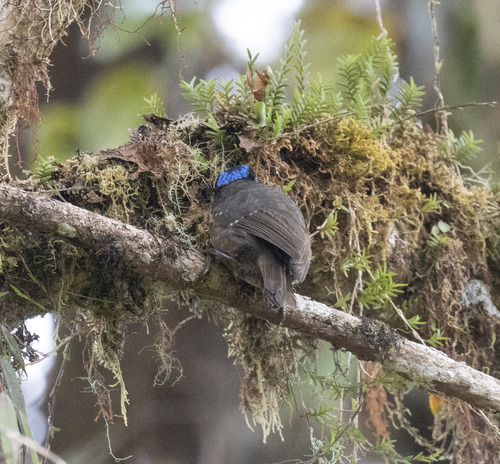
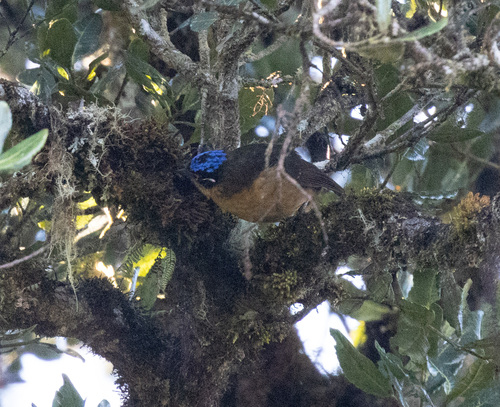
ID tip
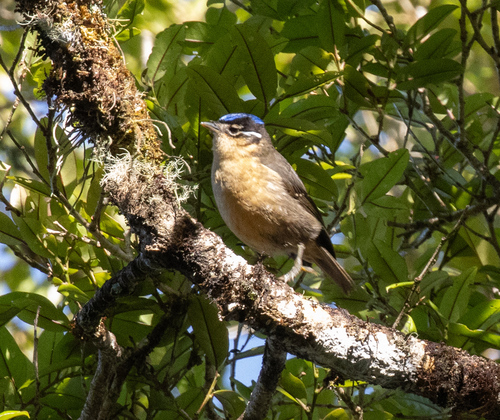
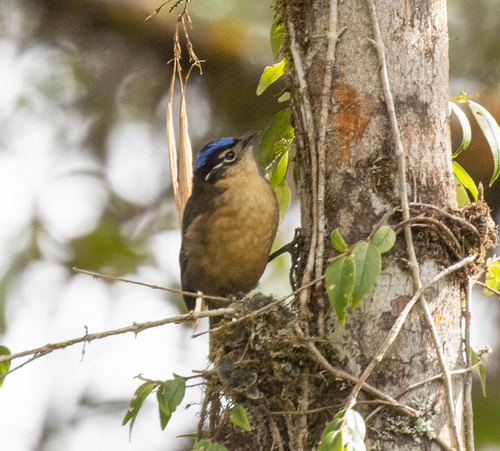
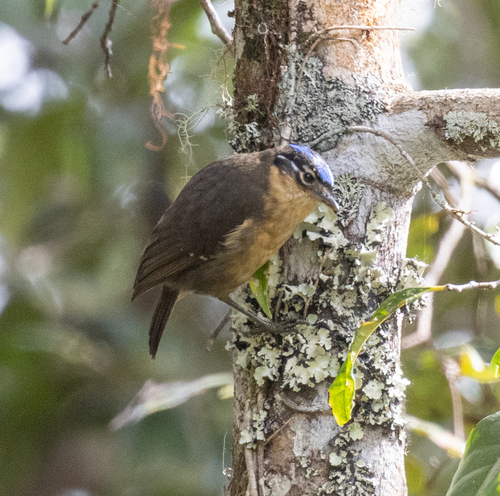
The blue-capped ifrit is 16–17 cm (6.5–6.5 in) long and weighs 34–36 g (1.2–1.3 oz). The bird shows brown upperparts (top side of the bird including head, back, wings, and tail) with finely dotted wing edges and light-yellow underparts (the underside of bird, including belly, throat, chest, and under the wings and tail). The head is marked with a bright blue cap outlined in black, a small black spot on the crown, and a long white stripe running besides the eye. A thin black strip is within this strip, and the eye itself is encircled by a narrow white ring. Voice: The blue-capped ifrit's song produces an upbeat "toowa-tee!", along with a short dry "wik" call.
Text from Wikipedia, licensed CC BY-SA 4.0.
When to see the Blue-capped Ifrit
One bar for each month. Filled bars are the 7 months with records; pale bars are months with none. The wide bar is July, the month with the most records.
Where to see the Blue-capped Ifrit
The map shades 2 countries with regular records. Everything unshaded has no records. Countries are listed below the map.
About the Blue-capped Ifrit
The blue-capped ifrit is a species of small passerine bird in the monotypic family Ifritidae, native to the montane rainforests of New Guinea. These birds are insectivorous and are notable for their distinctive blue crown and presence of batrachotoxin, a potent neurotoxin, in their feathers and skin. This chemical defense is believed to come from their diet, particularly Choresine beetles. Blue-capped ifrits are non-aggressive and typically found in small groups within high altitude forest habitats. Although they are currently listed as of least concern by the IUCN, their population is slowly declining due to habitat disturbance and limited conservation measures.
Text adapted from Wikipedia, licensed CC BY-SA 4.0.
Learn the Blue-capped Ifrit in the BeakBrain App
Photo and call practice. Coming soon to iPhone and Android.
Play today's Daily BirdEvery photo and recording on this page is credited to its author under the licence shown. Spotted a problem with this page, or have a better photo? Contribute.