Learn what every symbol on the card means.Full credits and sources at beakbrain.com/symbols
 ForestCavity nestMedium · 84 g

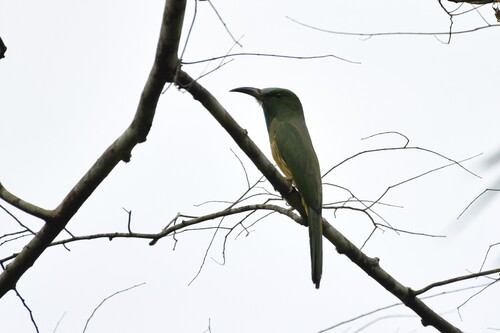
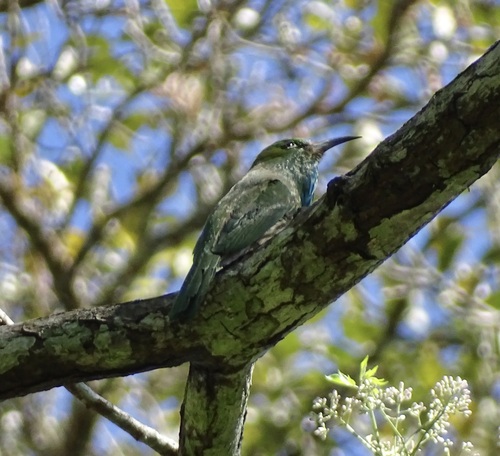
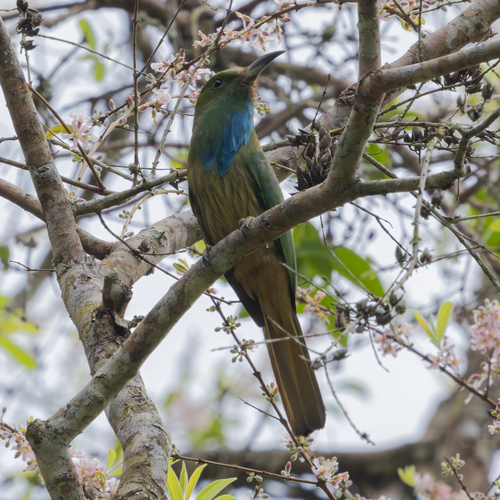
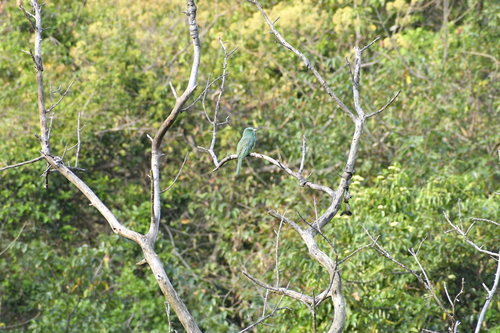
ID tip
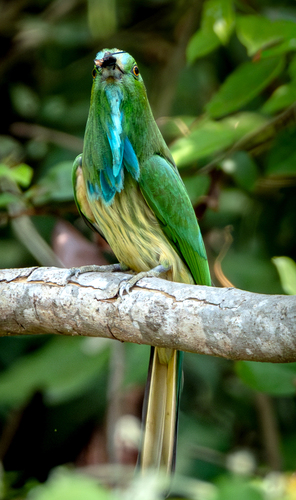
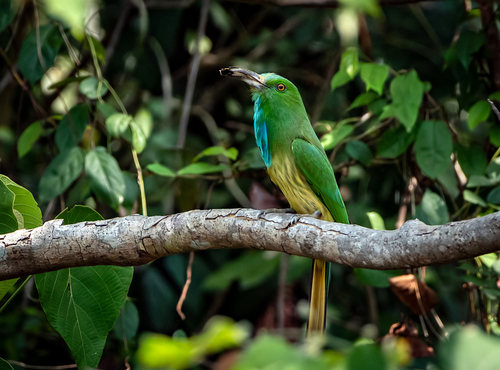
This is probably the largest species of the bee-eater family. Adults measure 31 to 35 cm (12 to 14 in) in length and weigh 70 to 93 g (2.5 to 3.3 oz). This species has a large sickle shaped bill and the square ended tail lacks the "wires" that are typical of smaller bee-eaters. The bird is grass green with a turquoise forehead, face and chin. The feathers of the throat are elongated giving it a bearded appearance when they are fluffed out. The belly is yellowish to olive with streaks of green or blue.
Text from Wikipedia, licensed CC BY-SA 4.0.
When to see the Blue-bearded Bee-eater
One bar for each month. Filled bars are the 10 months with records; pale bars are months with none. The wide bar is February, the month with the most records.
Where to see the Blue-bearded Bee-eater
The map shades 10 countries with regular records. Everything unshaded has no records. Countries are listed below the map.
About the Blue-bearded Bee-eater
The blue-bearded bee-eater is a species of bee-eater found in much of the Indian subcontinent and parts of Southeast Asia. This bee-eater is found in forest clearings. It is found mainly in the Malayan region but extends west into peninsular India. The blue feathers of its throat are elongated and often fluffed giving it its name. They have a loud call but are not as gregarious or active as the smaller bee-eaters, and their square ended tail lacks the typical "wires" made up of the shafts of the longer central tail feathers found in many other bee-eaters.
Text adapted from Wikipedia, licensed CC BY-SA 4.0.
Easily confused with

Side by side: Blue-bearded Bee-eater vs Red-bearded Bee-eater
Learn the Blue-bearded Bee-eater in the BeakBrain App
Photo and call practice. Coming soon to iPhone and Android.
Play today's Daily BirdEvery photo and recording on this page is credited to its author under the licence shown. Spotted a problem with this page, or have a better photo? Contribute.