Learn what every symbol on the card means.Full credits and sources at beakbrain.com/symbols
 ForestCavity nestSmall · 23 g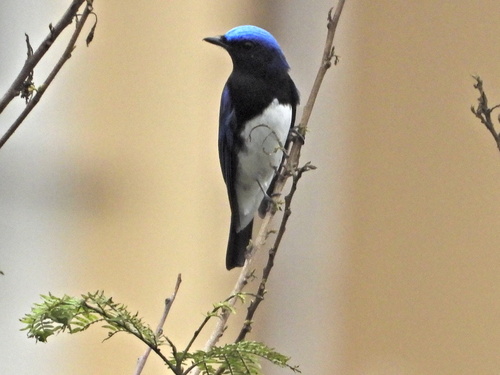
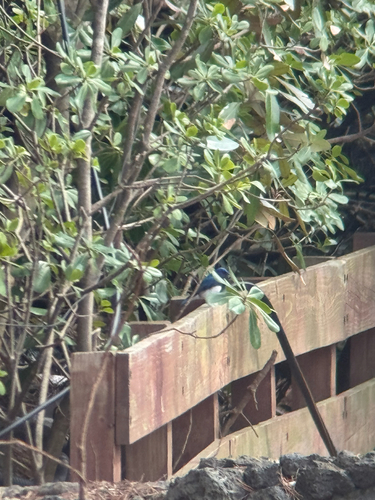
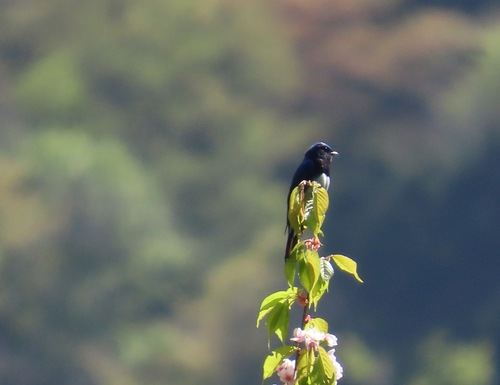


ID tip
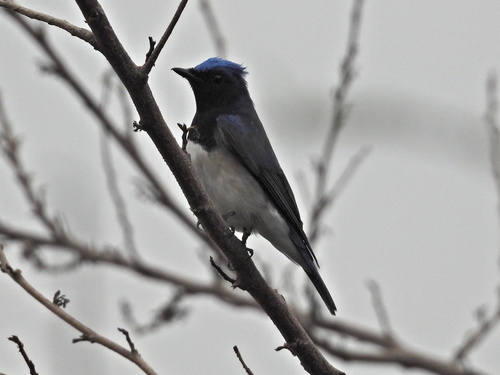
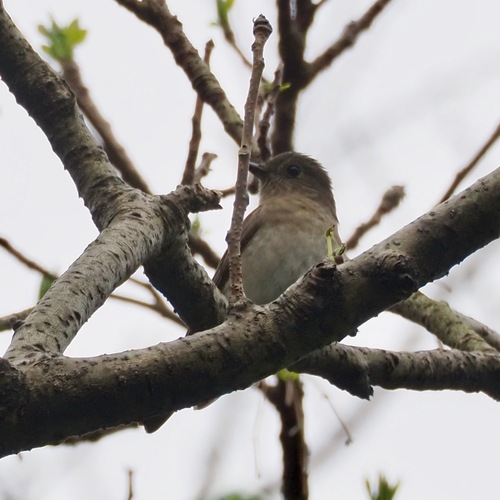
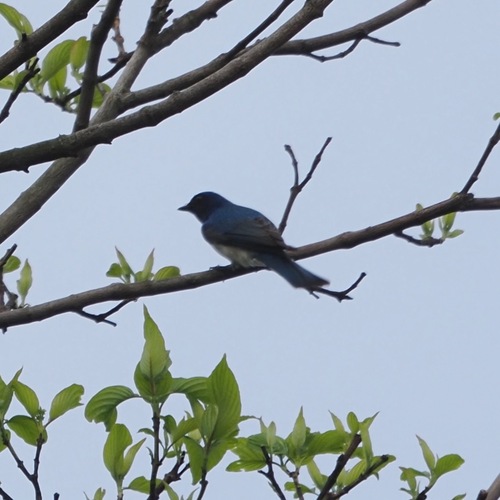
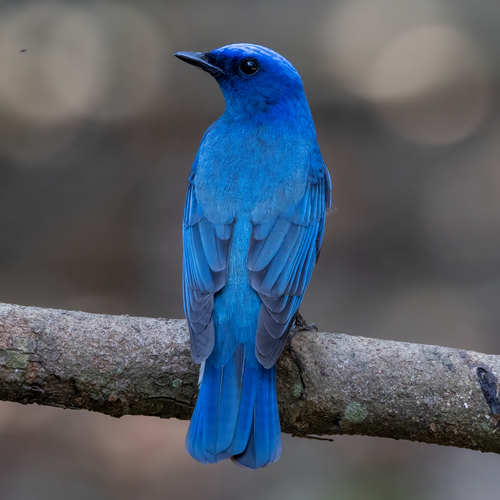
The blue-and-white flycatcher is a large flycatcher (16–17 cm long, weight 25 g on average) with a striking plumage pattern. The male is deep cobalt blue, with black on the face down to the upper part of the breast and flanks, the rest of the underside white. There is also a prominent white patch on the base of the outer tail feathers. Immature males have the adult male's blue wings, but are otherwise brown like females.
Text from Wikipedia, licensed CC BY-SA 4.0.
When to see the Blue-and-white Flycatcher
One bar for each month. Filled bars are the 6 months with records; pale bars are months with none. The wide bar is April, the month with the most records.
Where to see the Blue-and-white Flycatcher
The map shades 17 countries with regular records, and 6 more in a lighter tone where the bird turns up only as a stray. Everything unshaded has no records. Countries are listed below the map.
Recorded as a rare visitor in India, Mongolia, Australia, Brunei, Oman, Palau.
About the Blue-and-white Flycatcher
The blue-and-white flycatcher is a migratory songbird in the Old World flycatcher family Muscicapidae. The species is also known as the Japanese flycatcher. It breeds in Japan, Korea, and in parts of north eastern China and the Russian Far East. It winters in South East Asia, especially in Vietnam, Cambodia, Thailand, Sumatra and Borneo. This species has been recorded as a vagrant from the Sinharaja Rainforest in Sri Lanka in 2014.
Text adapted from Wikipedia, licensed CC BY-SA 4.0.
Easily confused with
Learn the Blue-and-white Flycatcher in the BeakBrain App
Photo and call practice. Coming soon to iPhone and Android.
Play today's Daily BirdEvery photo and recording on this page is credited to its author under the licence shown. Spotted a problem with this page, or have a better photo? Contribute.