Learn what every symbol on the card means.Full credits and sources at beakbrain.com/symbols
 ForestTiny · 14 g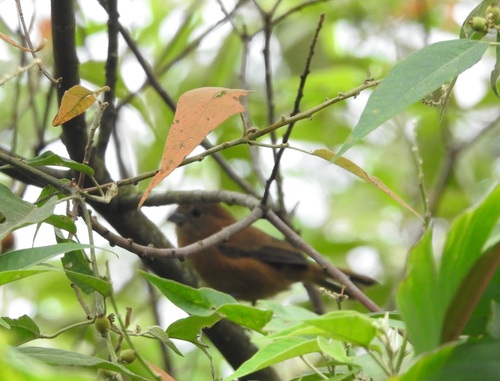
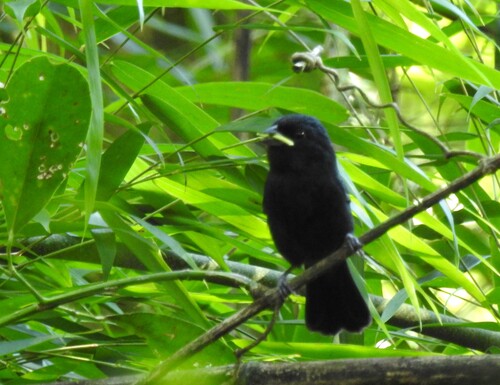
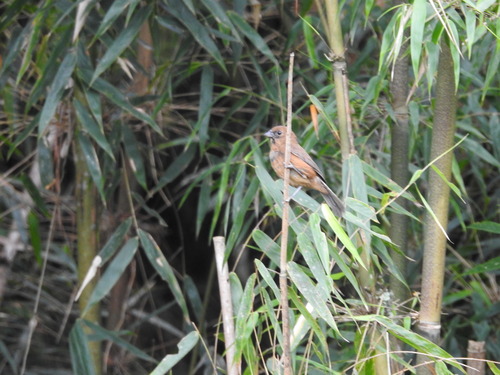
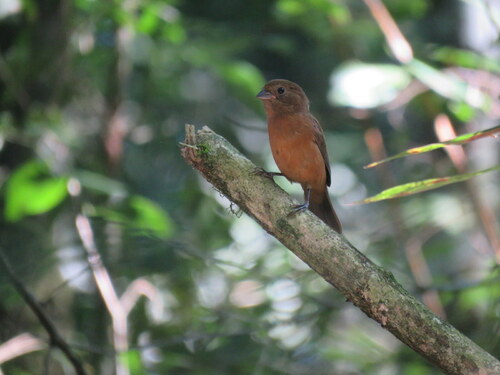
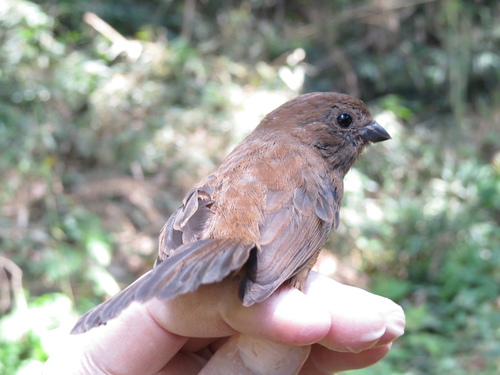
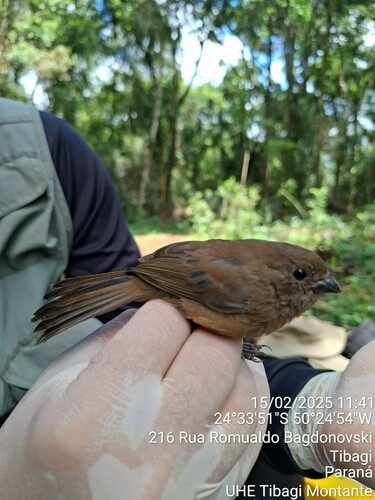
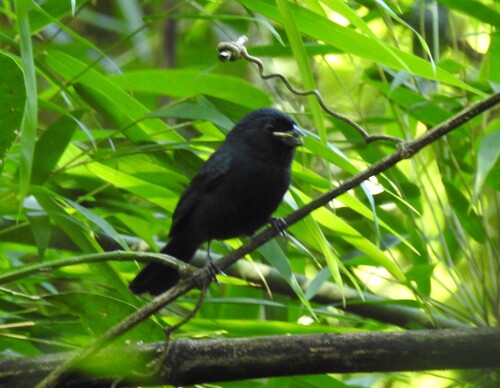
ID tip
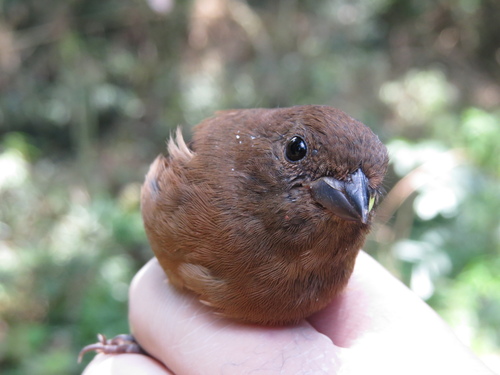
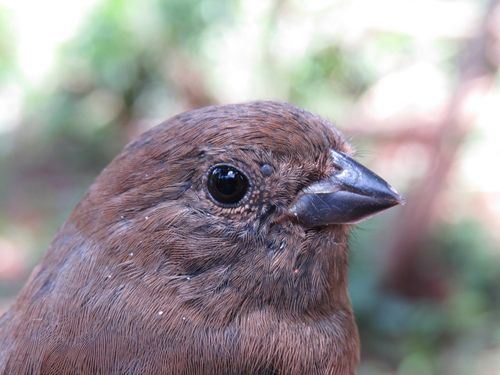
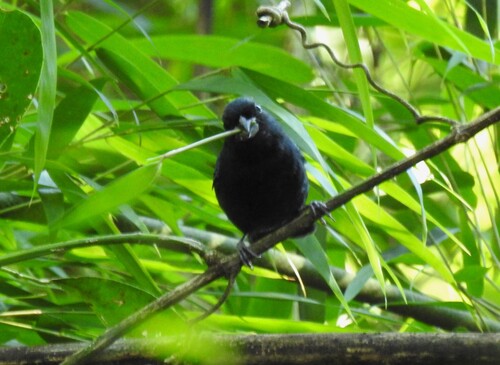
The blackish-blue seedeater is 12 to 12.5 cm (4.7 to 4.9 in) long and weighs 12.5 to 14 g (0.44 to 0.49 oz). The male is entirely dark slaty blue that is darker on the face and underparts. The female is tawny brown, with the underparts paler than the upperparts. Voice: The blackish-blue seedeater's song is "a pleasant warble" and its calls sound like "psit" or "pix".
Text from Wikipedia, licensed CC BY-SA 4.0.
When to see the Blackish-blue Seedeater
One bar for each month. Filled bars are the 9 months with records; pale bars are months with none. The wide bar is October, the month with the most records.
Where to see the Blackish-blue Seedeater
The map shades 3 countries with regular records, and 1 more in a lighter tone where the bird turns up only as a stray. Everything unshaded has no records. Countries are listed below the map.
Recorded as a rare visitor in Mexico.
About the Blackish-blue Seedeater
The blackish-blue seedeater is a species of bird in the family Cardinalidae, the cardinals or cardinal grosbeaks. It is found in Argentina, Brazil, and Paraguay.
Text adapted from Wikipedia, licensed CC BY-SA 4.0.
Easily confused with
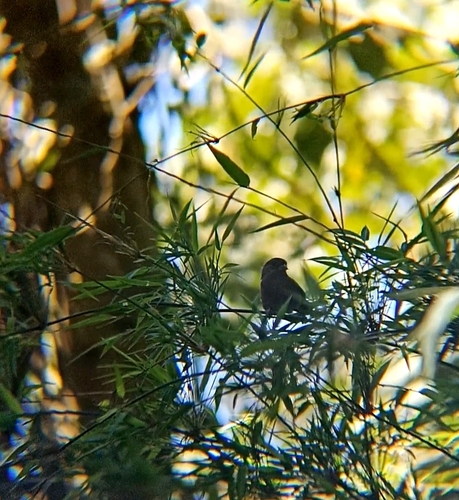 Blue SeedeaterAmaurospiza concolorThe blue seedeater is 11.5 to 14 cm (4.5 to 5.5 in) long and weighs 12 to 15 g (0.42 to 0.53 oz).
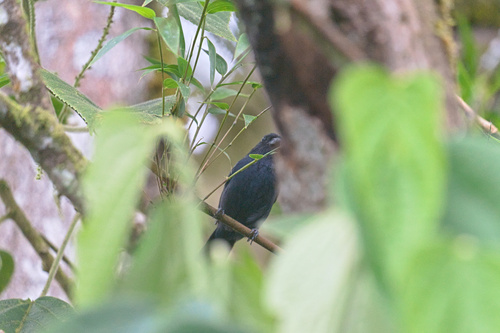 Ecuadorian SeedeaterAmaurospiza aequatorialisThe male Ecuadorian seedeater is mostly a pale slate blue; its crown is a lighter indigo.
Carrizal SeedeaterAmaurospiza carrizalensisThe Carrizal seedeater is 12 cm (4.7 in) long and weighs 12 to 14 g (0.42 to 0.49 oz).
Ecuadorian SeedeaterAmaurospiza aequatorialisThe male Ecuadorian seedeater is mostly a pale slate blue; its crown is a lighter indigo.
Carrizal SeedeaterAmaurospiza carrizalensisThe Carrizal seedeater is 12 cm (4.7 in) long and weighs 12 to 14 g (0.42 to 0.49 oz).
Learn the Blackish-blue Seedeater in the BeakBrain App
Photo and call practice. Coming soon to iPhone and Android.
Play today's Daily BirdEvery photo and recording on this page is credited to its author under the licence shown. Spotted a problem with this page, or have a better photo? Contribute.