Learn what every symbol on the card means.Full credits and sources at beakbrain.com/symbols
 ShrublandCavity nestTiny · 15 g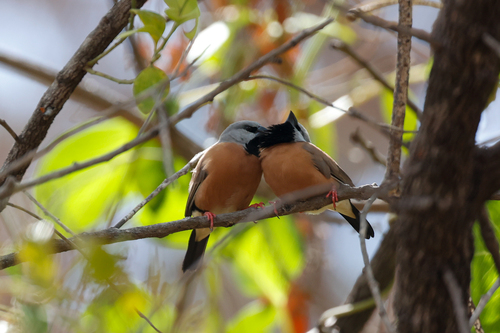
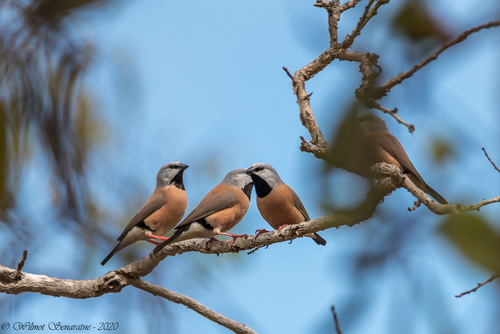


ID tip
Measuring around 10 cm (4 in) in length, the black-throated finch has a short black bill, lores, and throat, sharply delineated from the rest of the pale grey head. The wings, breast and belly are pale pinkish brown, and the short tail is black, while the rump is black in northern forms and white in southern. The vocalisation of P. cincta is comparable to that of the sister species Poephila acuticauda, although lower in tone and slightly less simple in the harmonic structures. Up to twelve calls have been identified, and the structure and tone of these is also distinguishable by subspecies.
Text from Wikipedia, licensed CC BY-SA 4.0.
When to see the Black-throated Finch
One bar for each month. Filled bars are the 11 months with records; pale bars are months with none. The wide bar is July, the month with the most records.
Where to see the Black-throated Finch
The map shades 1 country with regular records. Everything unshaded has no records. Countries are listed below the map.
About the Black-throated Finch
The black-throated finch, or parson finch, is a species of estrildid finch found in grassy woodlands throughout north-east Australia from Cape York Peninsula to central Queensland. The southern black-throated finch is endangered, with a population in decline and its habitat is threatened by development, and has become extinct in New South Wales, while the northern black-throated finch is not listed as threatened at this point.
Text adapted from Wikipedia, licensed CC BY-SA 4.0.
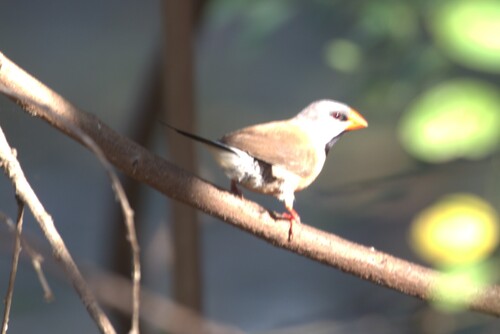
Easily confused with

Learn the Black-throated Finch in the BeakBrain App
Photo and call practice. Coming soon to iPhone and Android.
Play today's Daily BirdEvery photo and recording on this page is credited to its author under the licence shown. Spotted a problem with this page, or have a better photo? Contribute.