Learn what every symbol on the card means.Full credits and sources at beakbrain.com/symbols


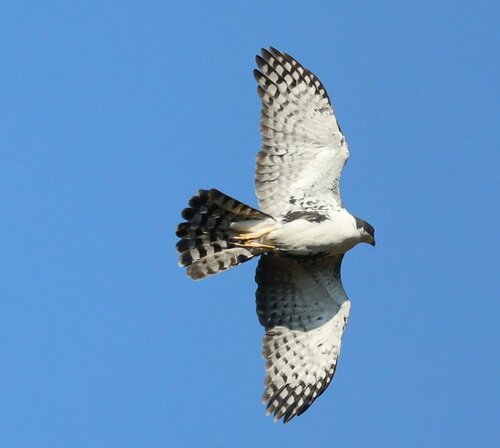
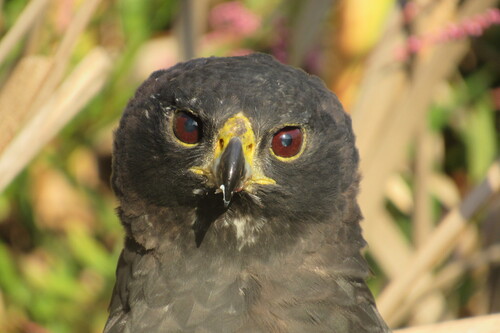
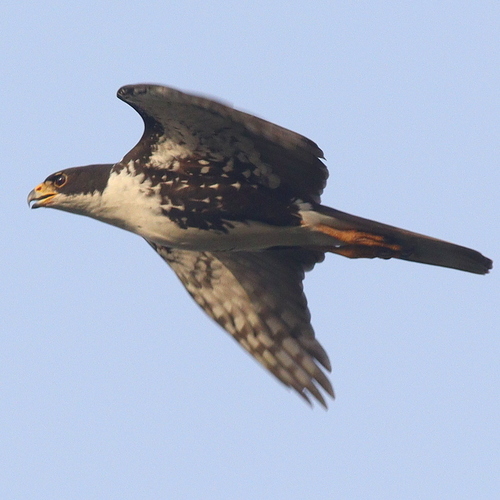
ID tip
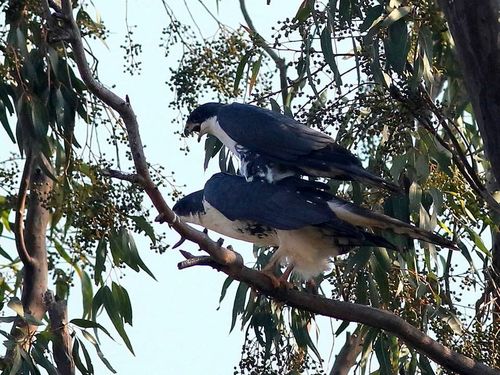
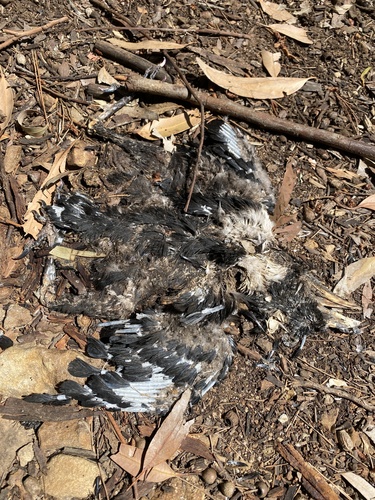
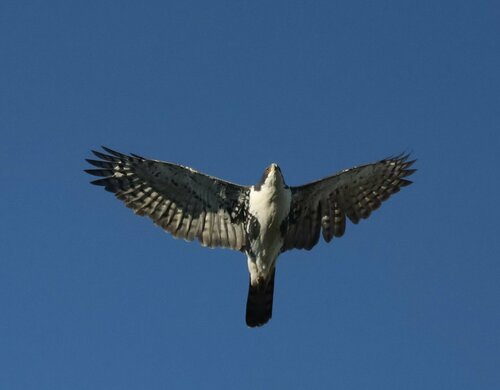
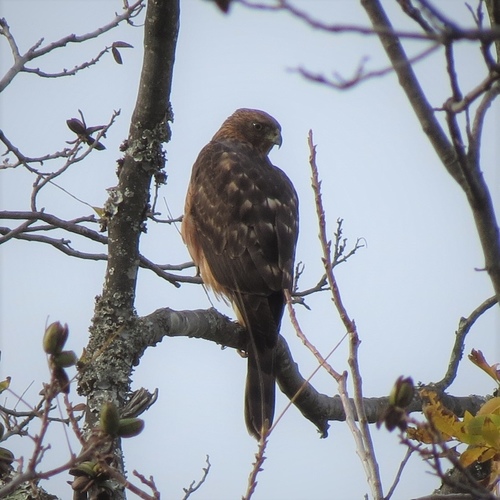
Typically, both sexes of the black sparrowhawk have a predominantly black plumage with a white throat, breast and belly. These white-breasted individuals are known as "white morphs" which are in the majority over most of the birds' range. The "black morph" variety is generally rare, except along the coastal regions of South Africa, including the Cape Peninsula where they constitute 80% of the population. (Black sparrowhawks do not occur more than about 200–300 km north of Cape Town along the South African west coast, where there are almost no trees. Voice: They are mostly silent except during the breeding season. Males make short, sharp "keeyp" contact calls when arriving with prey, to which the females respond with lower pitched "kek" sounds. Before the male arrives with food, however, the female will solicit food with loud, high pitched drawn out "kweeeeee-uw" sounds. Both sexes produce alarm calls, and characteristic mating cries.
Text from Wikipedia, licensed CC BY-SA 4.0.
About the Black Sparrowhawk
The black sparrowhawk, sometimes known as the black goshawk or great sparrowhawk, is a bird of prey belonging to the family Accipitridae. It was formerly placed in the genus Accipiter. It occurs mainly in forest and non-desert areas south of the Sahara, particularly where there are large trees suitable for nesting; favored habitat includes suburban and human-altered landscapes. It preys predominantly on birds of moderate size, such as pigeons and doves, in suburban areas.
Text adapted from Wikipedia, licensed CC BY-SA 4.0.
Easily confused with
 Cooper's HawkAstur cooperiiCooper's hawk is a medium-sized hawk as well as roughly average to small-sized for an Astur species.
 Gundlach's HawkAstur gundlachiThe hawk is a medium-sized forest raptor.
 Chilean HawkAstur chilensisThe male is 37 to 38 cm long, while the larger female measures 41 to 42 cm.
Learn the Black Sparrowhawk in the BeakBrain App
Photo and call practice. Coming soon to iPhone and Android.
Play today's Daily BirdEvery photo and recording on this page is credited to its author under the licence shown. Spotted a problem with this page, or have a better photo? Contribute.