Learn what every symbol on the card means.Full credits and sources at beakbrain.com/symbols
 ForestCup nestTiny · 11 g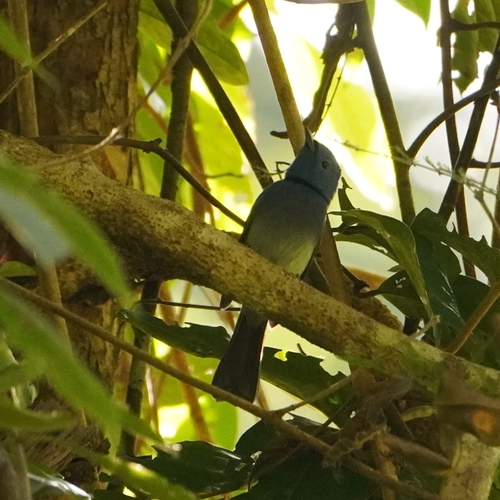


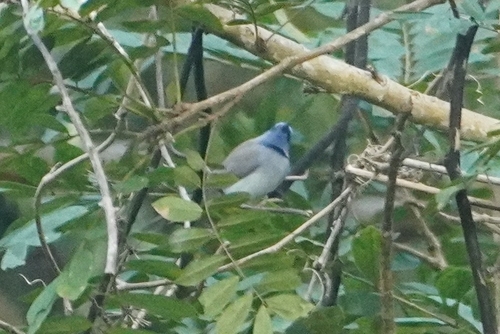
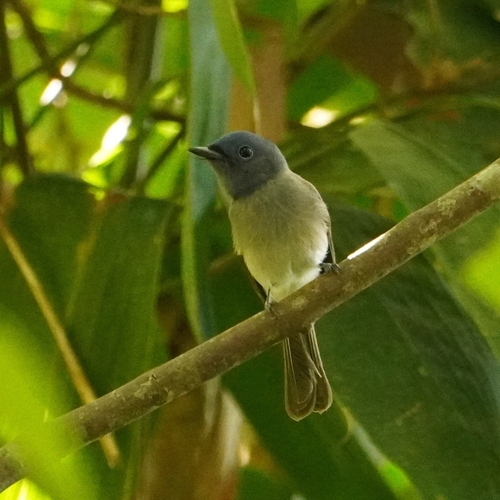
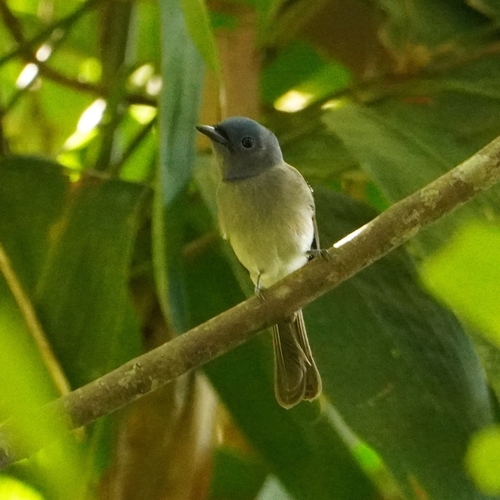
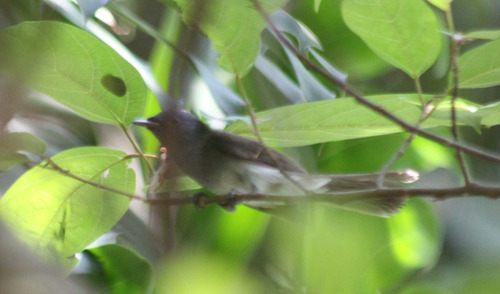
ID tip
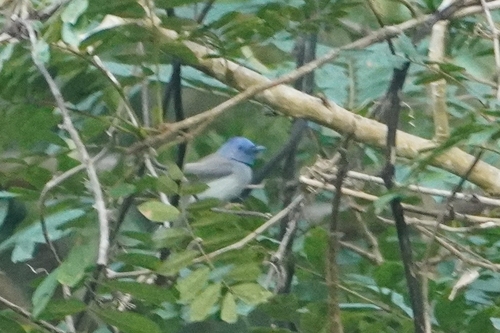
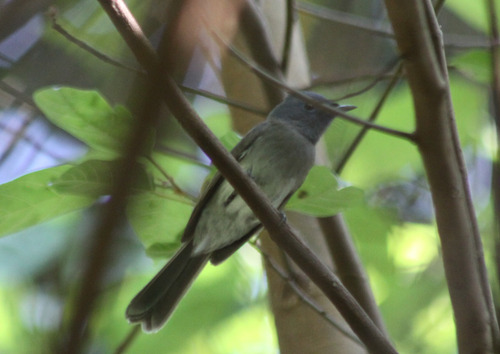
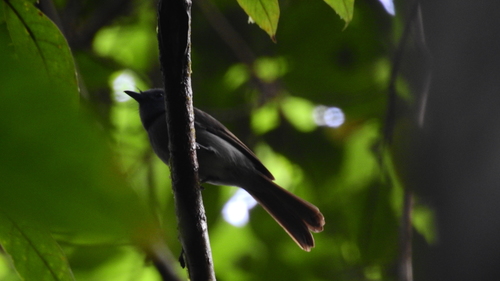
The adult male black-naped monarch is about 16 cm long, and is mainly pale azure blue apart from a whitish lower belly. It has a black nape and a narrow black gorget. The female is duller and lacks the black markings. Its wings and back are grey-brown. However, several geographically separated breeding populations differ in the extent and shade of markings. The Indian peninsula has subspecies H. a. styani (which subsumes H. a. sykesi of Stuart Baker), in which males have very distinct black markings and a whitish abdomen. Males of the Sri Lankan race H. a.
Text from Wikipedia, licensed CC BY-SA 4.0.
When to see the Black-naped Monarch
One bar for each month. Filled bars are the 11 months with records; pale bars are months with none. The wide bar is March, the month with the most records.
Where to see the Black-naped Monarch
The map shades 19 countries with regular records. Everything unshaded has no records. Countries are listed below the map.
About the Black-naped Monarch
The black-naped monarch is a passerine bird belonging to the family of monarch flycatchers found in southern and south-eastern Asia. They are sexually dimorphic, with the male having a distinctive black patch on the back of the head and a narrow black half collar ("necklace"), while the female is duller with olive brown wings and lacking the black markings on the head. They have a call that is similar to that of the Asian paradise flycatcher, and in tropical forest habitats, pairs may join mixed-species foraging flocks. Populations differ slightly in plumage colour and sizes.
Text adapted from Wikipedia, licensed CC BY-SA 4.0.
Easily confused with
 Short-crested MonarchHypothymis helenaeThe short-crested monarch is a species of bird in the family Monarchidae and one of the most attractive of all the monarch flycatchers.
 Celestial MonarchHypothymis coelestisThe celestial monarch is a species of bird in the family Monarchidae, and one of the most attractive of all the monarch flycatchers.
 Pale-blue MonarchHypothymis puellaThe pale-blue monarch is a small passerine bird in the family Monarchidae endemic to eastern Indonesia.
Learn the Black-naped Monarch in the BeakBrain App
Photo and call practice. Coming soon to iPhone and Android.
Play today's Daily BirdEvery photo and recording on this page is credited to its author under the licence shown. Spotted a problem with this page, or have a better photo? Contribute.