Learn what every symbol on the card means.Full credits and sources at beakbrain.com/symbols
 ForestCup nestTiny · 12 g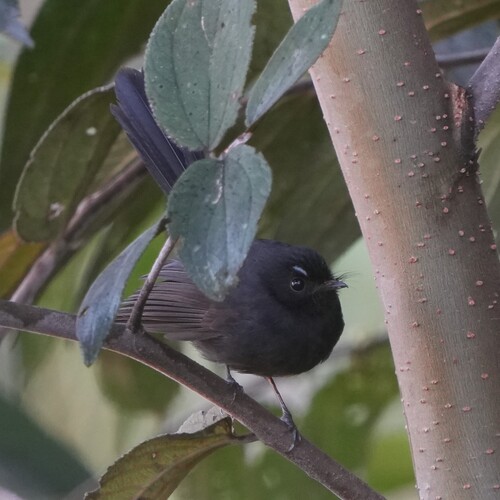
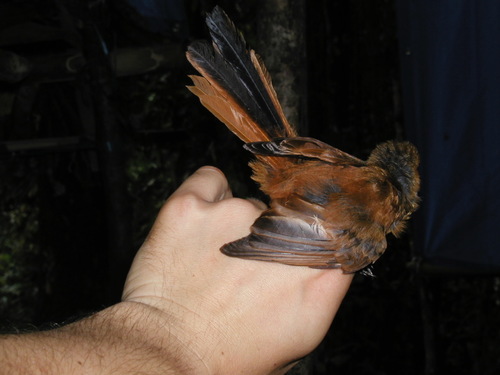


When to see the Black Fantail
One bar for each month. Filled bars are the 7 months with records; pale bars are months with none. The wide bar is August, the month with the most records.
Where to see the Black Fantail
The map shades 2 countries with regular records. Everything unshaded has no records. Countries are listed below the map.
About the Black Fantail
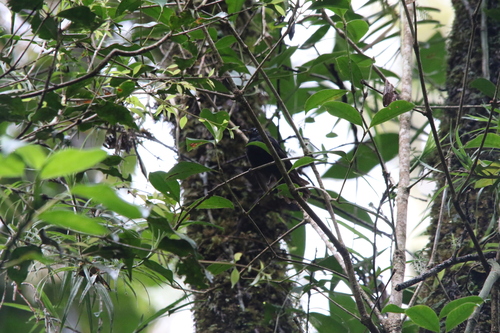
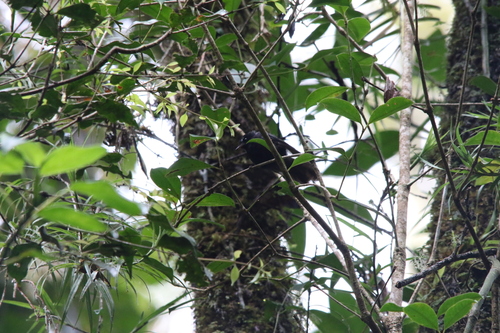
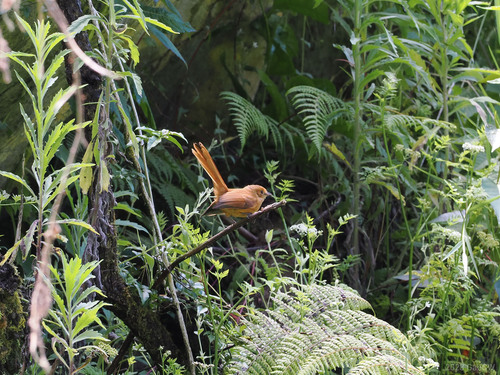
The black fantail is a species of bird in the family Rhipiduridae. It is endemic to the highlands of New Guinea and the nearby island of Waigeo. The species was named by Italian naturalist Tommaso Salvadori in 1876, who gave it the specific name atra for the Latin word for dull black. Two subspecies have been described, the widespread nominate race R. a. atra, and R. a. vulpes of the Cyclops Mountains. R. a. vulpes was described in 1931 by Ernst Mayr, who named it from the rufous colour of foxes.
Text adapted from Wikipedia, licensed CC BY-SA 4.0.
Easily confused with
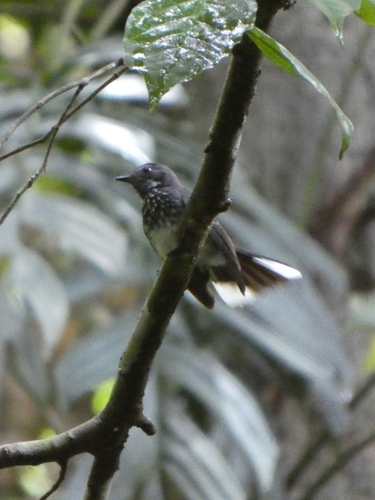 Spotted FantailRhipidura perlataThe spotted fantail is a species of bird in the family Rhipiduridae.
 Blue-headed FantailRhipidura cyanicepsThe blue-headed fantail is a fantail endemic to the northern Philippines where it is found on the islands of Luzon and Catanduanes.
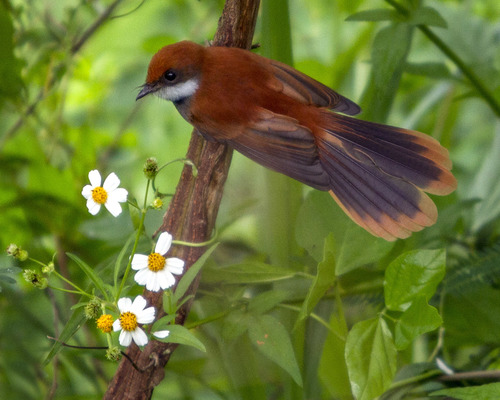 Palau FantailRhipidura lepidaThe Palau fantail is a typical fantail, short-bodied and long-tailed, measuring 18 cm (7.1 in).
Learn the Black Fantail in the BeakBrain App
Photo and call practice. Coming soon to iPhone and Android.
Play today's Daily BirdEvery photo and recording on this page is credited to its author under the licence shown. Spotted a problem with this page, or have a better photo? Contribute.