Learn what every symbol on the card means.Full credits and sources at beakbrain.com/symbols
 ShrublandDomed nestTiny · 10 g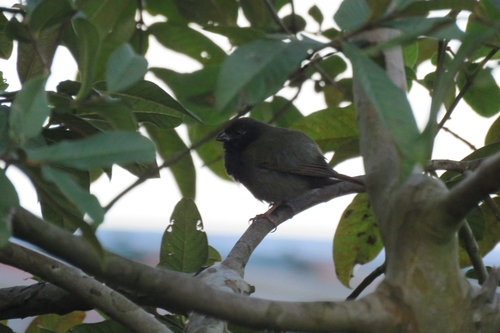


What the Black-faced Grassquit sounds like

ID tip
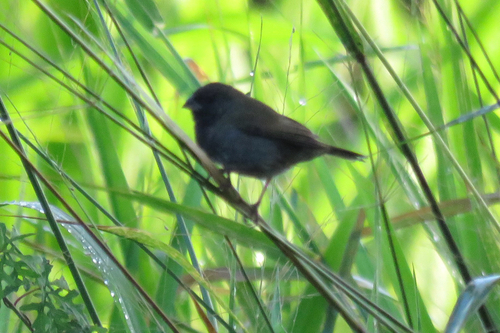
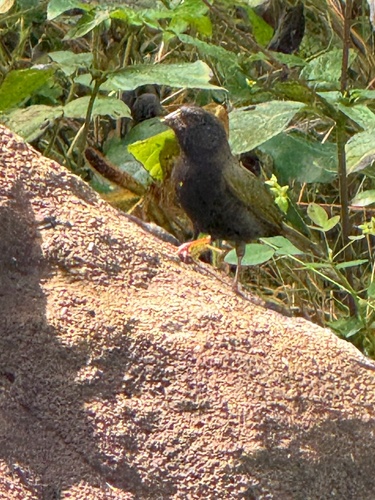
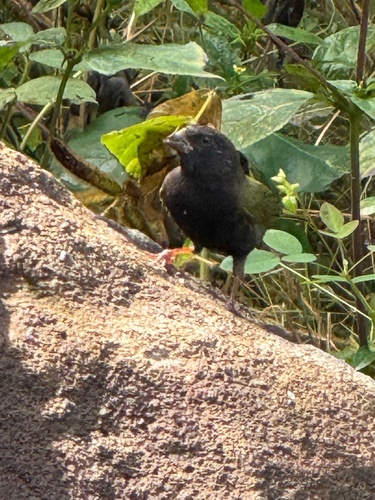
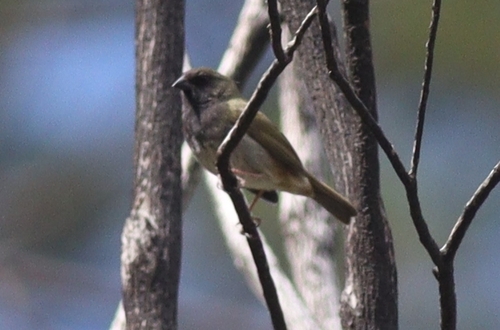
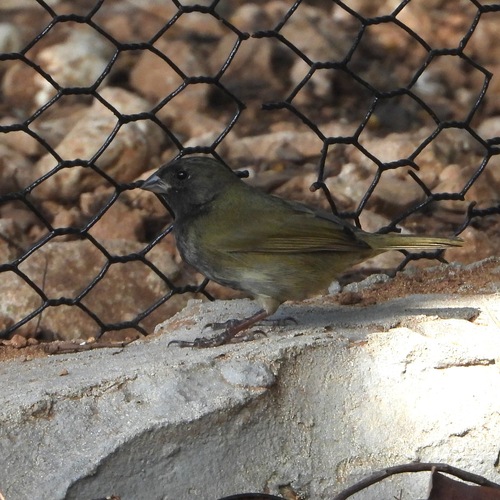
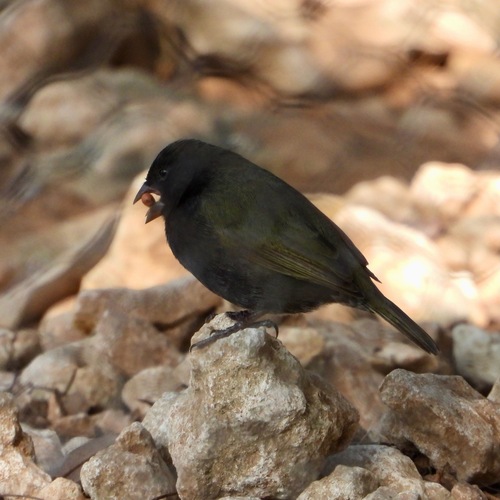
A male black-faced grassquit is around 10 cm (3.9 in) long and weighs approximately 10 g (0.35 oz). It has a short conical black bill, a black head and breast, and an olive green back. Females and immature birds have dull olive-grey upperparts and head, and paler grey underparts becoming whiter on the belly. Males on the South American mainland have more extensively black underparts, shading to a grey belly. The male has a display flight in which he flies for short distances, vibrating his wings and giving a buzzing dik-zeezeezee call.
Text from Wikipedia, licensed CC BY-SA 4.0.
When to see the Black-faced Grassquit
One bar for each month, and every month is filled: this bird is recorded here in all twelve. The wide bar is October, the month with the most records.
Where to see the Black-faced Grassquit
The map shades 28 countries with regular records, and 1 more in a lighter tone where the bird turns up only as a stray. Everything unshaded has no records. Countries are listed below the map.
Recorded as a rare visitor in United States.
About the Black-faced Grassquit
The black-faced grassquit is a small bird. It is recognized as a tanager closely related to Darwin's finches. It breeds in the West Indies except Cuba, on Tobago but not Trinidad, and along the northern coasts of Colombia and Venezuela.
Text adapted from Wikipedia, licensed CC BY-SA 4.0.
Easily confused with
Learn the Black-faced Grassquit in the BeakBrain App
Photo and call practice. Coming soon to iPhone and Android.
Play today's Daily BirdEvery photo and recording on this page is credited to its author under the licence shown. Spotted a problem with this page, or have a better photo? Contribute.