Learn what every symbol on the card means.Full credits and sources at beakbrain.com/symbols
 ForestCup nestMedium · 118 g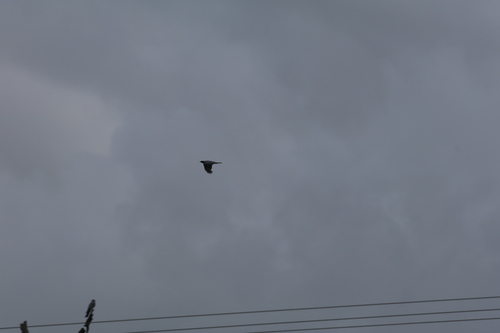
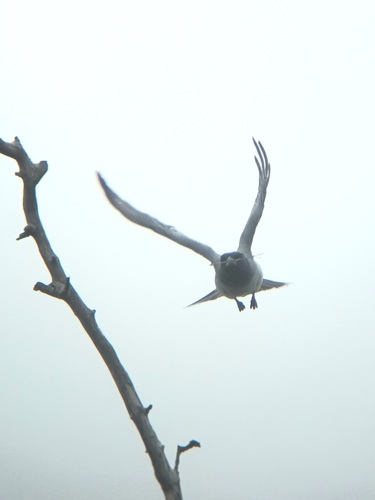
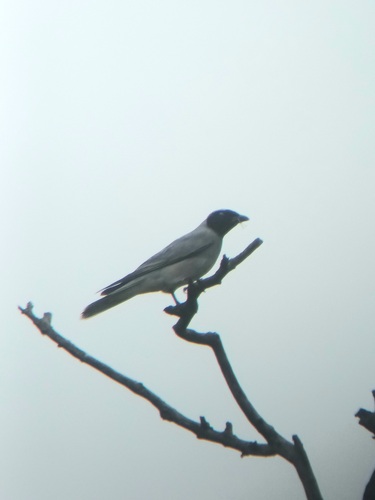
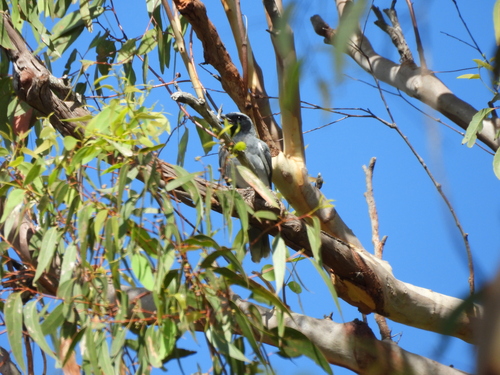
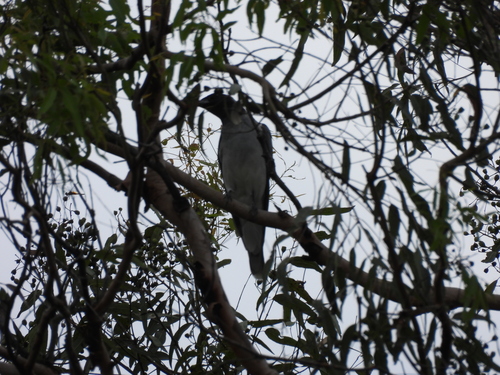


ID tip
Adult birds have a prominent black face and throat, grey plumage, white underparts and a somewhat hooked bill. The size varies between 32 cm and 34 cm. They are slow-moving, inconspicuous birds, with a shrill, screaming call, sounding like creearck.
Text from Wikipedia, licensed CC BY-SA 4.0.
When to see the Black-faced Cuckooshrike
One bar for each month, and every month is filled: this bird is recorded here in all twelve. The wide bar is October, the month with the most records.
Where to see the Black-faced Cuckooshrike
The map shades 5 countries with regular records, and 1 more in a lighter tone where the bird turns up only as a stray. Everything unshaded has no records. Countries are listed below the map.
Recorded as a rare visitor in New Zealand.
About the Black-faced Cuckooshrike
The black-faced cuckooshrike is a common omnivorous passerine bird native to Australia and southern New Guinea. It has a protected status in New South Wales, under the National Parks and Wildlife Act, 1974.
Text adapted from Wikipedia, licensed CC BY-SA 4.0.
Easily confused with
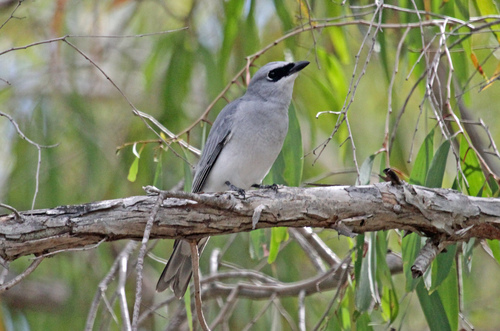 White-bellied CuckooshrikeCoracina papuensisThis species exhibits a short black mask extending from the beak to the eyes (lores) but not beyond with a fine white rear eye-ring.
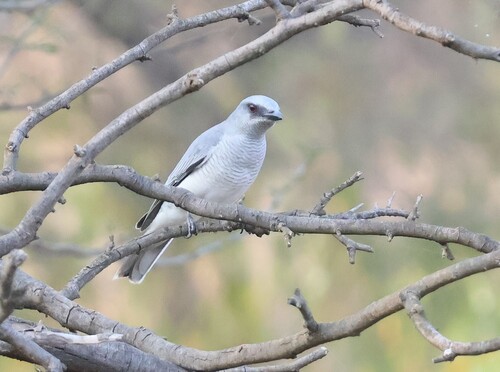 Indian CuckooshrikeCoracina maceiAdult males have a broad and well-marked eye stripe which is pale in females.
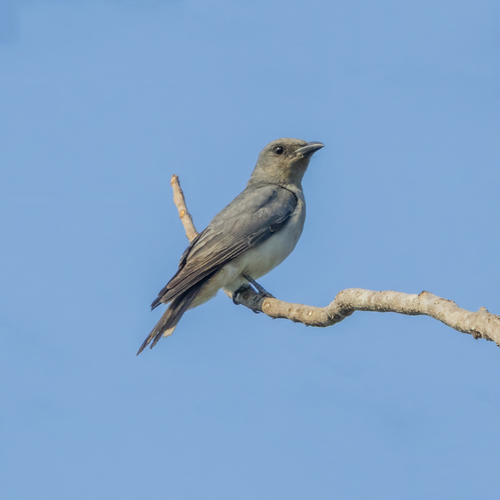 Oriental CuckooshrikeCoracina javensisThe Oriental cuckooshrike is a species of bird in the family Campephagidae.
Side by side: Black-faced Cuckooshrike vs White-bellied Cuckooshrike · Black-faced Cuckooshrike vs Indian Cuckooshrike
Learn the Black-faced Cuckooshrike in the BeakBrain App
Photo and call practice. Coming soon to iPhone and Android.
Play today's Daily BirdEvery photo and recording on this page is credited to its author under the licence shown. Spotted a problem with this page, or have a better photo? Contribute.