Learn what every symbol on the card means.Full credits and sources at beakbrain.com/symbols
 WoodlandCup nestSmall · 35 g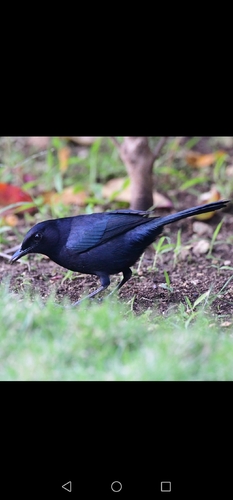


ID tip
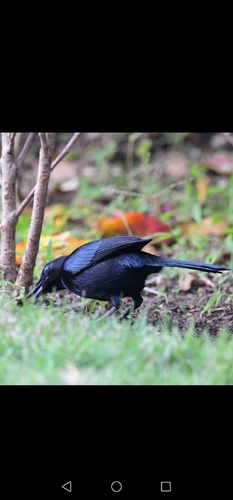
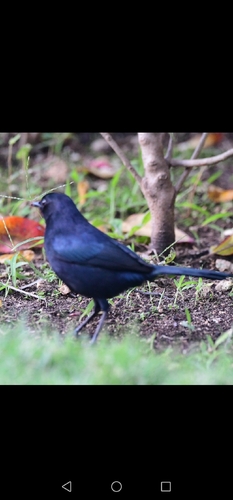
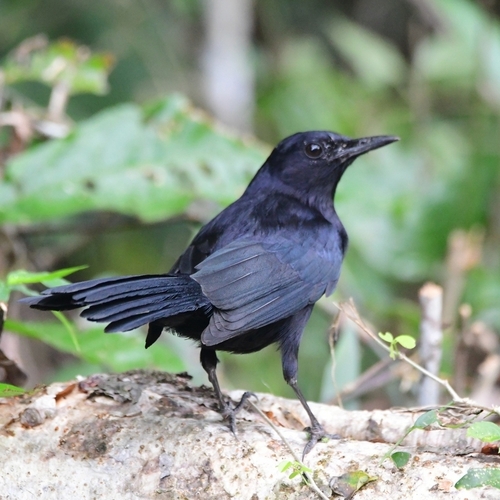
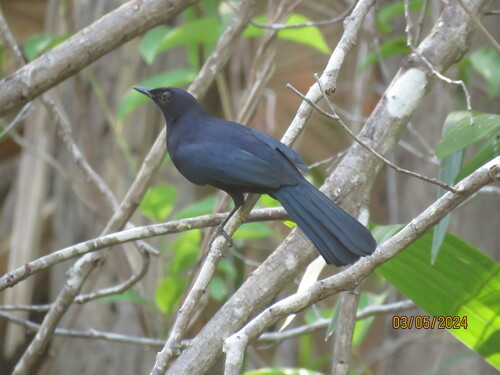
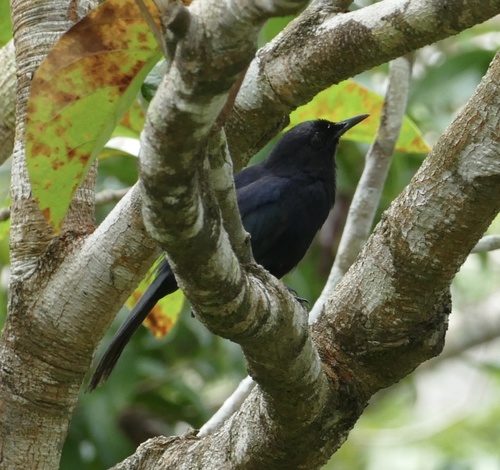
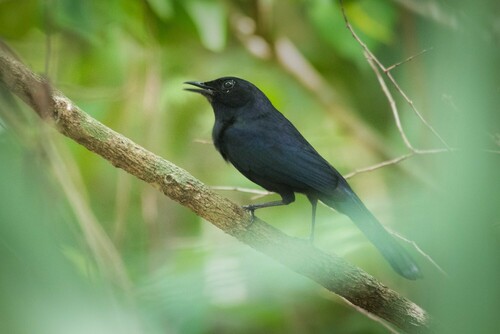
At 19–20.5 cm (7.5–8.1 in) in length and 31.6–42 g (1.11–1.48 oz) in mass, the black catbird is the smallest of the mimids. It has short, rounded wings and a relatively long tail. The sexes are similar in appearance, though the male tends to be heavier. The plumage is glossy black with a purplish sheen overall, though the rectrices and primary and secondary coverts have a greenish sheen and the remiges are a duller blackish-brown color showing reduced sheen. The female is less glossy than the male, and juveniles are brownish-gray with mottling below. The legs are black. Voice: Unlike many of its fellow mimids, the black catbird is not known to imitate any other species. Its song consists of repeated phrases of notes ranging from harsh and scratchy to warbled and flute-like, often interspersed with metallic clicking buzzes. It often sings from exposed perches.
Text from Wikipedia, licensed CC BY-SA 4.0.
When to see the Black Catbird
One bar for each month, and every month is filled: this bird is recorded here in all twelve. The wide bar is March, the month with the most records.
Where to see the Black Catbird
The map shades 4 countries with regular records. Everything unshaded has no records. Countries are listed below the map.
About the Black Catbird
The black catbird is a songbird species in the monotypic genus Melanoptila, part of the family Mimidae. At 19–20.5 cm (7.5–8.1 in) in length and 31.6–42 g (1.11–1.48 oz) in mass, it is the smallest of the mimids. Sexes appear similar, with glossy black plumage, black legs and bill, and dark brownish eyes. The species is endemic to the Yucatán Peninsula, and is found as far south as Campeche, northern Guatemala and northern Belize. Although there are historical records from Honduras and the US state of Texas, the species is not now known to occur in either location.
Text adapted from Wikipedia, licensed CC BY-SA 4.0.
Easily confused with
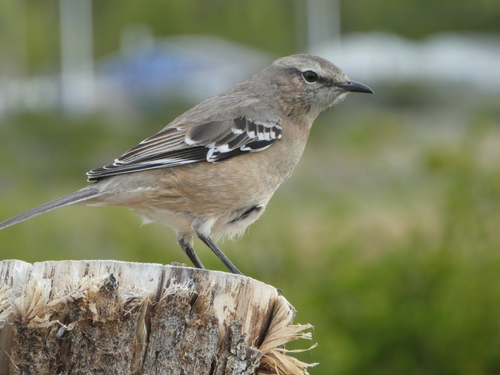 Patagonian MockingbirdMimus patagonicusThe Patagonian mockingbird is 22 to 25 cm (8.7 to 9.8 in) long.
 Blue-and-white MockingbirdMelanotis hypoleucusThe blue-and-white mockingbird is 24.2 to 28 cm (9.5 to 11.0 in) long; 20 specimens had a mean mass of 68 g (2.4 oz).
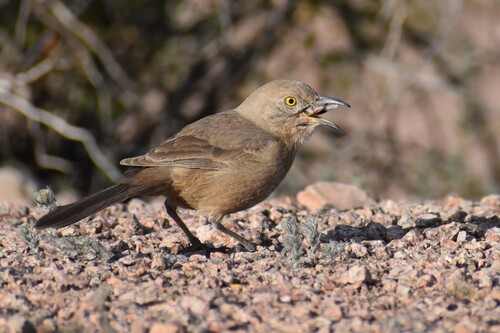 Bendire's ThrasherToxostoma bendireiBecause of its similar coloration and structure to the curve-billed thrasher, the two birds are very easy to mistake for one another.
Side by side: Black Catbird vs Patagonian Mockingbird · Black Catbird vs Blue-and-white Mockingbird · Bendire's Thrasher vs Black Catbird
Learn the Black Catbird in the BeakBrain App
Photo and call practice. Coming soon to iPhone and Android.
Play today's Daily BirdEvery photo and recording on this page is credited to its author under the licence shown. Spotted a problem with this page, or have a better photo? Contribute.