Learn what every symbol on the card means.Full credits and sources at beakbrain.com/symbols
 ForestTiny · 9 g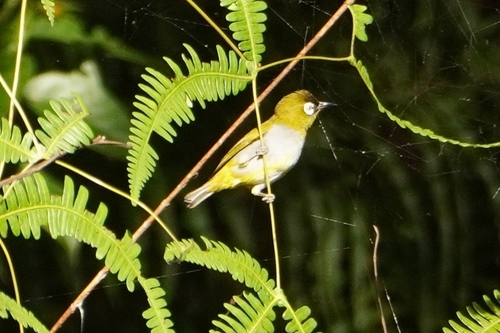
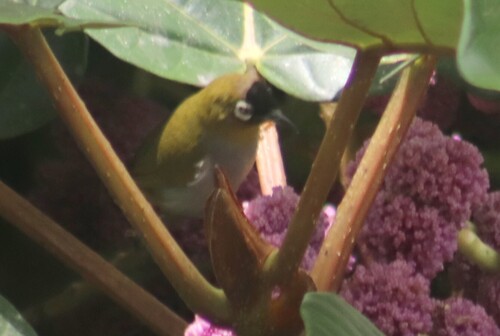
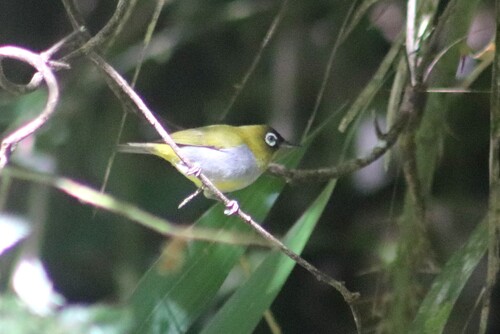

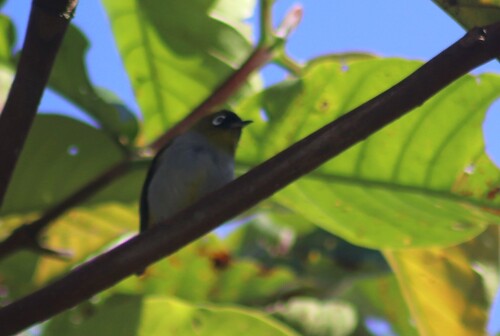
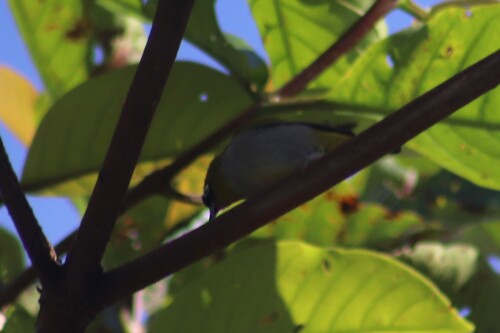
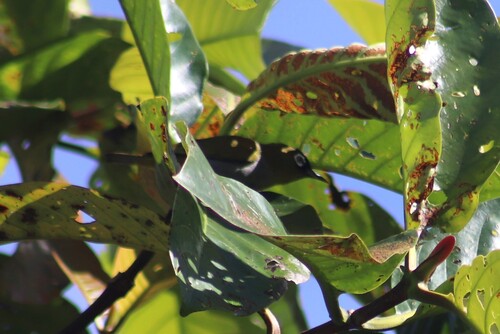
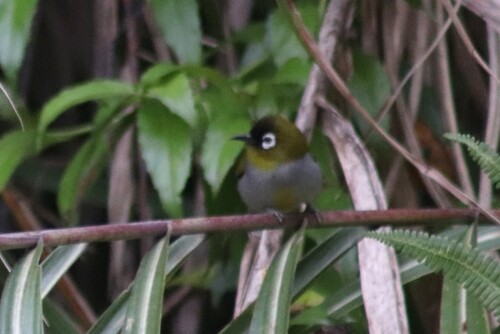
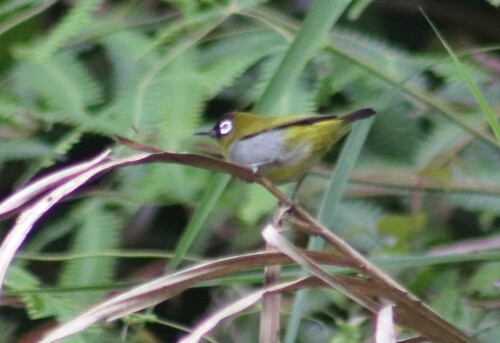
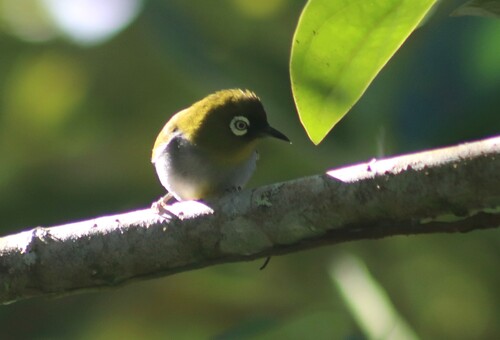
ID tip
It can reach a length between nine and eleven centimetres and looks slightly similar to the Sangkar white-eye. The back is olive green and the iris is brown. The bill and the feet are coloured black. The voice is characterized by soft twitters.
Text from Wikipedia, licensed CC BY-SA 4.0.
When to see the Black-capped White-eye
One bar for each month. Filled bars are the 9 months with records; pale bars are months with none. The wide bar is March, the month with the most records.
Where to see the Black-capped White-eye
The map shades 1 country with regular records. Everything unshaded has no records. Countries are listed below the map.
About the Black-capped White-eye
The black-capped white-eye is a small passerine from the family Zosteropidae.
Text adapted from Wikipedia, licensed CC BY-SA 4.0.
Easily confused with
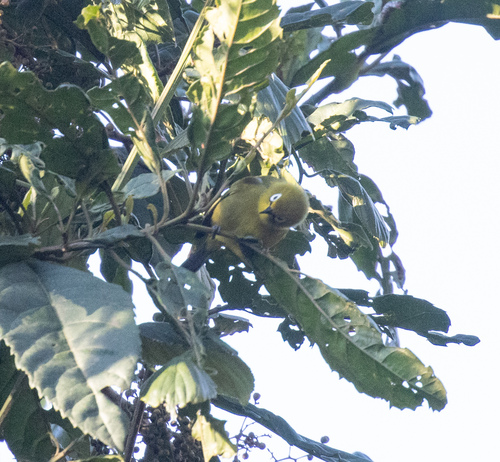 Pale White-eyeZosterops flavilateralisThe pale white-eye also known as Kenya white-eye is a bird species in the family Zosteropidae.
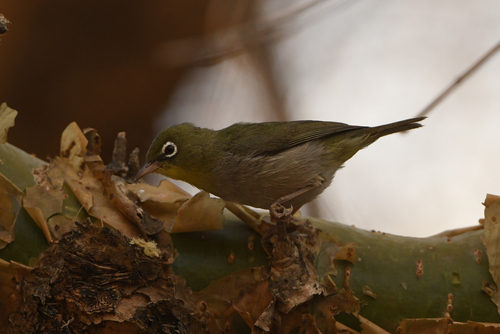 Abyssinian White-eyeZosterops abyssinicusThe Abyssinian white-eye or white-breasted white-eye is a small passerine bird belonging to the genus Zosterops in the white-eye family Zosteropidae.
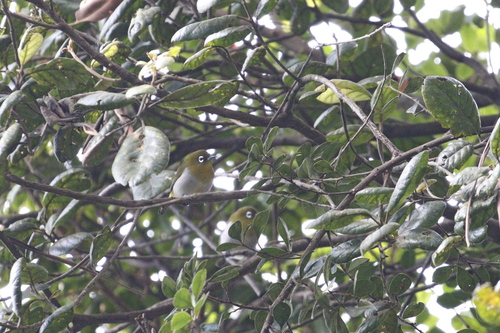 Sri Lanka White-eyeZosterops ceylonensisThis bird is slightly larger than the Indian white-eye (about 11 cm long) which it replaces above 4000 ft.
Side by side: Black-capped White-eye vs Sri Lanka White-eye
Learn the Black-capped White-eye in the BeakBrain App
Photo and call practice. Coming soon to iPhone and Android.
Play today's Daily BirdEvery photo and recording on this page is credited to its author under the licence shown. Spotted a problem with this page, or have a better photo? Contribute.