Learn what every symbol on the card means.Full credits and sources at beakbrain.com/symbols
 GrasslandDomed nestSmall · 21 g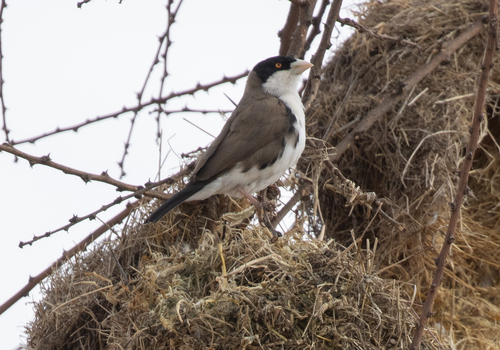
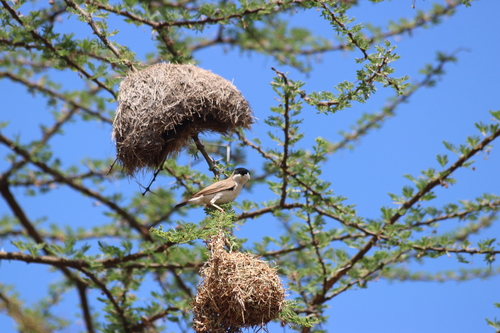

What the Black-capped Social Weaver sounds like


ID tip
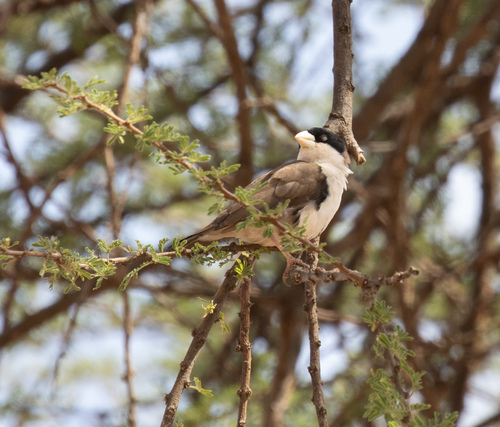
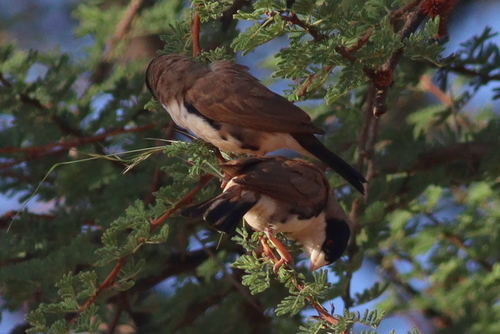
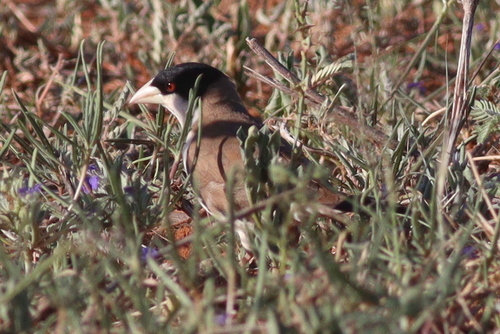
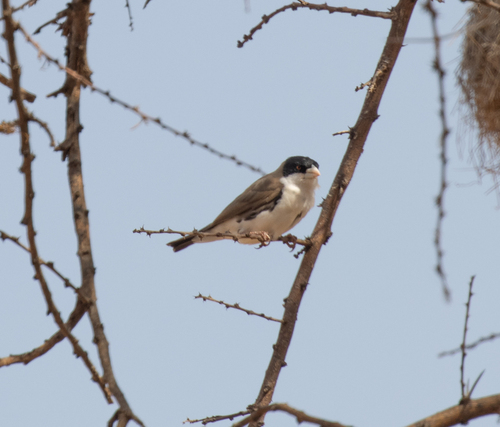
The black-capped weaver is 13 cm (5.1 in) long and weighs 18–24 g (0.63–0.85 oz). Adult birds have an extensive and well-delimited black cap that runs from the bill opening, across the crown to the back neck, and also covers the area around the eye and ear. The neck, mantle, wings and rump are evenly brown. The tail is blackish brown. The throat, sides of the neck, breast, belly and vent are white. A clearly visible narrow longitudinal black stripe runs along the middle of belly to the stomach.
Text from Wikipedia, licensed CC BY-SA 4.0.
When to see the Black-capped Social Weaver
One bar for each month, and every month is filled: this bird is recorded here in all twelve. The wide bar is November, the month with the most records.
Where to see the Black-capped Social Weaver
The map shades 3 countries with regular records. Everything unshaded has no records. Countries are listed below the map.
About the Black-capped Social Weaver
The black-capped social weaver is a sparrow-like species of bird that has been assigned to the weaverbird family. It was originally described by Fisher and Reichenow, and later re-classified by the latter to the genus Pseudonigrita. Adults have a large black cap, ivory-colored bill, red eyes, brown back and wings, blackish-brown tail, white throat and underparts with a black midline, and dark horn-colored legs. It breeds in colonies and roofed nests with an entrance at the bottom in thorny trees such as acacias are constructed by the male from grass stems. It is found in parts of Ethiopia, Kenya, Somalia, and Tanzania. It is sometimes kept and bred in captivity.
Text adapted from Wikipedia, licensed CC BY-SA 4.0.
Easily confused with
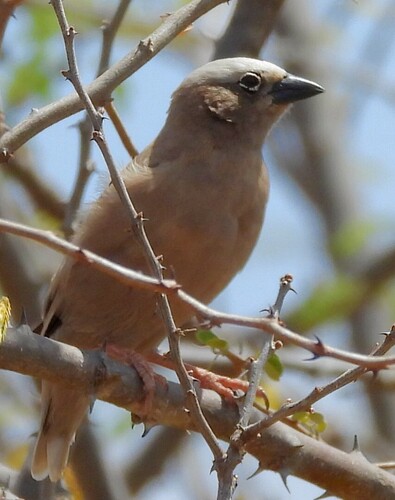 Grey-capped Social WeaverPseudonigrita arnaudiThe grey-capped social weaver is small for a weaver with 11–12 cm (4.3–4.7 in) long, and it weighs 15–26 g (0.53–0.92 oz).
Grey-capped Social WeaverPseudonigrita arnaudiThe grey-capped social weaver is small for a weaver with 11–12 cm (4.3–4.7 in) long, and it weighs 15–26 g (0.53–0.92 oz).
Grey-capped Social WeaverPseudonigrita arnaudiThe grey-capped social weaver is small for a weaver with 11–12 cm (4.3–4.7 in) long, and it weighs 15–26 g (0.53–0.92 oz).
Learn the Black-capped Social Weaver in the BeakBrain App
Photo and call practice. Coming soon to iPhone and Android.
Play today's Daily BirdEvery photo and recording on this page is credited to its author under the licence shown. Spotted a problem with this page, or have a better photo? Contribute.