Learn what every symbol on the card means.Full credits and sources at beakbrain.com/symbols
 ForestDomed nestSmall · 15 g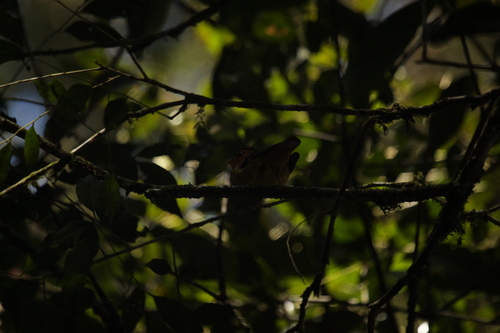

ID tip
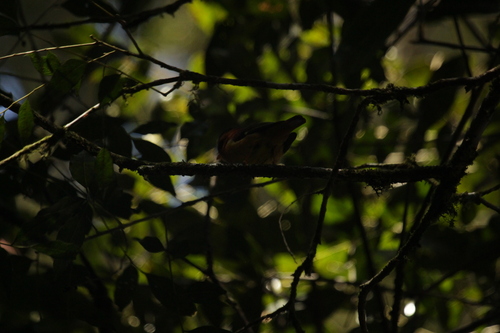
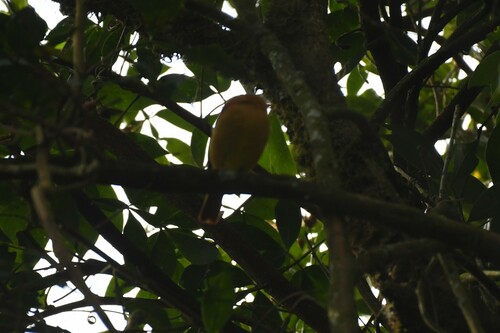
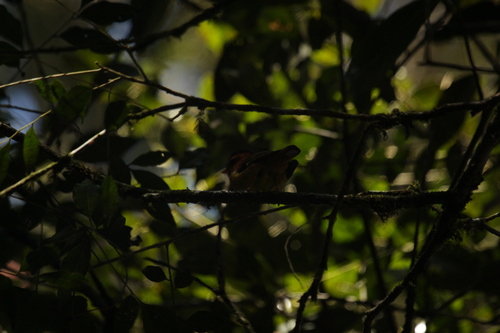
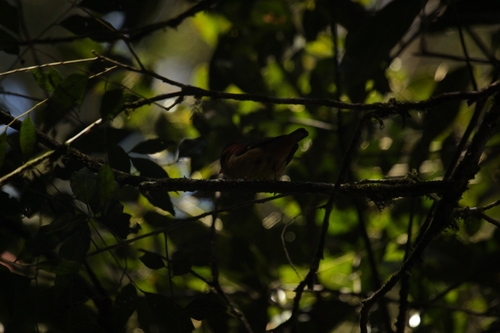
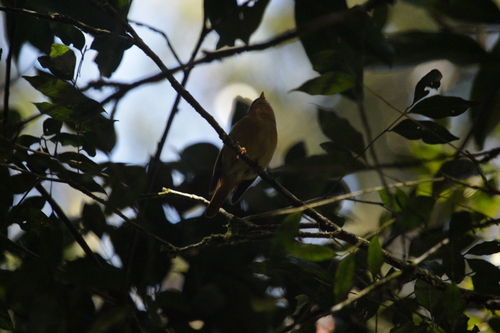
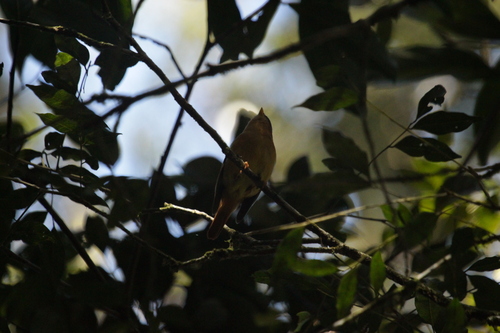
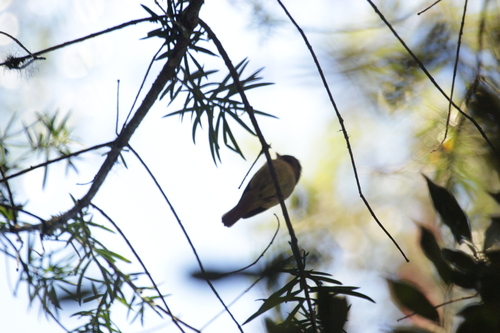
The adult black-capped piprites is a tyranid with a black cap and yellow beak. Its length has been measured to range from 12–12.5 centimetres (4.7–4.9 in). It has contrasting chestnut-colored upperparts, yellow legs, blackish and yellow-green remiges. In males, primary feathers are notably whitish. Females resemble males, though they are drab olive colored above rather than chestnut. The juvenile has not been described. Voice: The species' calls include a single "whééu" sound, followed by a variable series of brief, softer vocalizations.
Text from Wikipedia, licensed CC BY-SA 4.0.
When to see the Black-capped Piprites
One bar for each month, and every month is filled: this bird is recorded here in all twelve. The wide bar is October, the month with the most records.
Where to see the Black-capped Piprites
The map shades 1 country with regular records, and 1 more in a lighter tone where the bird turns up only as a stray. Everything unshaded has no records. Countries are listed below the map.
Recorded as a rare visitor in Argentina.
About the Black-capped Piprites
The black-capped piprites, also known as the black-capped manakin, bailarín castaño, or piprites capirotado, is a species of suboscine passerine. It has been placed in the genus Piprites, part of the Tyrannidae family. Previously, the species was included in the family Pipridae, but was reclassified following genetic studies.
Text adapted from Wikipedia, licensed CC BY-SA 4.0.
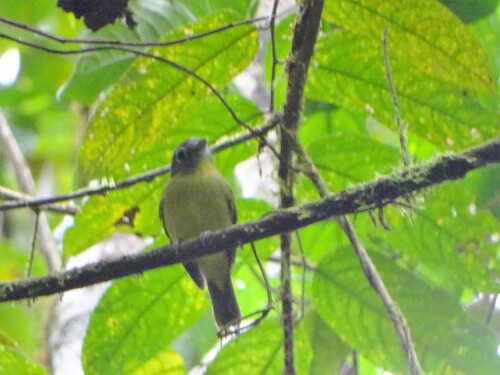
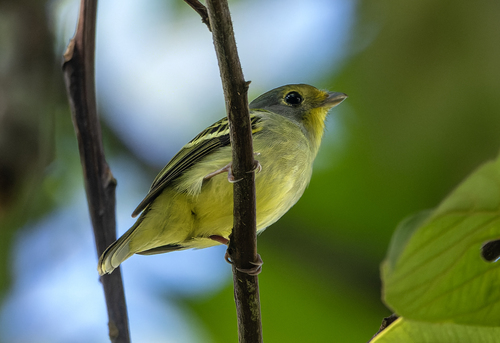
Easily confused with
Learn the Black-capped Piprites in the BeakBrain App
Photo and call practice. Coming soon to iPhone and Android.
Play today's Daily BirdEvery photo and recording on this page is credited to its author under the licence shown. Spotted a problem with this page, or have a better photo? Contribute.