Learn what every symbol on the card means.Full credits and sources at beakbrain.com/symbols
 MarineCavity nestMedium · 278 g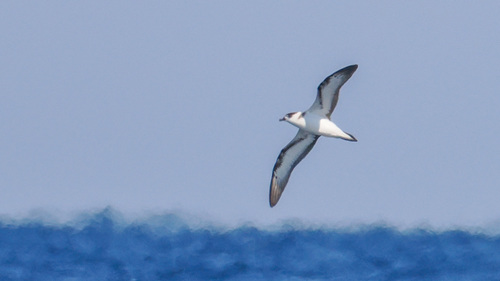
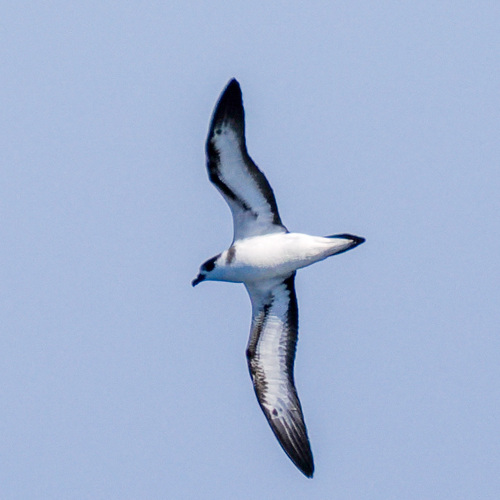
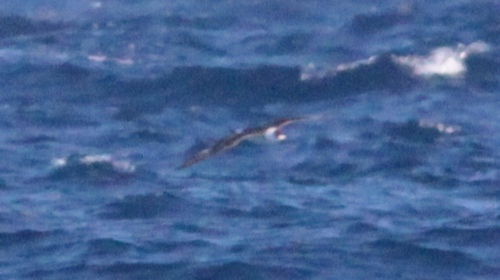
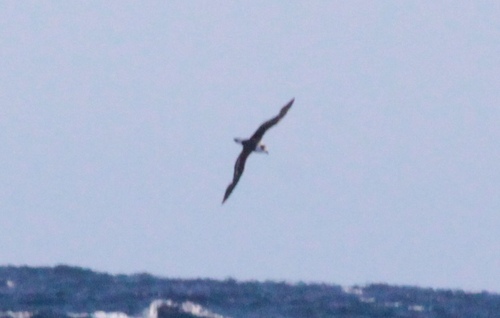
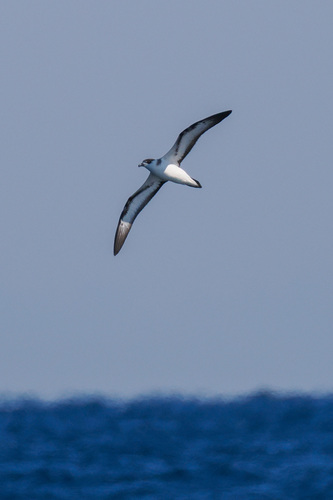
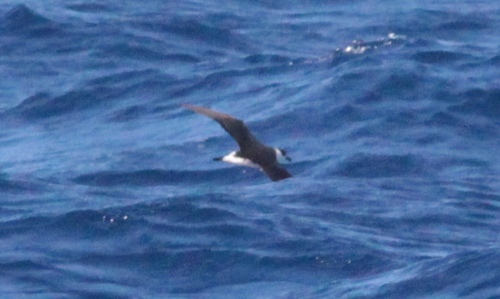
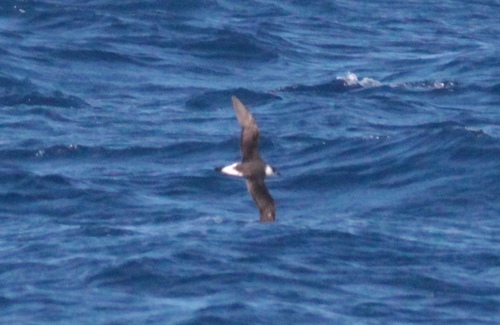
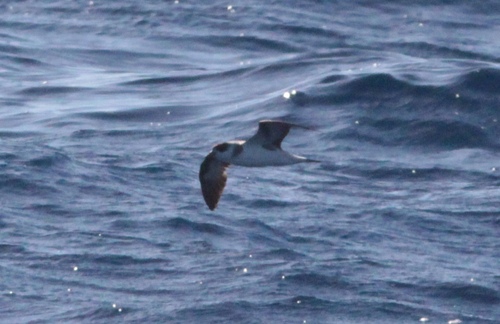
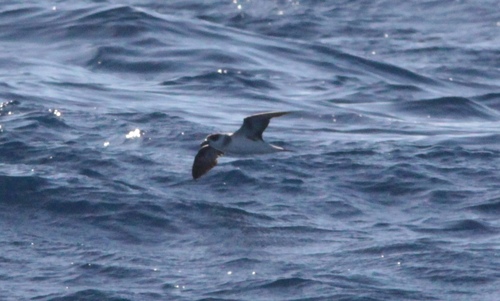
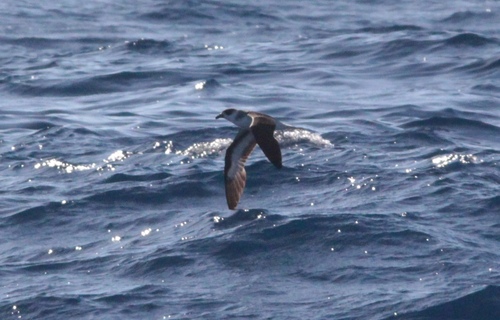
ID tip
The black-capped petrel is large compared to other gadfly petrels, with a length of about 16 inches (40.5 cm) and 37 inches (94 cm) wingspan. The most similar species within its range is the Bermuda petrel, which is smaller and has a narrower white rump patch and an extensive gray cowl. The great shearwater is also superficially similar. The critically endangered or possibly extinct Jamaica petrel (P. caribbaea) was a related dark form.
Text from Wikipedia, licensed CC BY-SA 4.0.
When to see the Black-capped Petrel
One bar for each month. Filled bars are the 6 months with records; pale bars are months with none. The wide bar is May, the month with the most records.
Where to see the Black-capped Petrel
The map shades 11 countries with regular records, and 6 more in a lighter tone where the bird turns up only as a stray. Everything unshaded has no records. Countries are listed below the map.
Recorded as a rare visitor in Canada, Spain, Puerto Rico, Portugal, St. Vincent & Grenadines, Aruba.
About the Black-capped Petrel
The black-capped petrel, also known as the diablotín, is a small seabird native to the West Indies in the genus Pterodroma. It is a long-winged petrel with a grey-brown back and wings, with a white nape and rump. Underparts are mainly white apart from a black cap and some dark underwing markings. It picks food items such as squid from the ocean surface.
Text adapted from Wikipedia, licensed CC BY-SA 4.0.
Easily confused with
 Great-winged PetrelPterodroma macropteraThis is a large seabird, with a body length of 42–45 cm.
 Cook's PetrelPterodroma cookiiCook's petrel or tītī (Māori), blue-footed petrel, is a Procellariiform seabird endemic to New Zealand.
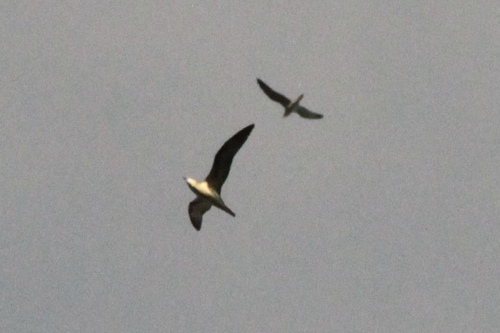 Barau's PetrelPterodroma barauiBarau's petrel is around 40 cm long, and has white undersides and forehead.
Side by side: Black-capped Petrel vs Great-winged Petrel · Barau's Petrel vs Black-capped Petrel
Learn the Black-capped Petrel in the BeakBrain App
Photo and call practice. Coming soon to iPhone and Android.
Play today's Daily BirdEvery photo and recording on this page is credited to its author under the licence shown. Spotted a problem with this page, or have a better photo? Contribute.