Learn what every symbol on the card means.Full credits and sources at beakbrain.com/symbols
 ForestCup nestSmall · 18 g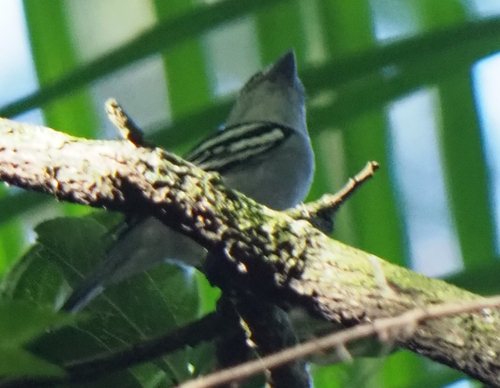

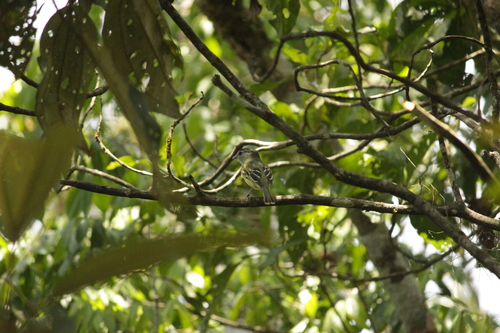
What the Black-capped Becard sounds like

ID tip
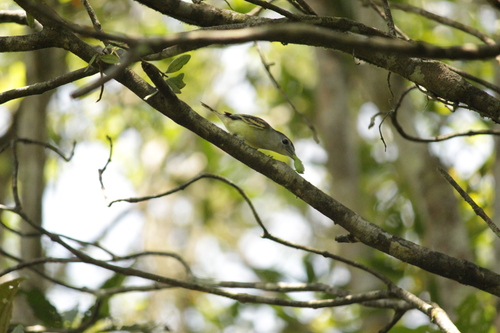
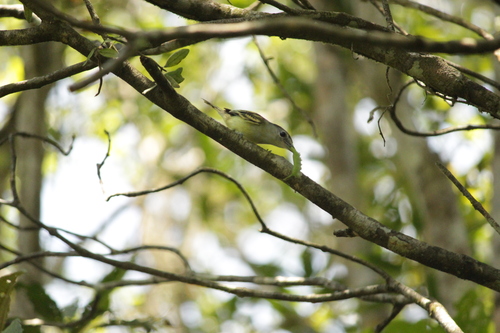
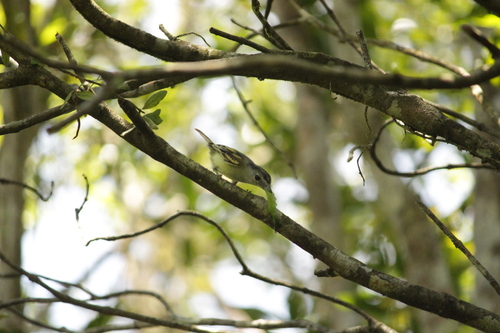
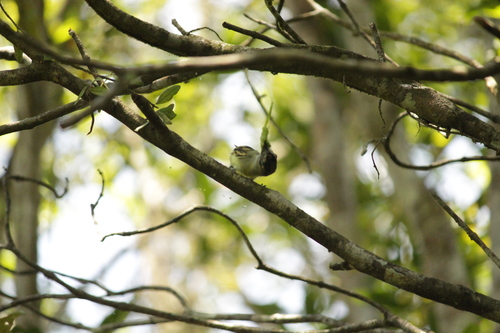
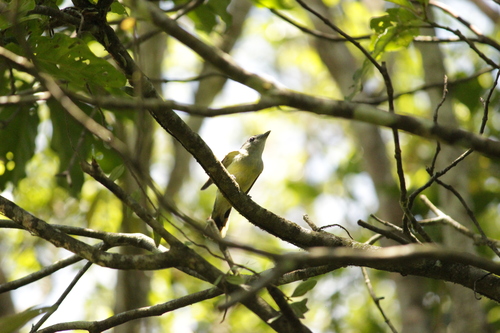
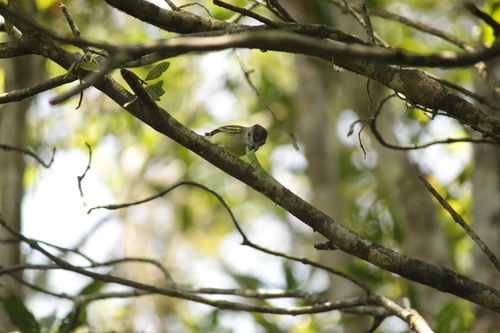
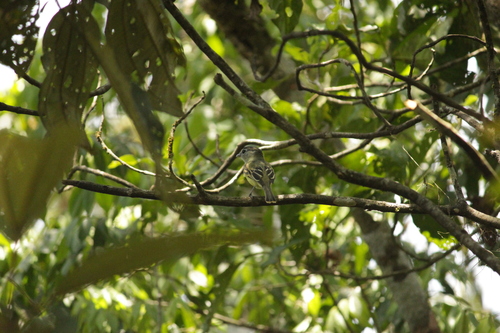
The black-capped becard is 13 to 14 cm (5.1 to 5.5 in) long and weighs about 18 g (0.63 oz). Adult males of the nominate subspecies have a glossy black crown that has a blue sheen and a scaly appearance. They have a pale spot above the lores and a thin whitish eye-ring on an otherwise light gray face. The gray of their face wraps around their nape as a collar. Their back is variable from gray to black and their rump is gray. Their wings are mostly black with white scapulars and widish white edges on the coverts and flight feathers; the white shows as two wing bars. Voice: The black-capped becard's dawn song is "a soft, delicate...tew, tew’tweet that rises sharply". Its principle day song is a variable "short melancholy series of clear musical notes" written as "teeu, whee-do-weét, twee-twee-tee-eet, dear-dear or tewtewtewteé, dew-dew". It also makes "a quickly repeated fleur-de-lis phrase" and even-pitched trills "teeu, tee-tee-tee-te-ti or tre-tre’tre-e-e-e-e-it".
Text from Wikipedia, licensed CC BY-SA 4.0.
When to see the Black-capped Becard
One bar for each month, and every month is filled: this bird is recorded here in all twelve. The wide bar is October, the month with the most records.
Where to see the Black-capped Becard
The map shades 9 countries with regular records. Everything unshaded has no records. Countries are listed below the map.
About the Black-capped Becard
The black-capped becard is a species of bird in the family Tityridae, the tityras, becards, and allies. It is found in Bolivia, Brazil, Colombia, Ecuador, French Guiana, Guyana, Peru, Suriname, and Venezuela.
Text adapted from Wikipedia, licensed CC BY-SA 4.0.
Easily confused with
 Grey-collared BecardPachyramphus majorThe grey-collared becard is 14 to 16.3 cm (5.5 to 6.4 in) long and weighs about 21 to 28 g (0.74 to 0.99 oz).
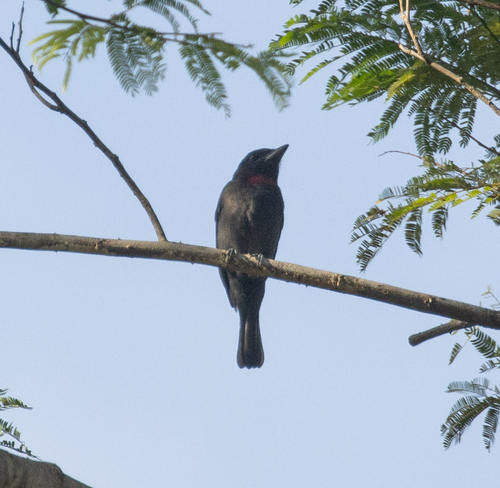 Pink-throated BecardPachyramphus minorThe pink-throated becard is 16.5 to 17.5 cm (6.5 to 6.9 in) long and weighs 31 to 44 g (1.1 to 1.6 oz).
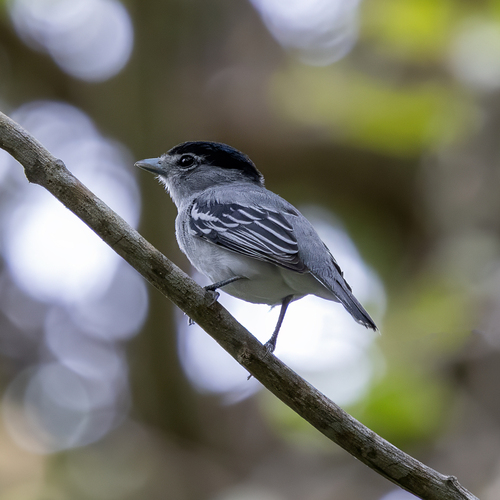 Cryptic BecardPachyramphus salviniThe cryptic becard is about 14 cm (5.5 in) long and weighs an average of about 17 g (0.60 oz).
Learn the Black-capped Becard in the BeakBrain App
Photo and call practice. Coming soon to iPhone and Android.
Play today's Daily BirdEvery photo and recording on this page is credited to its author under the licence shown. Spotted a problem with this page, or have a better photo? Contribute.