Learn what every symbol on the card means.Full credits and sources at beakbrain.com/symbols
 ForestDomed nestTiny · 9 g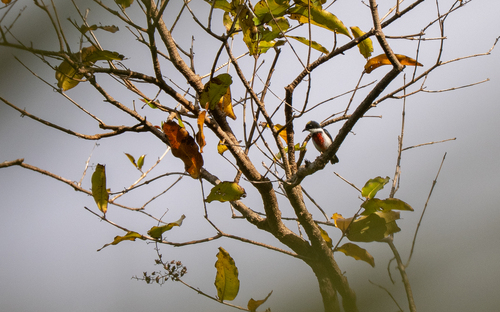

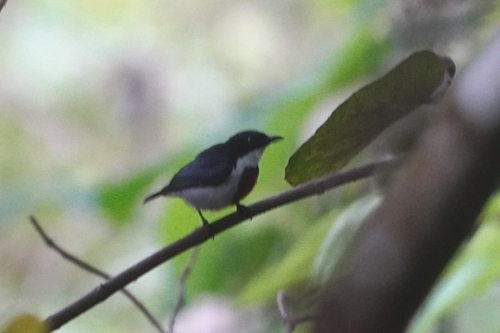
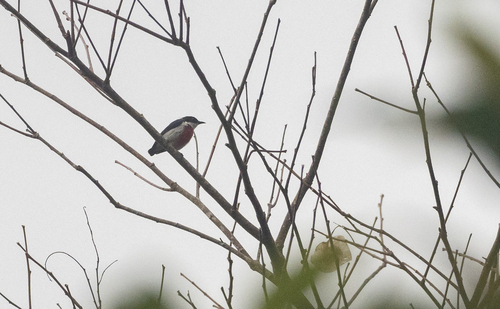
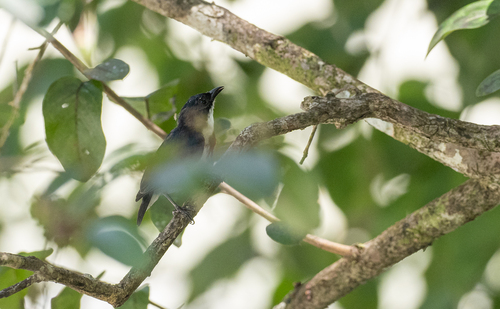
When to see the Black-belted Flowerpecker
One bar for each month, and every month is filled: this bird is recorded here in all twelve. The wide bar is March, the month with the most records.
Where to see the Black-belted Flowerpecker
The map shades 1 country with regular records. Everything unshaded has no records. Countries are listed below the map.
About the Black-belted Flowerpecker
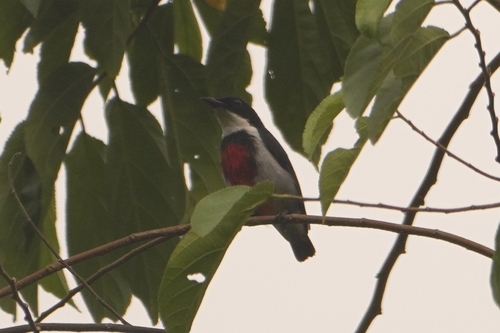
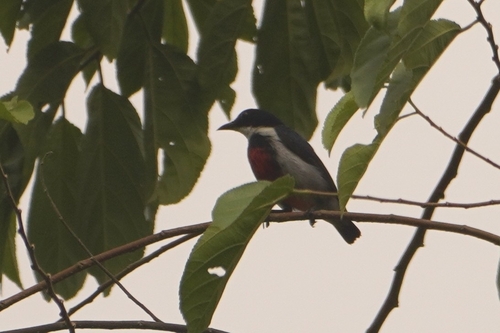
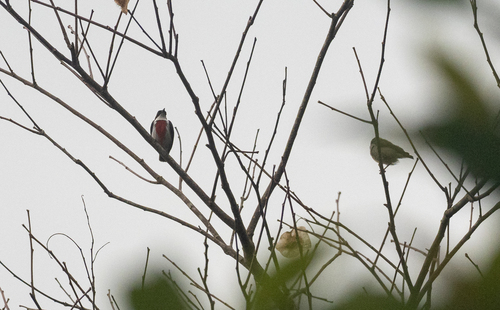
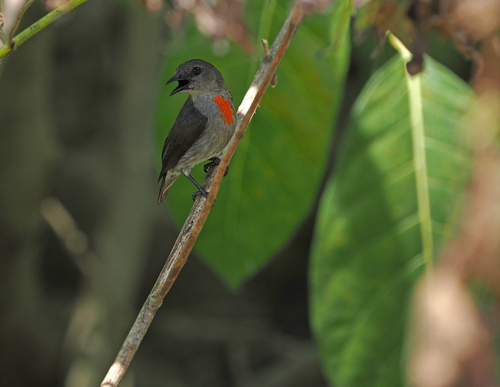
The black-belted flowerpecker, or Visayan flowerpecker, is a species of bird in the family Dicaeidae. It is endemic to the Philippines where it is restricted to Panay, Negros and Guimaras islands. It was formerly regarded as a subspecies of the more widespread red-keeled flowerpecker. Sometimes the name red-keeled flowerpecker is used for D. haematostictum and D. australe is then known as the red-sided flowerpecker.
Text adapted from Wikipedia, licensed CC BY-SA 4.0.
Easily confused with
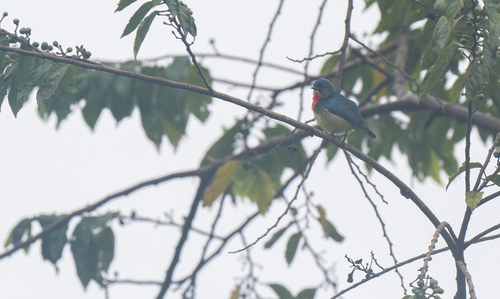 Fire-throated FlowerpeckerDicaeum luzonienseThe fire-throated flowerpecker is a species of bird in the flowerpecker family Dicaeidae that is found in the Philippines except on the islands of Mindoro, the Palawan group and the Sulu Archipelago.
 Ashy FlowerpeckerDicaeum vulneratumAshy flowerpeckers range between 8 and 8.5 cm in length.
Golden-rumped FlowerpeckerDicaeum annaeThe golden-rumped flowerpecker is a species of bird in the family Dicaeidae.
Ashy FlowerpeckerDicaeum vulneratumAshy flowerpeckers range between 8 and 8.5 cm in length.
Golden-rumped FlowerpeckerDicaeum annaeThe golden-rumped flowerpecker is a species of bird in the family Dicaeidae.
Learn the Black-belted Flowerpecker in the BeakBrain App
Photo and call practice. Coming soon to iPhone and Android.
Play today's Daily BirdEvery photo and recording on this page is credited to its author under the licence shown. Spotted a problem with this page, or have a better photo? Contribute.