Learn what every symbol on the card means.Full credits and sources at beakbrain.com/symbols
 RiverineScrapeMedium · 166 g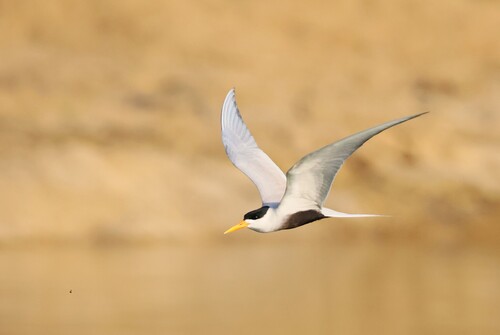
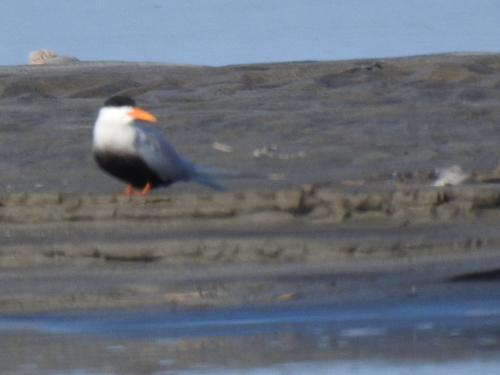


ID tip
The black-bellied tern grows to a length of 32 to 35 cm (13 to 14 in). In the breeding plumage, the crown and nape are black and the upper parts are pale grey. The throat is white and the breast pale grey, gradually darkening to a black belly. The wings are long, slender and pointed and the tail is deeply forked with sharply pointed tips. The bill and feet are yellow or orange and the iris is reddish brown. Outside the breeding season, the belly is whitish, the tail is reduced in length and the bill has a dark tip.
Text from Wikipedia, licensed CC BY-SA 4.0.
When to see the Black-bellied Tern
One bar for each month. Filled bars are the 4 months with records; pale bars are months with none. The wide bar is December, the month with the most records.
Where to see the Black-bellied Tern
The map shades 5 countries with regular records. Everything unshaded has no records. Countries are listed below the map.
About the Black-bellied Tern
The black-bellied tern is a tern found near large rivers in the Indian subcontinent, its range extending from Pakistan, Nepal and India to Myanmar. It has become very scarce in the eastern part of its range and the International Union for Conservation of Nature has assessed its conservation status as being endangered.
Text adapted from Wikipedia, licensed CC BY-SA 4.0.
Easily confused with
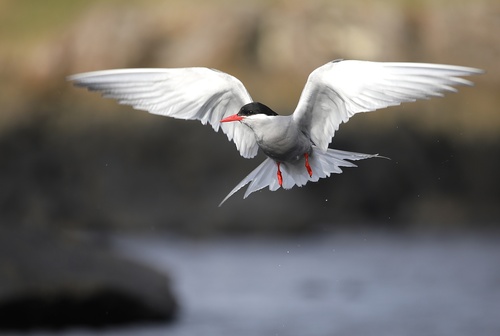 Kerguelen TernSterna virgataThe Kerguelen tern is a tern of the Southern Hemisphere.
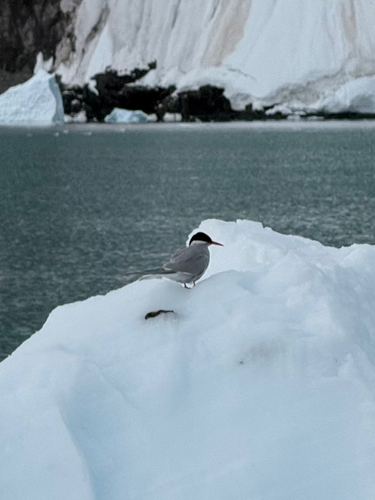 Antarctic TernSterna vittataThe Antarctic tern is a medium-sized tern ranging from 35 to 40 cm (14 to 16 in) in length with a wingspan of 74 to 79 cm (29 to 31 in).
 White-cheeked TernSterna repressaThe white-cheeked tern is a species of tern in the family Laridae.
Learn the Black-bellied Tern in the BeakBrain App
Photo and call practice. Coming soon to iPhone and Android.
Play today's Daily BirdEvery photo and recording on this page is credited to its author under the licence shown. Spotted a problem with this page, or have a better photo? Contribute.