Learn what every symbol on the card means.Full credits and sources at beakbrain.com/symbols
 MarineCavity nestSmall · 52 g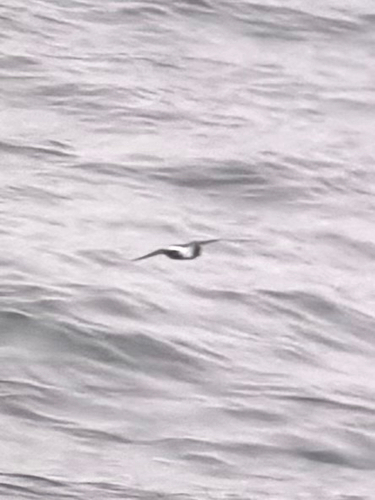


ID tip
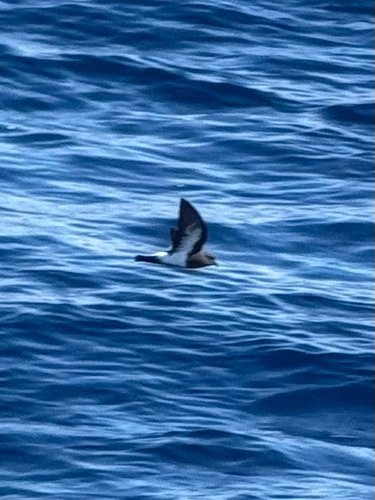
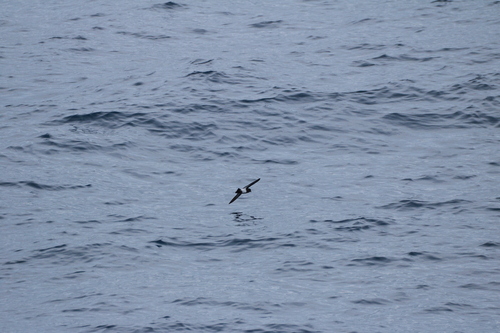
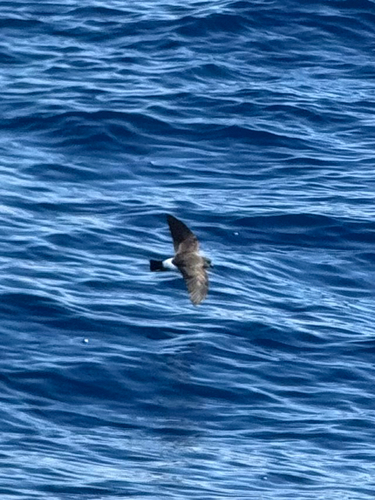
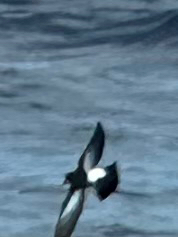
They are usually black with a white band over the rump and white under the wings and on the flanks. A broad black stripe runs down the center of the belly, but may be broken or absent altogether. They have long legs, so the feet can be seen beyond the tail in flight. The legs and feet are black. They are silent mostly at sea. Noises can be heard from the breeding colonies; birds on the ground give a drawn-out shrill whistle.
Text from Wikipedia, licensed CC BY-SA 4.0.
When to see the Black-bellied Storm Petrel
One bar for each month. Filled bars are the 5 months with records; pale bars are months with none. The wide bar is January, the month with the most records.
Where to see the Black-bellied Storm Petrel
The map shades 9 countries with regular records, and 5 more in a lighter tone where the bird turns up only as a stray. Everything unshaded has no records. Countries are listed below the map.
Recorded as a rare visitor in Spain, United States, Réunion, Kenya, Solomon Islands.
About the Black-bellied Storm Petrel
The black-bellied storm petrel is a species of seabird in the family Oceanitidae.
Text adapted from Wikipedia, licensed CC BY-SA 4.0.
Easily confused with
 New Zealand Storm PetrelFregetta maorianaThe New Zealand storm petrel is a small seabird, dark brown/black above, except for its white rump.
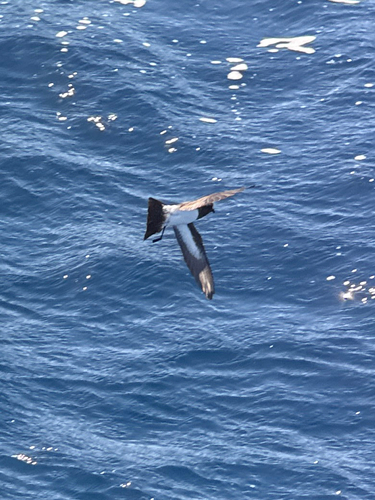 White-bellied Storm PetrelFregetta grallariaThe species is characterised on colour patterns, the condition of the nasal tubes, tail shape, structure of claws, and proportions of the leg bones.
 New Caledonian Storm PetrelFregetta lineataThe New Caledonian storm petrel is a species of bird in the family Oceanitidae.
Side by side: Black-bellied Storm Petrel vs White-faced Storm Petrel · Black-bellied Storm Petrel vs Grey-backed Storm Petrel
Learn the Black-bellied Storm Petrel in the BeakBrain App
Photo and call practice. Coming soon to iPhone and Android.
Play today's Daily BirdEvery photo and recording on this page is credited to its author under the licence shown. Spotted a problem with this page, or have a better photo? Contribute.