Learn what every symbol on the card means.Full credits and sources at beakbrain.com/symbols
 ForestTiny · 9 g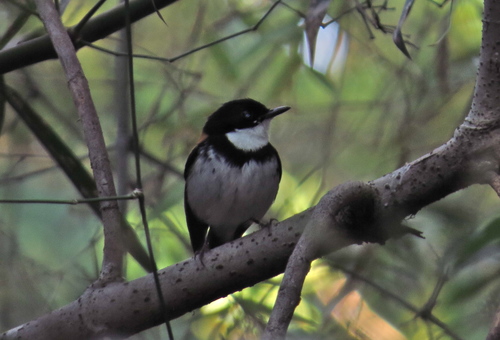

When to see the Black-banded Flycatcher
One bar for each month. Filled bars are the 8 months with records; pale bars are months with none. The wide bar is August, the month with the most records.
Where to see the Black-banded Flycatcher
The map shades 2 countries with regular records. Everything unshaded has no records. Countries are listed below the map.
About the Black-banded Flycatcher
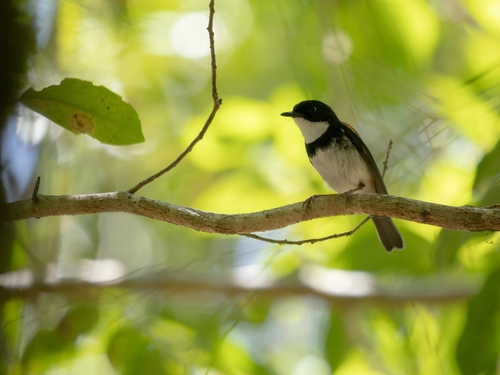
The black-banded flycatcher, also known as the Timor flycatcher, is a species of bird in the family Muscicapidae. In the past the species was considered to be related to the Australasian robins but this was as the result of convergent evolution. It is endemic to Timor island. The black-banded flycatcher is small with a broad bill and distinctive plumage. The species has a white belly, lower rump and throat with a thin black band across the chest. The tail, neck and wings are black and the back, upper wing and shoulders rich chestnut. The plumage of the head is sexually dichromatic, with the head being black in the males and dark grey in the females.
Text adapted from Wikipedia, licensed CC BY-SA 4.0.
Easily confused with
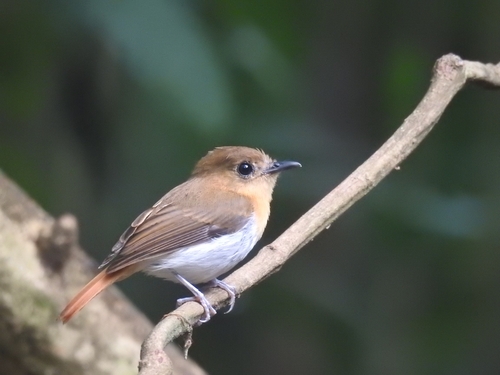 Palawan FlycatcherFicedula platenaeThe Palawan flycatcher is a species of bird in the family Muscicapidae.
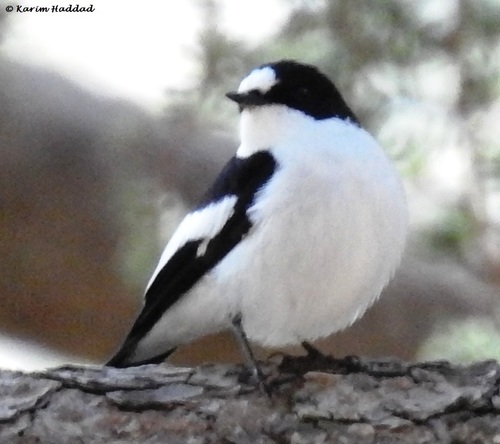 Atlas Pied FlycatcherFicedula speculigeraThe Atlas pied flycatcher or Atlas flycatcher is a bird in an Old World flycatcher family, one of the four species of Western Palearctic black-and-white flycatchers; it is endemic as a breeding species to North-west Africa.
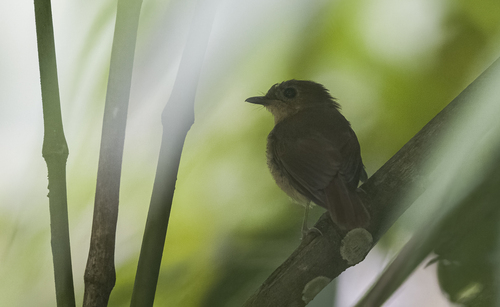 Cryptic FlycatcherFicedula cryptaIts drab colour, low foraging areas and its habit of being perched motionless most likely makes this bird overlooked and unnoticed.
Learn the Black-banded Flycatcher in the BeakBrain App
Photo and call practice. Coming soon to iPhone and Android.
Play today's Daily BirdEvery photo and recording on this page is credited to its author under the licence shown. Spotted a problem with this page, or have a better photo? Contribute.