Learn what every symbol on the card means.Full credits and sources at beakbrain.com/symbols
 ForestTiny · 4 g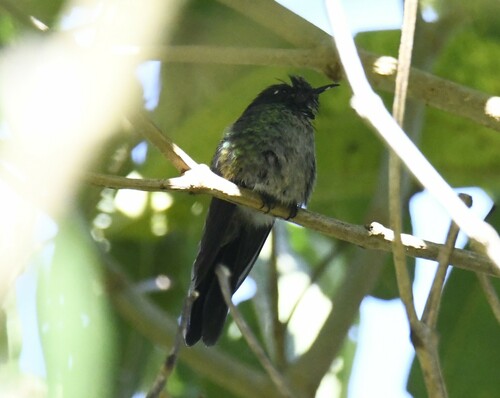
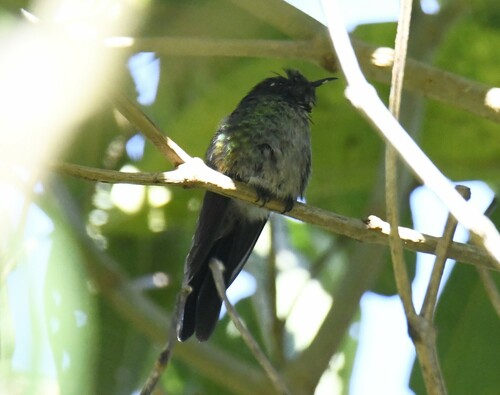


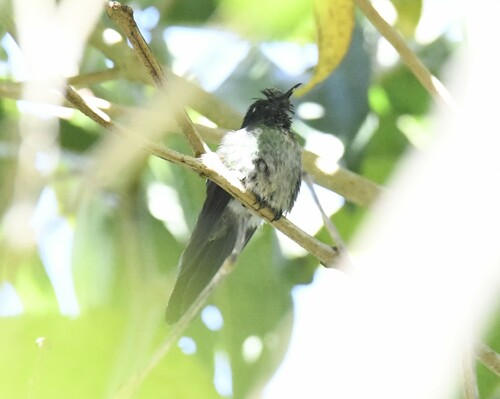
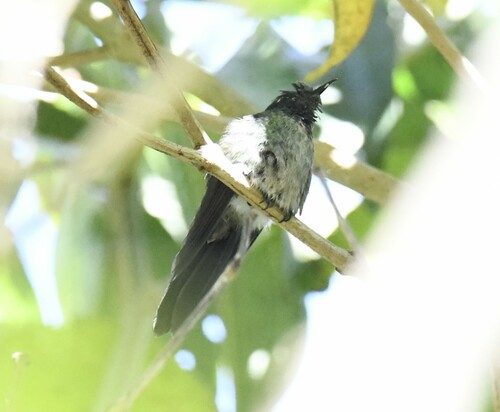
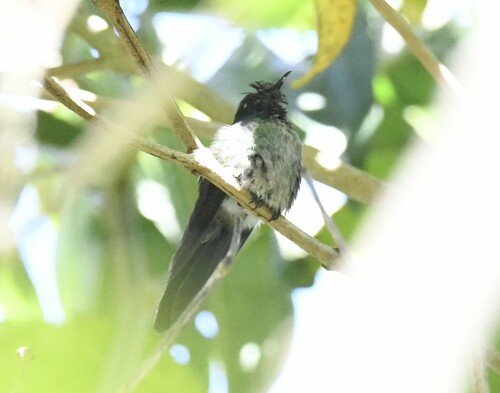
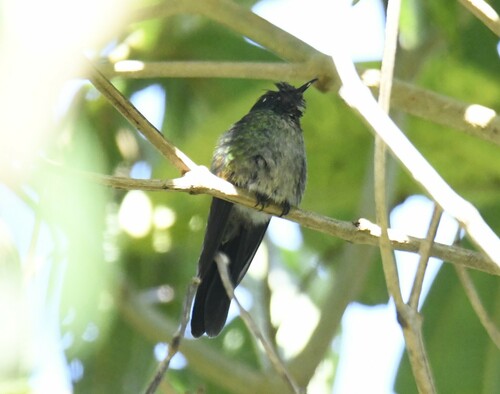
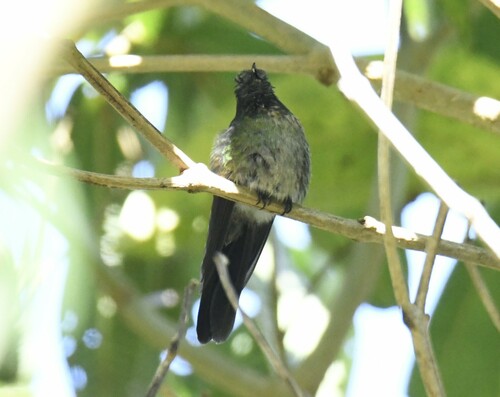
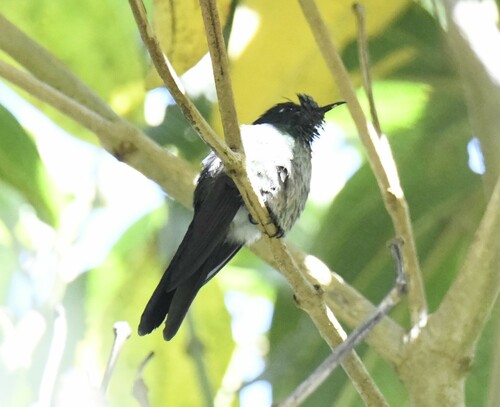
ID tip
The black-backed thornbill is 9 to 10 cm (3.5 to 3.9 in) long and weighs about 3.5 g (0.12 oz). Both sexes have a very short black bill; the male's is slightly decurved. The male's upperparts are velvety black with purplish uppertail coverts and a white spot behind the eye. Their gorget is olive green and the rest of the underparts are a mix of dark gray and rufous with green dots. The tail is moderately long, deeply forked, and purplish black. Females have shining grass green upperparts, and like the male, purplish uppertail coverts and a white spot behind the eye. Voice: The black-backed thornbill's calls include "a short dry rattle 'trrr'...a long descending rattle...'tsee-tttrrrrrrrr-tsee', single 'tsee' notes."
Text from Wikipedia, licensed CC BY-SA 4.0.
When to see the Black-backed Thornbill
One bar for each month. Filled bars are the 7 months with records; pale bars are months with none. The wide bar is January, the month with the most records.
Where to see the Black-backed Thornbill
The map shades 1 country with regular records. Everything unshaded has no records. Countries are listed below the map.
About the Black-backed Thornbill
The black-backed thornbill is a Near Threatened species of hummingbird in the "coquettes", tribe Lesbiini of subfamily Lesbiinae. It is endemic to the Sierra Nevada de Santa Marta of northern Colombia.
Text adapted from Wikipedia, licensed CC BY-SA 4.0.
Easily confused with

Learn the Black-backed Thornbill in the BeakBrain App
Photo and call practice. Coming soon to iPhone and Android.
Play today's Daily BirdEvery photo and recording on this page is credited to its author under the licence shown. Spotted a problem with this page, or have a better photo? Contribute.