Learn what every symbol on the card means.Full credits and sources at beakbrain.com/symbols
 WoodlandCup nestSmall · 26 g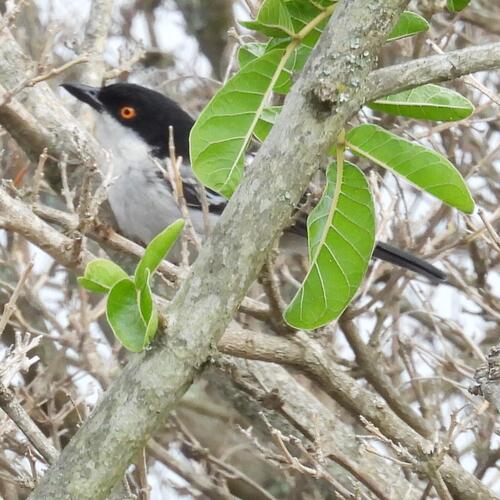


What the Black-backed Puffback sounds like


ID tip
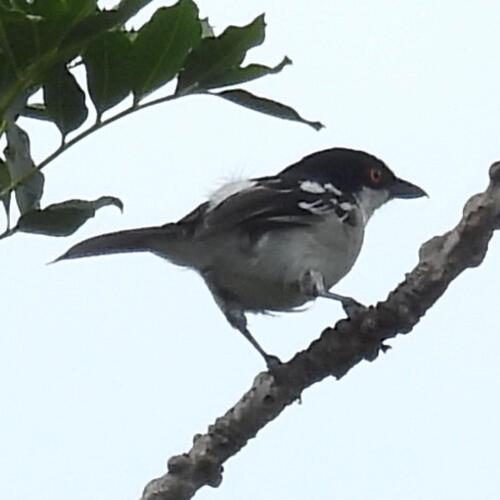
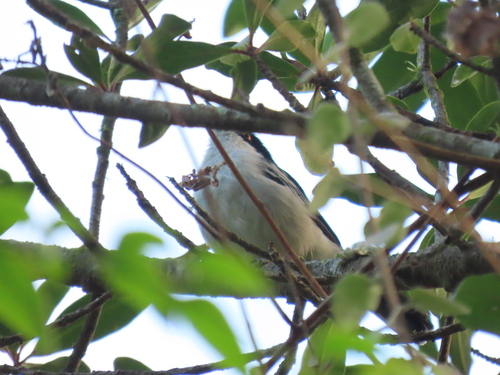
They measure about 17 cm in length, and the sexes are similar though easily distinguishable. Adult males have the upperparts deep blue-black with a slight luster. The black cap subtends the red eye, the upperpart plumage is black-and-white, and the underparts pure white. Females have a black loral stripe and white supraloral feathering, with the ear coverts pale and the crown not solidly black. They also have greyer backs than males, and grey to buffy tones to the white plumage tracts.
Text from Wikipedia, licensed CC BY-SA 4.0.
When to see the Black-backed Puffback
One bar for each month, and every month is filled: this bird is recorded here in all twelve. The wide bar is November, the month with the most records.
Where to see the Black-backed Puffback
The map shades 14 countries with regular records, and 1 more in a lighter tone where the bird turns up only as a stray. Everything unshaded has no records. Countries are listed below the map.
Recorded as a rare visitor in Somalia.
About the Black-backed Puffback
The black-backed puffback is a species of passerine bird in the family Malaconotidae. They are common to fairly common sedentary bushshrikes in various wooded habitats in Africa south of the equator. They restlessly move about singly, in pairs or family groups, and generally frequent tree canopies. Like others of its genus, the males puff out the loose rump and lower back feathers in display, to assume a remarkable ball-like appearance. They draw attention to themselves by their varied repertoire of whistling, clicking and rasping sounds.
Text adapted from Wikipedia, licensed CC BY-SA 4.0.
Easily confused with
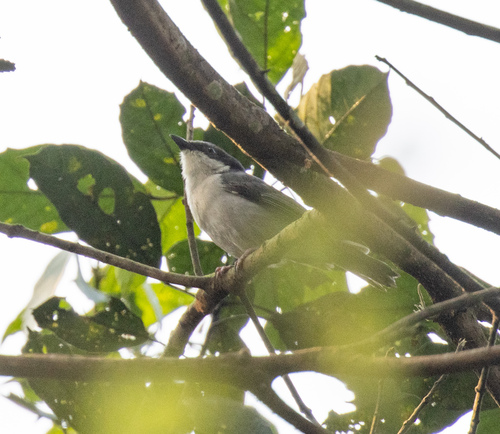
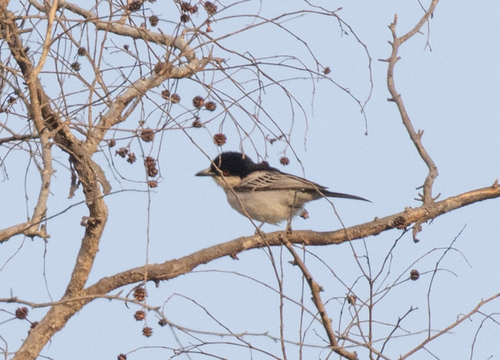 Northern PuffbackDryoscopus gambensisThe northern puffback is a species of bird in the family Malaconotidae.
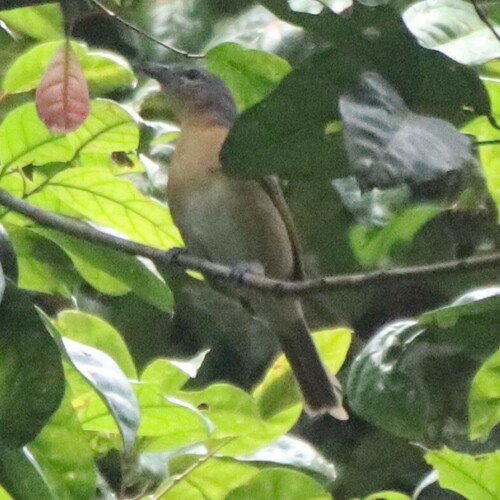
 Pink-footed PuffbackDryoscopus angolensisThe pink-footed puffback is a species of bird in the family Malaconotidae.
 Sabine's PuffbackDryoscopus sabiniSabine's puffback, also known as the large-billed puffback, is a species of bird in the family Malaconotidae.
Learn the Black-backed Puffback in the BeakBrain App
Photo and call practice. Coming soon to iPhone and Android.
Play today's Daily BirdEvery photo and recording on this page is credited to its author under the licence shown. Spotted a problem with this page, or have a better photo? Contribute.