Learn what every symbol on the card means.Full credits and sources at beakbrain.com/symbols
 ForestSmall · 23 g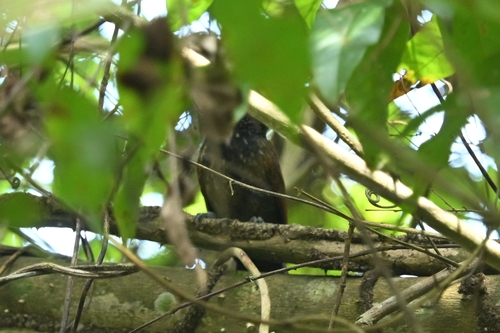
ID tip
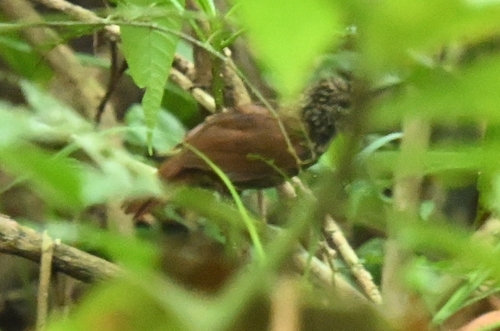
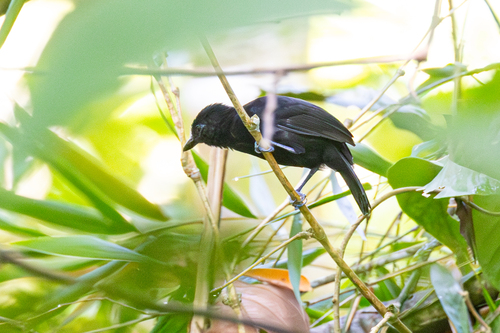
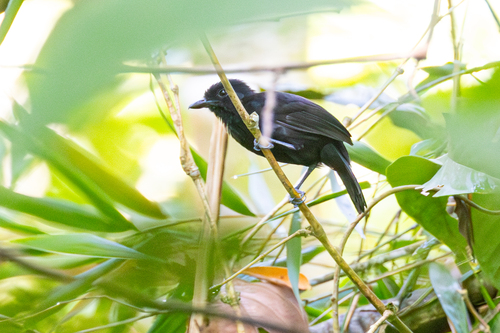
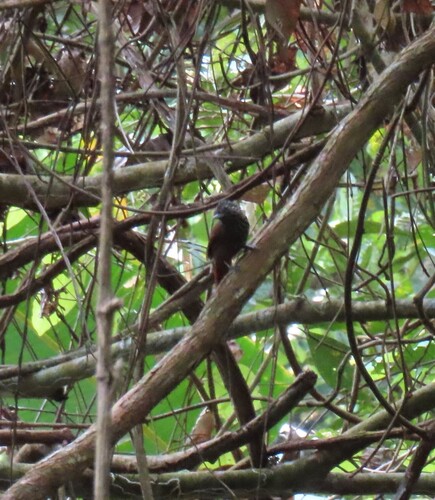
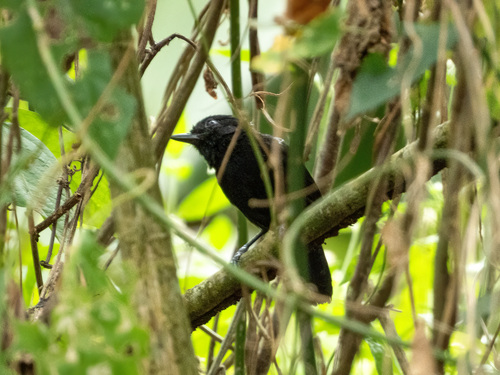
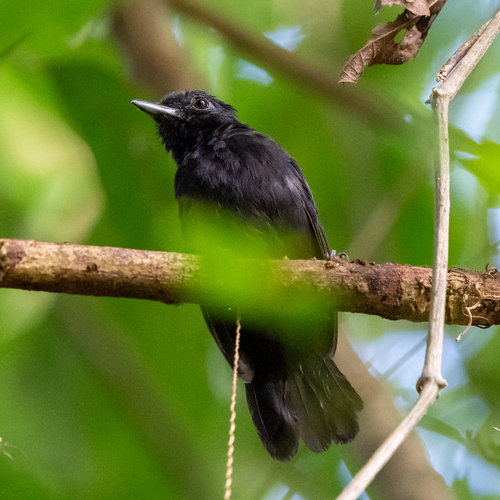
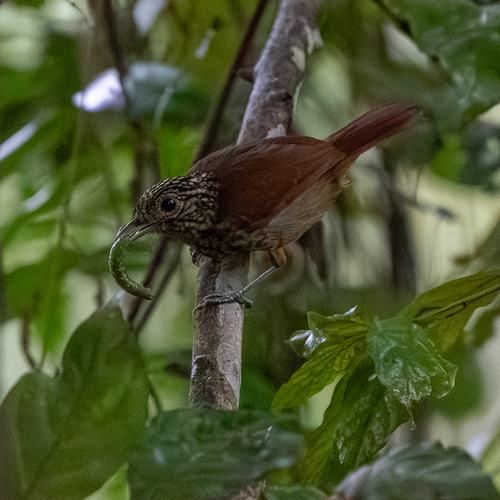
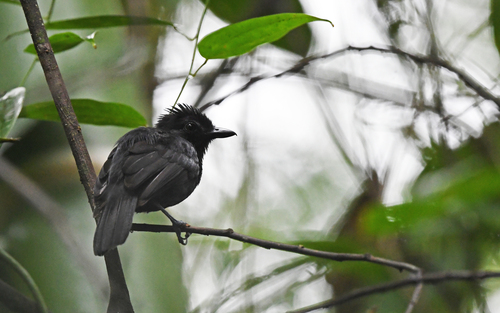
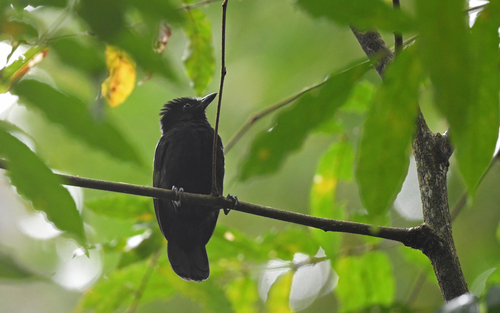
The black antshrike is 15 to 16 cm (5.9 to 6.3 in) long and weighs 23 to 24 g (0.81 to 0.85 oz). Members of genus Thamnophilus are largish members of the antbird family; all have stout bills with a hook like those of true shrikes. This species exhibits some sexual dimorphism. Adult males are almost entirely black. They have dark gray flanks and their underwing coverts and edges of the underside of their flight feathers are white. Adult females have a blackish gray head and upper breast with buff-white streaks. Their upperparts, wings, and tail are rufous-brown. Voice: The black antshrike's song is "a moderately long...slightly accelerating, evenly pitched series of somewhat musical yet emphatic notes". Its calls include a "hollow, nasal note sometimes repeated" and a "nasal growl".
Text from Wikipedia, licensed CC BY-SA 4.0.
When to see the Black Antshrike
One bar for each month, and every month is filled: this bird is recorded here in all twelve. The wide bar is March, the month with the most records.
Where to see the Black Antshrike
The map shades 2 countries with regular records. Everything unshaded has no records. Countries are listed below the map.
About the Black Antshrike
The black antshrike is a species of insectivorous bird in subfamily Thamnophilinae of family Thamnophilidae, the "typical antbirds". It is found in Colombia and Panama.
Text adapted from Wikipedia, licensed CC BY-SA 4.0.
Easily confused with
 White-shouldered AntshrikeThamnophilus aethiopsThe white-shouldered antshrike is 15 to 17 cm (5.9 to 6.7 in) long and weighs 23 to 30 g (0.81 to 1.1 oz).
 Sooretama Slaty AntshrikeThamnophilus ambiguusThe Sooretama slaty antshrike is 14 to 15 cm (5.5 to 5.9 in) long.
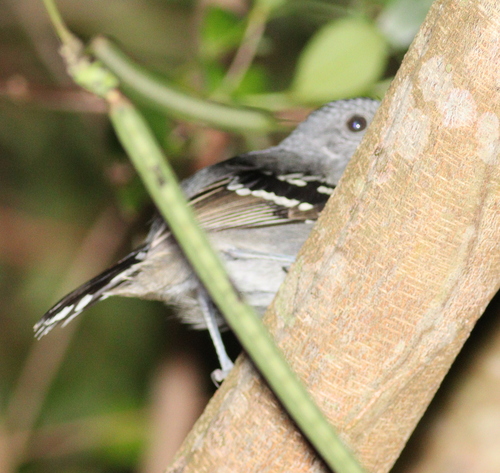 Northern Slaty AntshrikeThamnophilus punctatusThe northern slaty antshrike is 13 to 15 cm (5.1 to 5.9 in) long and weighs 16 to 18 g (0.56 to 0.63 oz).
Side by side: Black Antshrike vs Northern Slaty Antshrike · Black Antshrike vs Sooretama Slaty Antshrike · Black Antshrike vs White-shouldered Antshrike · Black Antshrike vs Rufous-winged Antshrike
Learn the Black Antshrike in the BeakBrain App
Photo and call practice. Coming soon to iPhone and Android.
Play today's Daily BirdEvery photo and recording on this page is credited to its author under the licence shown. Spotted a problem with this page, or have a better photo? Contribute.