Learn what every symbol on the card means.Full credits and sources at beakbrain.com/symbols
 ForestDomed nestTiny · 9 g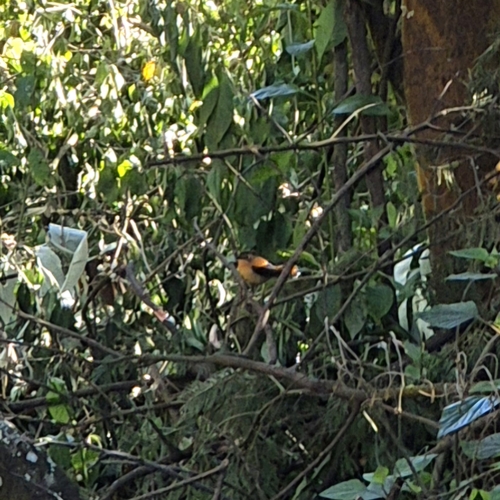

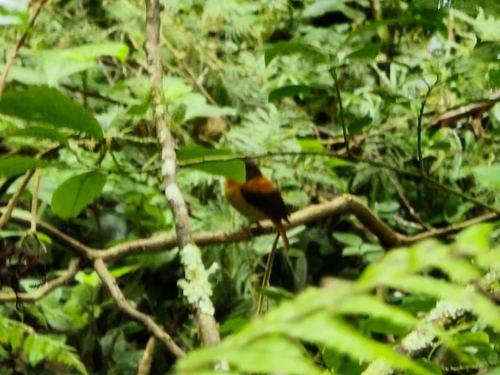
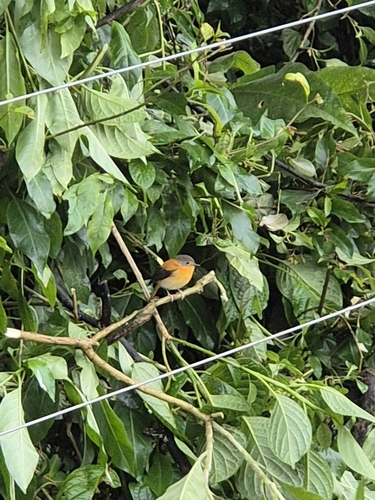
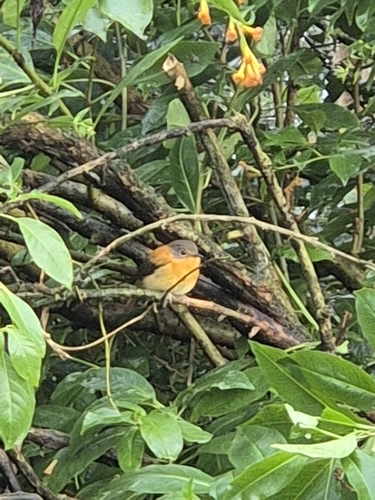
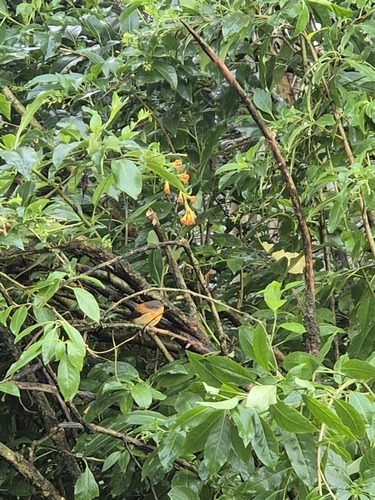
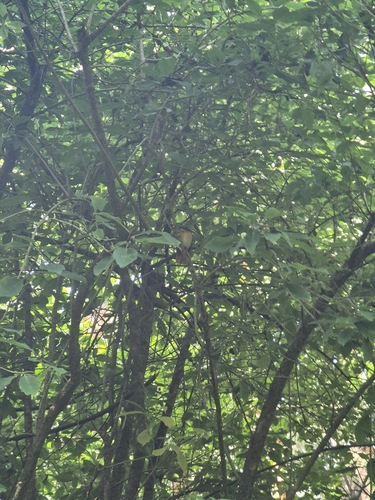
ID tip
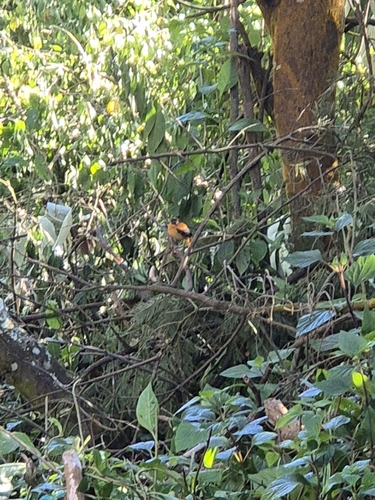
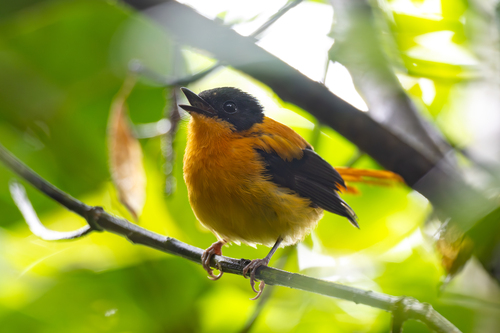
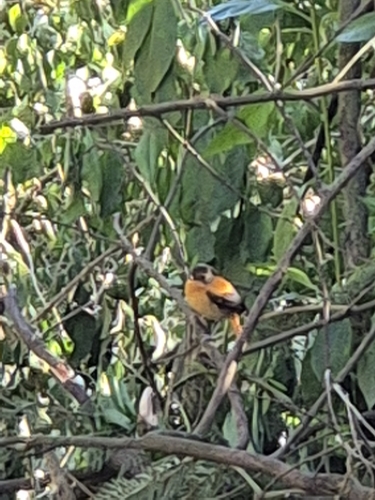
A distinctly coloured bird found mainly in the high-elevation areas of the Western Ghats, the Nilgiris, the Palnis and associated hill ranges. The male is distinctly black headed with black wings. The female has the black replaced by dark brown and has a light eye-ring. They are usually seen singly or in pairs. The young bird at around two weeks of age is brownish orange with a whitish vent and abdomen. The head has dark streaks and the wings appear bluish with a trace of brown. There is a pale ring around the eye and the orange tail appears stumpy.
Text from Wikipedia, licensed CC BY-SA 4.0.
When to see the Black-and-orange Flycatcher
One bar for each month. Filled bars are the 8 months with records; pale bars are months with none. The wide bar is February, the month with the most records.
Where to see the Black-and-orange Flycatcher
The map shades 1 country with regular records. Everything unshaded has no records. Countries are listed below the map.
About the Black-and-orange Flycatcher
The black-and-orange flycatcher or black-and-rufous flycatcher is a species of flycatcher endemic to the central and southern Western Ghats, the Nilgiris and Palni hill ranges in southern India. It is unique among the Ficedula flycatchers in having rufous coloration on its back and prior to molecular studies was suggested to be related to the chats and thrushes.
Text adapted from Wikipedia, licensed CC BY-SA 4.0.
Easily confused with
 Rusty-tailed FlycatcherFicedula ruficaudaThe rusty-tailed flycatcher is a small passerine bird in the flycatcher family Muscicapidae.
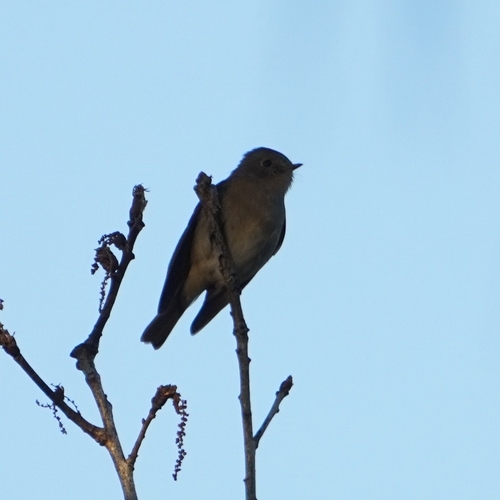 Slaty-backed FlycatcherFicedula erithacusThe slaty-backed flycatcher is a species of bird in the family Muscicapidae.
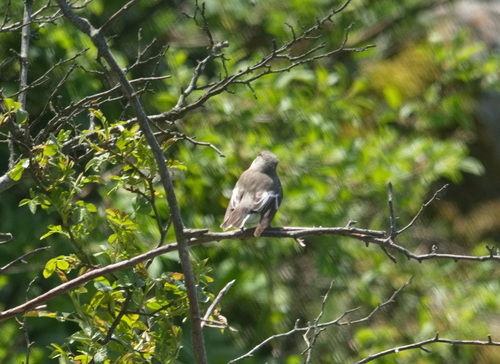 Semicollared FlycatcherFicedula semitorquataThe semicollared flycatcher is a small passerine bird in the Old World flycatcher family, one of the four species of Western Palearctic black-and-white flycatchers.
Learn the Black-and-orange Flycatcher in the BeakBrain App
Photo and call practice. Coming soon to iPhone and Android.
Play today's Daily BirdEvery photo and recording on this page is credited to its author under the licence shown. Spotted a problem with this page, or have a better photo? Contribute.