Learn what every symbol on the card means.Full credits and sources at beakbrain.com/symbols
 ShrublandDomed nestSmall · 42 g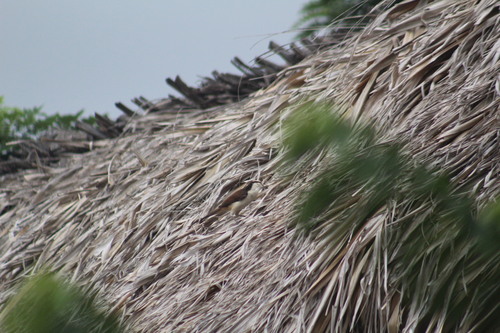

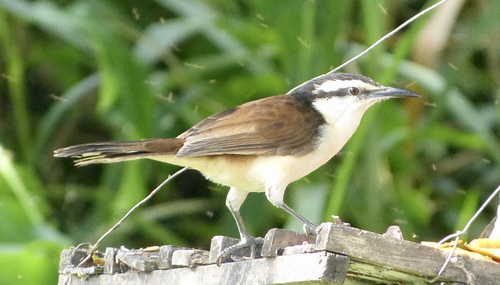

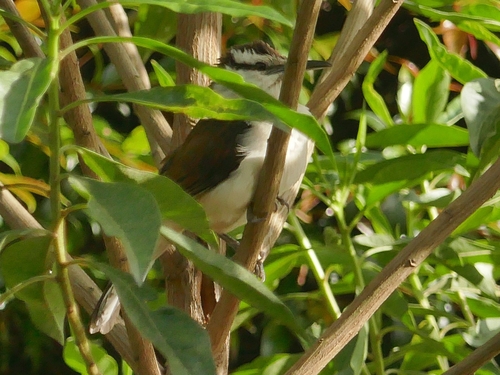
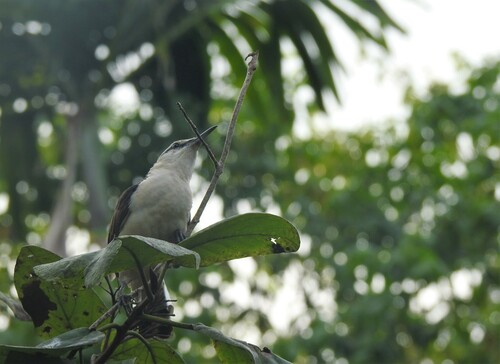
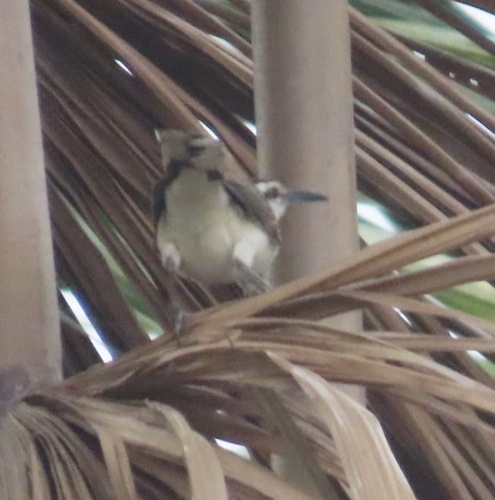
ID tip
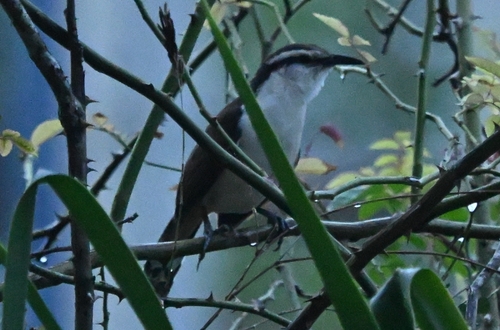
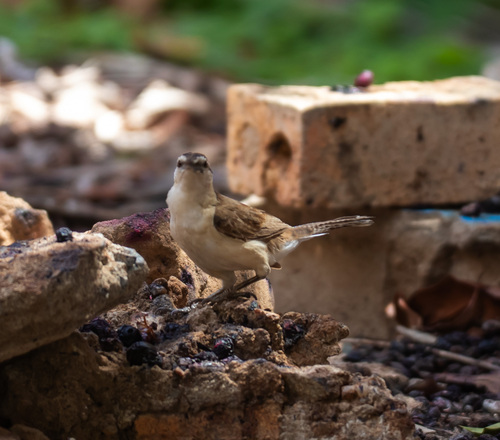
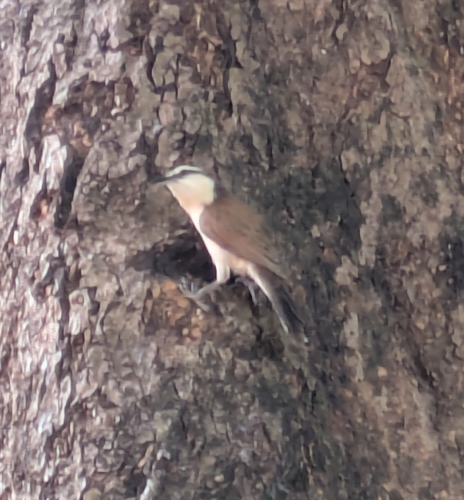
The bicolored wren is the largest South American wren and second in size only to the giant wren overall in the family. It is 21 to 22 cm (8.3 to 8.7 in) long and weighs 37 to 46.5 g (1.31 to 1.64 oz). The sexes are similar. The nominate adults have dark chocolate crowns and napes and their upperparts a paler chocolate. An off-white supercilium separates a dark brown stripe through the eye from the crown and the rest of the face is also white. Their tail is dark brown; all of the tail feathers except the middle pair have a white band near the end. The throat and the entire underparts are white. Voice: The male bicolored wren's song is "a series of multiple loud gurgling notes" . The female's is similar but includes a trill. The songs vary widely across the species' range. Its calls are "mostly harsh and grating" .
Text from Wikipedia, licensed CC BY-SA 4.0.
When to see the Bicolored Wren
One bar for each month, and every month is filled: this bird is recorded here in all twelve. The wide bar is May, the month with the most records.
Where to see the Bicolored Wren
The map shades 5 countries with regular records. Everything unshaded has no records. Countries are listed below the map.
About the Bicolored Wren
The bicolored wren is a species of bird in the family Troglodytidae. It is found in Colombia, Venezuela, Guyana, and Brazil.
Text adapted from Wikipedia, licensed CC BY-SA 4.0.
Easily confused with
 Thrush-like WrenCampylorhynchus turdinusThe thrush-like wren is a South American species of bird in the family Troglodytidae, the wrens.
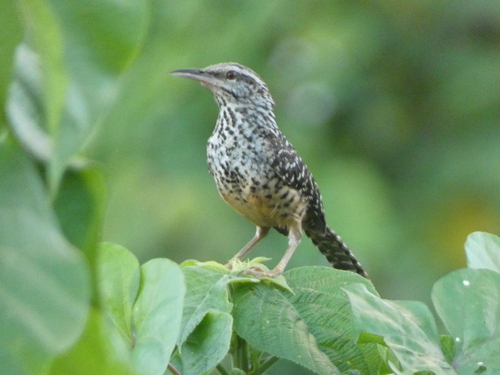 Band-backed WrenCampylorhynchus zonatusThis large wren breeds in lowlands and foothills from sea level up to 1700 m altitude in thinned forest or open woodland, scrub, second growth and groves around houses.
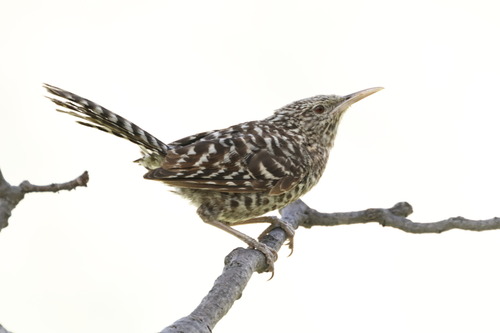 Fasciated WrenCampylorhynchus fasciatusThe fasciated wren is approximately 19 cm (7.5 in) long; one female weighed 24.9 g (0.88 oz).
Side by side: Bicolored Wren vs Rufous-backed Wren · Band-backed Wren vs Bicolored Wren · Bicolored Wren vs Fasciated Wren
Learn the Bicolored Wren in the BeakBrain App
Photo and call practice. Coming soon to iPhone and Android.
Play today's Daily BirdEvery photo and recording on this page is credited to its author under the licence shown. Spotted a problem with this page, or have a better photo? Contribute.