Learn what every symbol on the card means.Full credits and sources at beakbrain.com/symbols
 WoodlandCup nestTiny · 11 g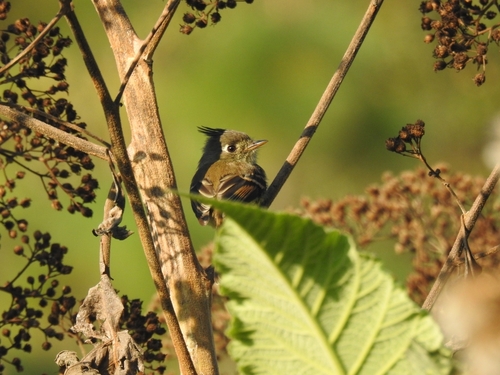
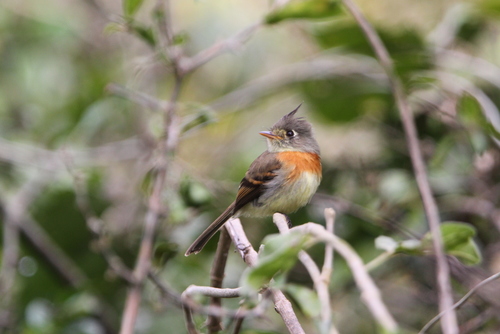
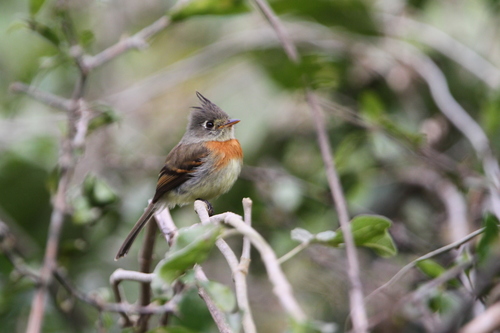
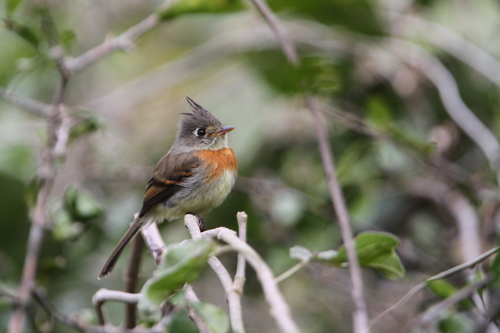
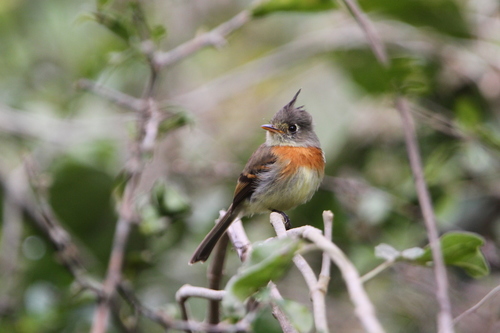
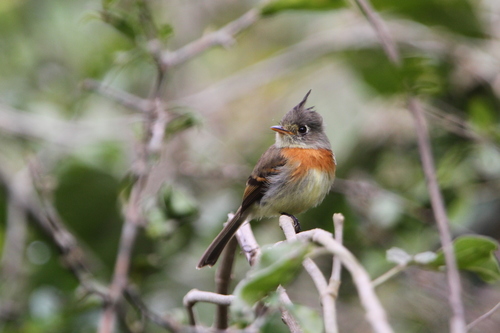
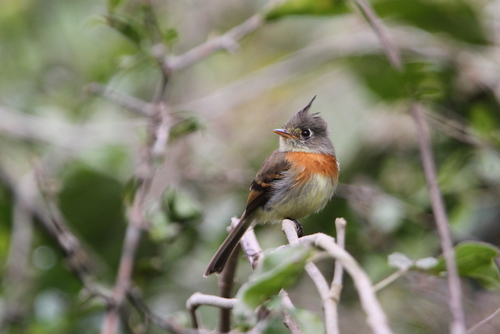
ID tip
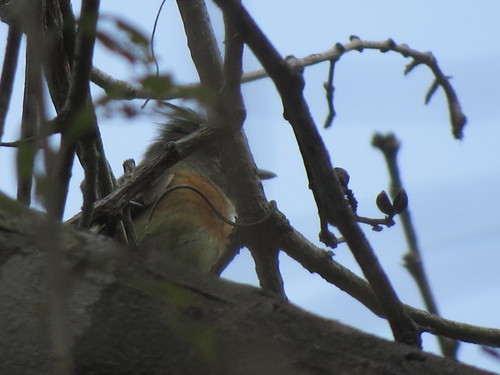
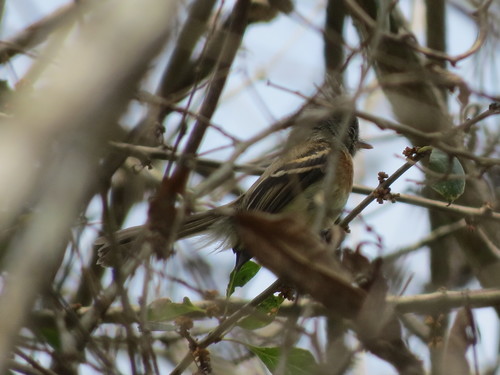
The belted flycatcher is 11.5 to 13 cm (4.5 to 5.1 in) long; one male weighed 13.0 g (0.46 oz) and a female 11.5 g (0.41 oz). The sexes have the same plumage. Adult males have a mostly brownish olive head with a pointed blackish brown or olive gray crest and a wide white or pale lemon teardrop-shaped eye-ring. Their upperparts are mostly brownish olive with pale cinnamon brown uppertail coverts. Their wings are dusky brown with wide pale cinnamon ends on the coverts that show as two wing bars. They have pale cinnamon edges on their tertials and the same color as a panel on their secondaries. Voice: The belted flycatcher's song is "a rolling nasal pip-pip-pi'pi'pi'pi'pweee!". Its calls are an "emphatic nasal peeurrr! a 2-part pee'wierr!". Males jerk their tail while calling. Mates have a peer-peer contact call when the male approaches the nest.
Text from Wikipedia, licensed CC BY-SA 4.0.
When to see the Belted Flycatcher
One bar for each month. Filled bars are the 11 months with records; pale bars are months with none. The wide bar is March, the month with the most records.
Where to see the Belted Flycatcher
The map shades 3 countries with regular records. Everything unshaded has no records. Countries are listed below the map.
About the Belted Flycatcher
The belted flycatcher is a species of bird in the family Tyrannidae, the tyrant flycatchers. It is known in El Salvador, Guatemala, and Mexico and possibly occurs in Honduras.
Text adapted from Wikipedia, licensed CC BY-SA 4.0.
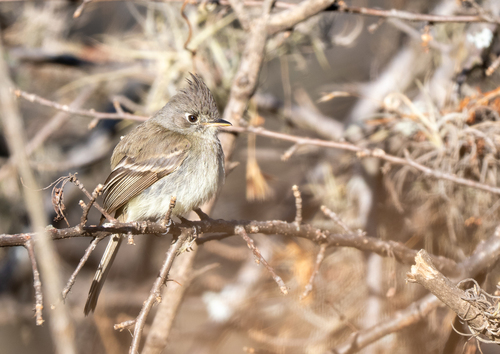
Easily confused with
Learn the Belted Flycatcher in the BeakBrain App
Photo and call practice. Coming soon to iPhone and Android.
Play today's Daily BirdEvery photo and recording on this page is credited to its author under the licence shown. Spotted a problem with this page, or have a better photo? Contribute.