Learn what every symbol on the card means.Full credits and sources at beakbrain.com/symbols
 Grassland25 g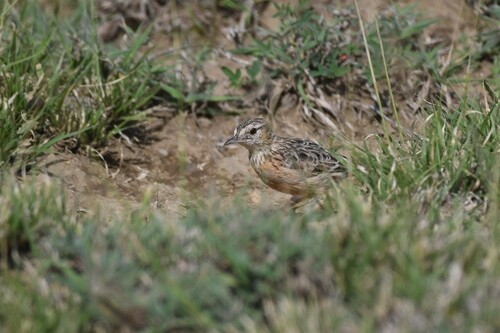
ID tip
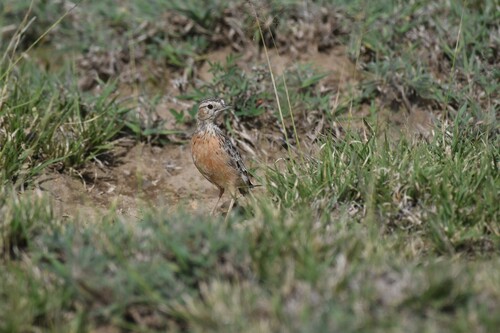
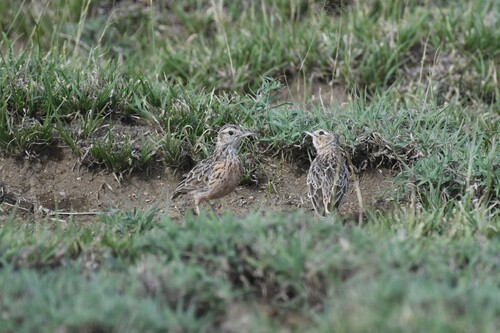
Beesley’s Larks show some slender, decurved bills, and can be identified by their whitish napes, general structure and size, but also by their vocalizations and behavior. They have some white-fringed, scalloped upperwing coverts, and a very short tail, sporting some white-tipped rectrices and a rufuous rump. The species is sexually dimorphic, and individuals of different sexes can be told apart in the field: adult female Beesley’s Larks have bolder breast streaks in comparison to males, a darker-orange belly, and they are smaller in size.
Text from Wikipedia, licensed CC BY-SA 4.0.
When to see the Beesley's Lark
One bar for each month. Filled bars are the 11 months with records; pale bars are months with none. The wide bar is March, the month with the most records.
Where to see the Beesley's Lark
The map shades 1 country with regular records. Everything unshaded has no records. Countries are listed below the map.
About the Beesley's Lark
Beesley's Lark is a species of lark in the family Alaudidae. It was formerly considered to be a subspecies of the Spike-heeled Lark.
Text adapted from Wikipedia, licensed CC BY-SA 4.0.
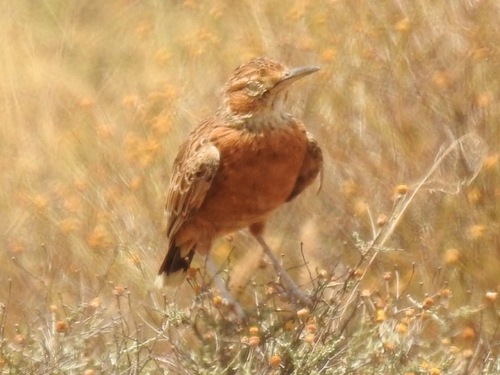
Easily confused with
Learn the Beesley's Lark in the BeakBrain App
Photo and call practice. Coming soon to iPhone and Android.
Play today's Daily BirdEvery photo and recording on this page is credited to its author under the licence shown. Spotted a problem with this page, or have a better photo? Contribute.