Learn what every symbol on the card means.Full credits and sources at beakbrain.com/symbols
 RockyPlatform nestHuge · 5.7 kg


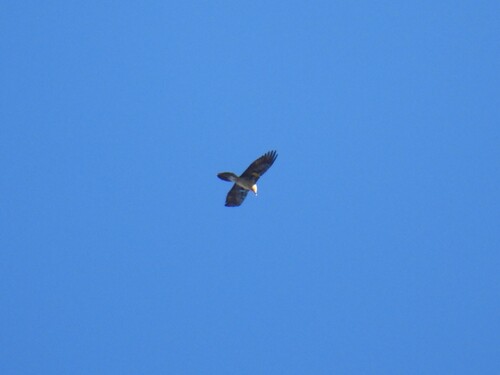

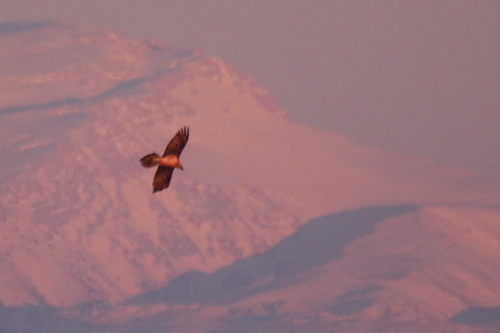
What the Bearded Vulture sounds like


ID tip
The bearded vulture is 94–125 cm (37–49 in) long with a wingspan of 2.31–2.83 m (7 ft 7 in – 9 ft 3 in). It weighs 4.5–7.8 kg (9.9–17.2 lb), with the nominate race averaging 6.21 kg (13.7 lb) and G. b. meridionalis of Africa averaging 5.7 kg (13 lb). In Eurasia, vultures found around the Himalayas tend to be slightly larger than those from other mountain ranges. Females are slightly larger than males. It is essentially unmistakable with other vultures or indeed other birds in flight due to its long, narrow wings, with the wing chord measuring 71.5–91 cm (28.1–35.
Text from Wikipedia, licensed CC BY-SA 4.0.
When to see the Bearded Vulture
One bar for each month, and every month is filled: this bird is recorded here in all twelve. The wide bar is May, the month with the most records.
Where to see the Bearded Vulture
The map shades 37 countries with regular records, and 8 more in a lighter tone where the bird turns up only as a stray. Everything unshaded has no records. Countries are listed below the map.
Recorded as a rare visitor in Sweden, Norway, Netherlands, Morocco, Belgium, Eritrea, North Macedonia, Poland.
About the Bearded Vulture
The bearded vulture, also known as the lammergeier and ossifrage, is a very large bird of prey in the monotypic genus Gypaetus. The bearded vulture is the only known vertebrate whose diet consists of 70–90% bone.
Text adapted from Wikipedia, licensed CC BY-SA 4.0.
Easily confused with
 Black Hawk-EagleSpizaetus tyrannusThe black hawk-eagle is 58–70 cm (23–27.5 in) long and weighs about 900 to 1,300 grams (2.0 to 2.9 pounds).
 Black EagleIctinaetus malaiensisThe black eagle is a large but slender eagle, at about 75 cm (30 in) in length and 148 to 182 cm (4 ft 10 in to 6 ft 0 in) in wingspan.
 Long-crested EagleLophaetus occipitalisThe long-crested eagle is a distinctive eagle when perched due to the long, shaggy crest and all dark plumage often called Kamusungu-sungu in Uganda.
Side by side: Bearded Vulture vs Long-crested Eagle · Bearded Vulture vs Black Eagle · Bearded Vulture vs Black Hawk-Eagle
Learn the Bearded Vulture in the BeakBrain App
Photo and call practice. Coming soon to iPhone and Android.
Play today's Daily BirdEvery photo and recording on this page is credited to its author under the licence shown. Spotted a problem with this page, or have a better photo? Contribute.