Learn what every symbol on the card means.Full credits and sources at beakbrain.com/symbols
 GrasslandCup nestTiny · 6 g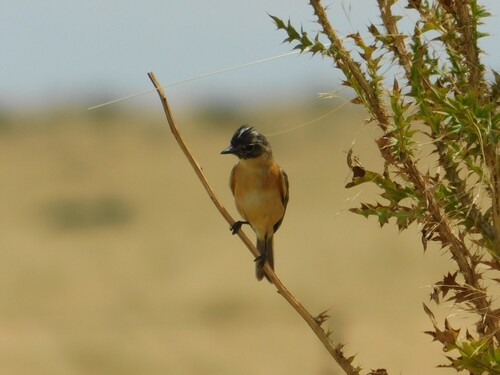

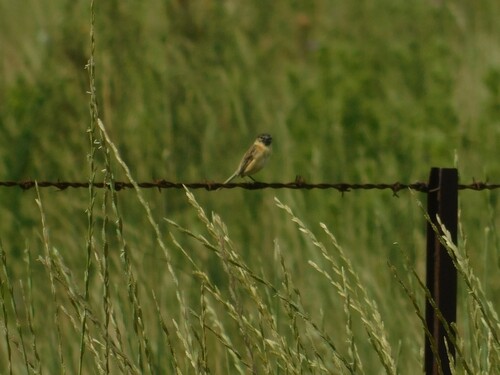
ID tip
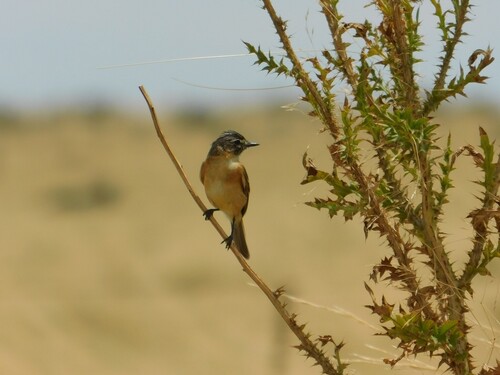
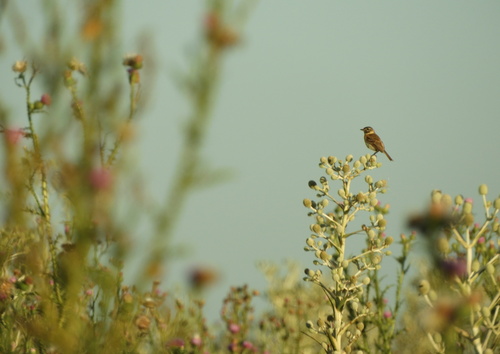
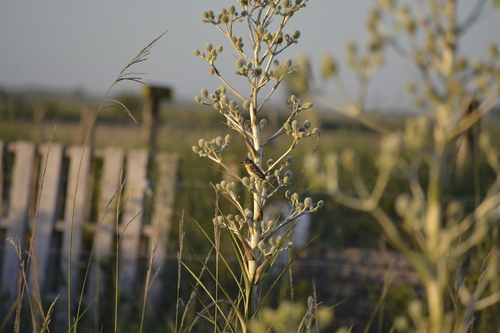
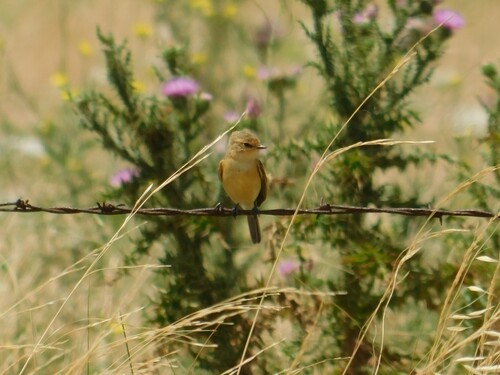
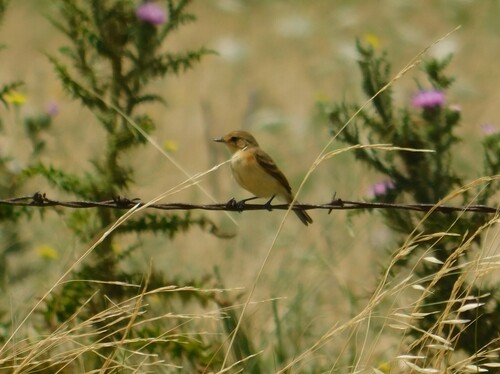
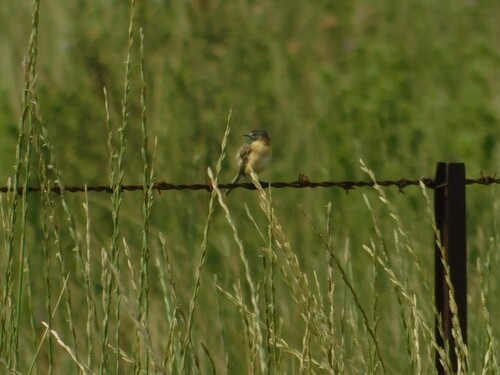
The bearded tachuri is 8 to 10.5 cm (3.1 to 4.1 in) long and weighs 6 to 8 grams (0.21 to 0.28 oz). Adult males of the nominate subspecies have a dusky gray to blackish crown with a bushy but usually flattened crest; the crown's white center is mostly hidden. They have a short white supercilium and a thin blackish line through the eye on a face that is otherwise thinly striped with black and white. Their upperparts are mostly buffy brown with a tawny to rufous rump. Voice: The bearded tachuri sings both from a perch and during its flight display, a "very high, thin series of about 3 'see sisi' notes, ending in an odd, low, toneless, very short 'krrak', together as 'see sisi-krrak' ". It also makes "weak rising 'feee' or 'pewee' " contact calls.
Text from Wikipedia, licensed CC BY-SA 4.0.
When to see the Bearded Tachuri
One bar for each month. Filled bars are the 11 months with records; pale bars are months with none. The wide bar is October, the month with the most records.
Where to see the Bearded Tachuri
The map shades 10 countries with regular records. Everything unshaded has no records. Countries are listed below the map.
About the Bearded Tachuri
The bearded tachuri is a Near Threatened species of bird in subfamily Elaeniinae of family Tyrannidae, the tyrant flycatchers. It is found in every mainland South American country except Chile, Ecuador, and Peru.
Text adapted from Wikipedia, licensed CC BY-SA 4.0.
Easily confused with

Learn the Bearded Tachuri in the BeakBrain App
Photo and call practice. Coming soon to iPhone and Android.
Play today's Daily BirdEvery photo and recording on this page is credited to its author under the licence shown. Spotted a problem with this page, or have a better photo? Contribute.