Learn what every symbol on the card means.Full credits and sources at beakbrain.com/symbols
 ShrublandCup nestTiny · 8 g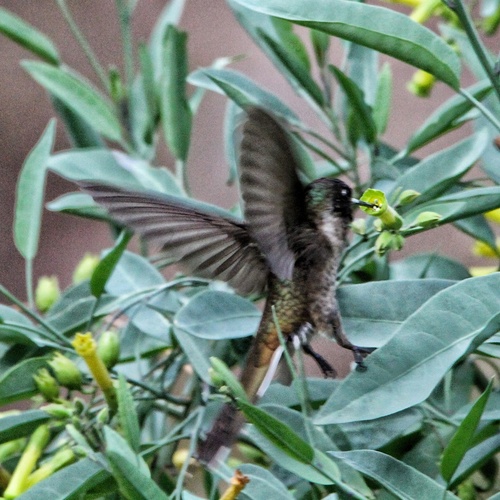
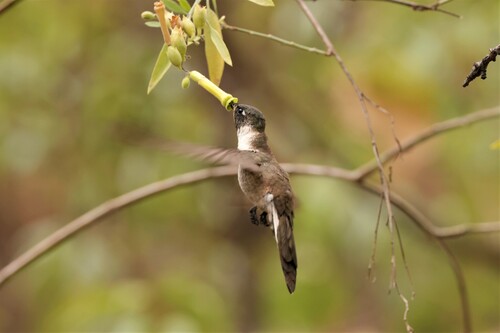
ID tip
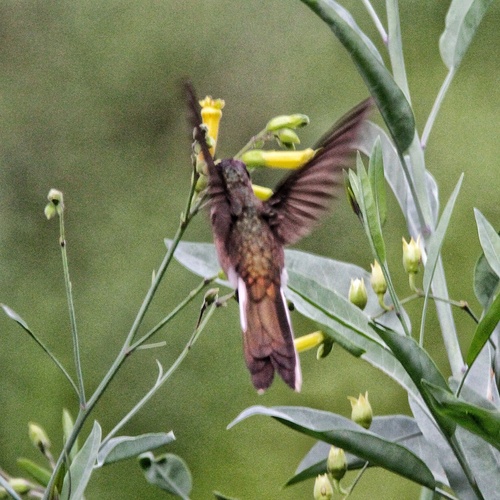
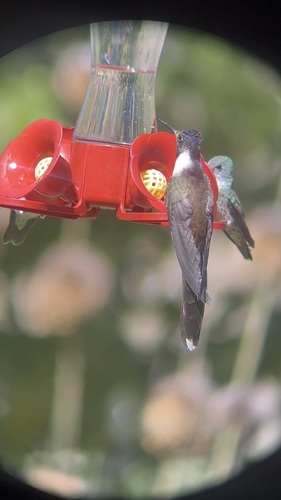
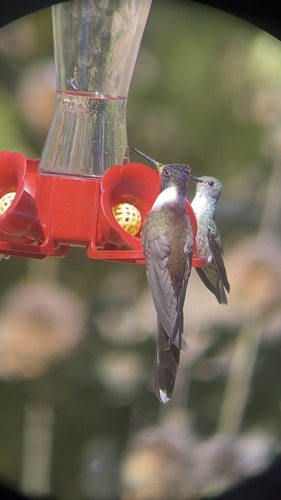
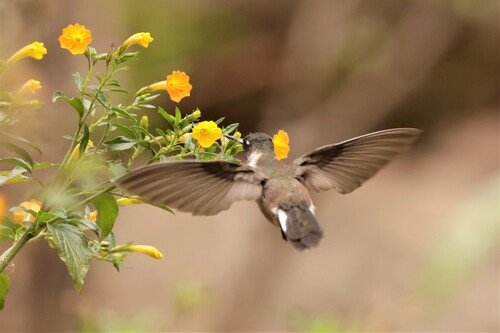
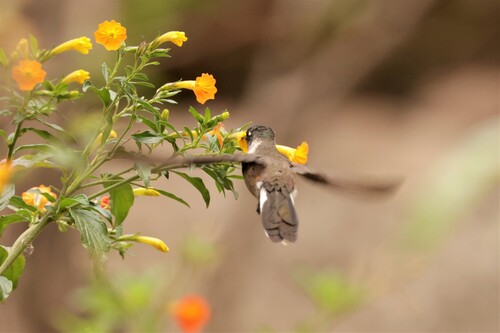
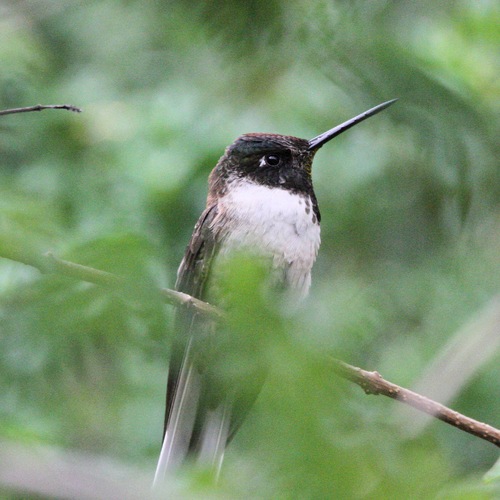
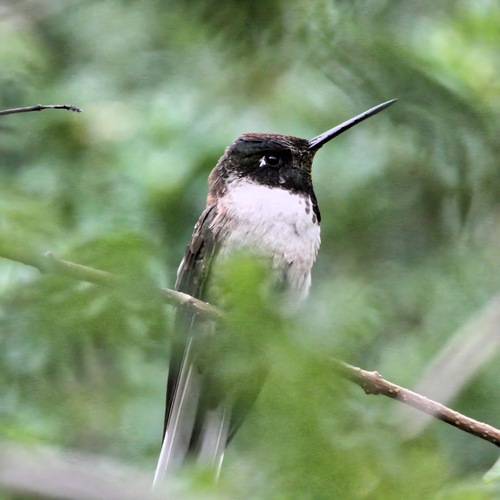
The bearded mountaineer is 14 to 16.5 cm (5.5 to 6.5 in) long including the approximately 2.3 cm (0.91 in) long bill. It weighs about 7 to 9 g (0.25 to 0.32 oz). Adult males of the nominate subspecies have a deep purplish blue forecrown and crown with a narrow black stripe in the middle. The face is bronzy black with a narrow white band at the back. Its gorget is long and narrow, emerald green under the chin and the rest purplish with a bluish tip. The nape, back, and rump are bronzy to bronzy brown. Voice: The bearded mountaineer's vocalizations include "a descending, squeaky series followed by a rich chatter: swee swee chew-chew-chew also a dry dzzrt."
Text from Wikipedia, licensed CC BY-SA 4.0.
When to see the Bearded Mountaineer
One bar for each month, and every month is filled: this bird is recorded here in all twelve. The wide bar is October, the month with the most records.
Where to see the Bearded Mountaineer
The map shades 1 country with regular records. Everything unshaded has no records. Countries are listed below the map.
About the Bearded Mountaineer
The bearded mountaineer is a species of hummingbird in the "coquettes", tribe Lesbiini of subfamily Lesbiinae. It is endemic to Peru.
Text adapted from Wikipedia, licensed CC BY-SA 4.0.
Easily confused with
 Frilled CoquetteLophornis magnificusThe frilled coquette is one of the smallest birds alive.
 Green-tailed GoldenthroatPolytmus theresiaeThe green-tailed goldenthroat is 8.9 to 9.9 cm (3.5 to 3.9 in) long and weighs 3.0 to 3.9 g (0.11 to 0.14 oz).
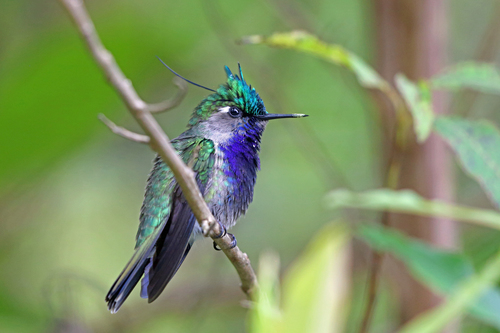 Green-crowned PlovercrestStephanoxis lalandiThe green-crowned plovercrest is 8.5 to 9 cm (3.3 to 3.5 in) long.
Side by side: Bearded Mountaineer vs Frilled Coquette · Bearded Mountaineer vs Green-tailed Goldenthroat · Bearded Mountaineer vs Green-crowned Plovercrest
Learn the Bearded Mountaineer in the BeakBrain App
Photo and call practice. Coming soon to iPhone and Android.
Play today's Daily BirdEvery photo and recording on this page is credited to its author under the licence shown. Spotted a problem with this page, or have a better photo? Contribute.