Learn what every symbol on the card means.Full credits and sources at beakbrain.com/symbols
 ForestCavity nestMedium · 95 g


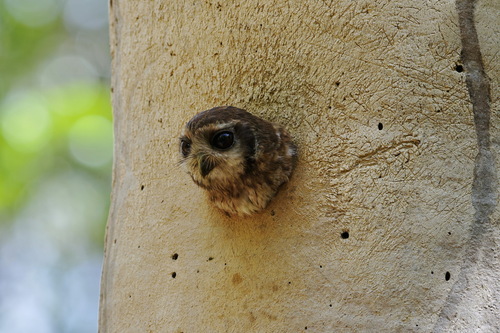
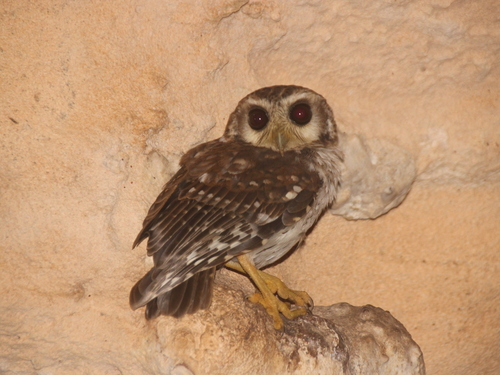
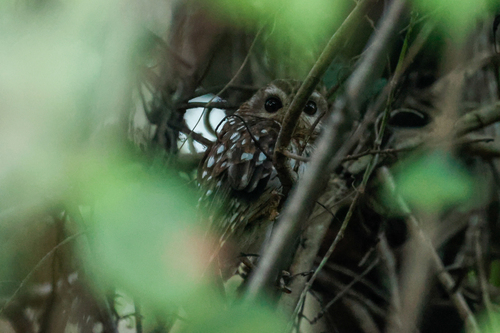
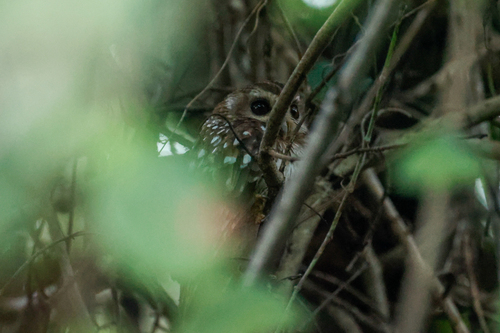
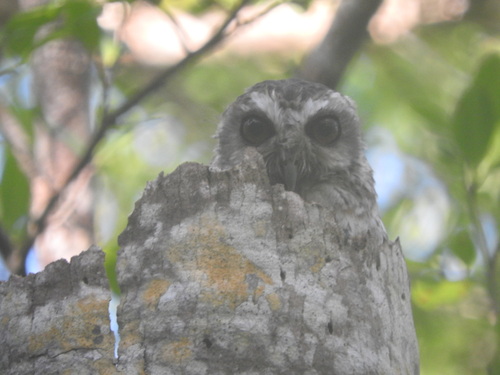
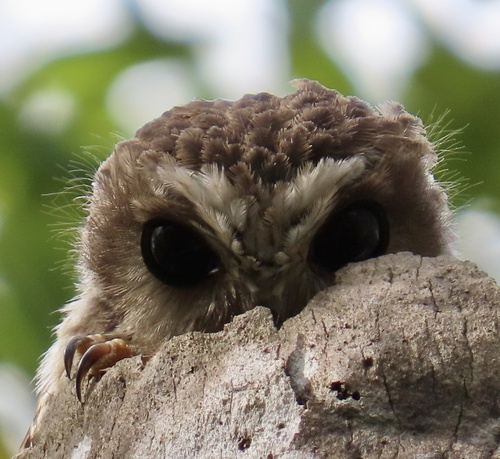
ID tip
The bare-legged owl is relatively small, measuring 20–23 cm (8–9 in) long, and weighing about 80 g (2.8 oz). Its name comes from its featherless green-yellow legs, similar to those of the burrowing owl. These owls have dark brown eyes, no ear tufts, a cream-colored facial disk, and brown rictal bristles. The upperparts of these birds are largely brown to slightly rufous in colour. Their wing feathers have white barring, and there are white spots on their shoulder and scapular feathers.
Text from Wikipedia, licensed CC BY-SA 4.0.
When to see the Bare-legged Owl
One bar for each month. Filled bars are the 8 months with records; pale bars are months with none. The wide bar is March, the month with the most records.
Where to see the Bare-legged Owl
The map shades 1 country with regular records. Everything unshaded has no records. Countries are listed below the map.
About the Bare-legged Owl
The bare-legged owl, also called the Cuban bare-legged owl or Cuban screech owl, is a species of owl in the family Strigidae that is endemic to Cuba and Isla de la Juventud. It belongs to the monotypic genus Margarobyas.
Text adapted from Wikipedia, licensed CC BY-SA 4.0.
Easily confused with
 Ryukyu Scops OwlOtus elegansThe Ryukyu scops owl or elegant scops owl is a small rufous-brown owl with a brown face disk and a cinnamon facial ruff.
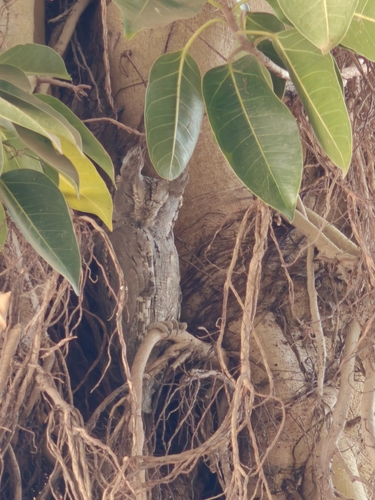 Pallid Scops OwlOtus bruceiThe pallid scops owl is a small-eared owl similar in appearance to the Eurasian scops owl but with more distinct streaks on the back and less intricate markings.
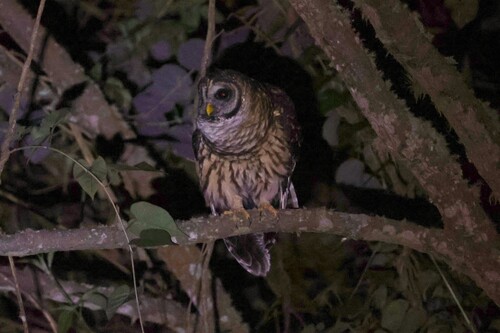 Fulvous OwlStrix fulvescensThe fulvous owl is a medium-sized owl with a round head.
Learn the Bare-legged Owl in the BeakBrain App
Photo and call practice. Coming soon to iPhone and Android.
Play today's Daily BirdEvery photo and recording on this page is credited to its author under the licence shown. Spotted a problem with this page, or have a better photo? Contribute.