Learn what every symbol on the card means.Full credits and sources at beakbrain.com/symbols
 ShrublandCup nestMedium · 77 g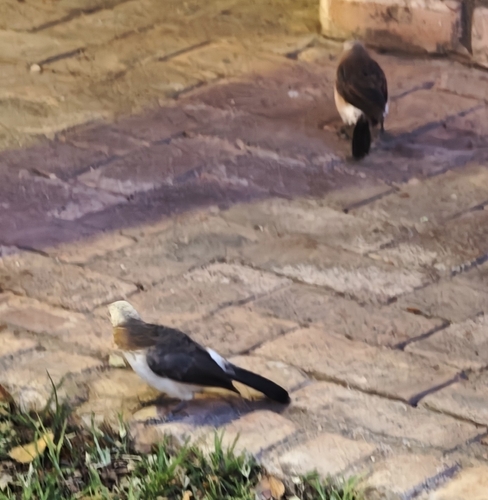

ID tip
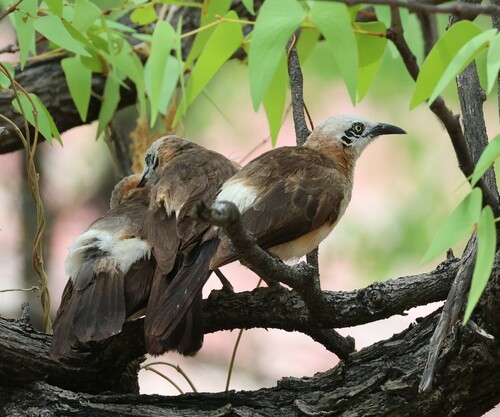
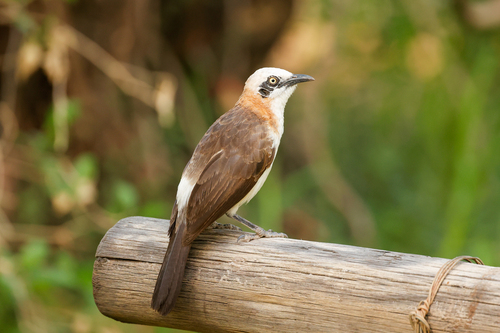
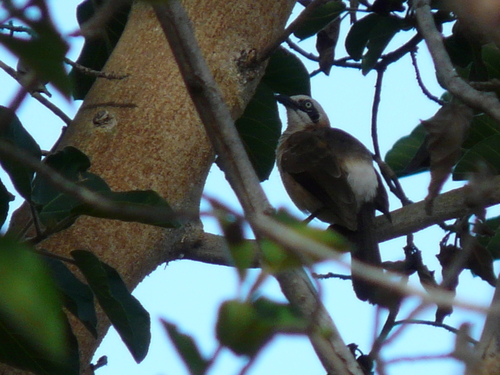
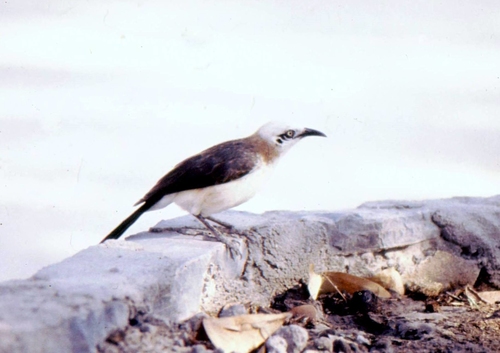
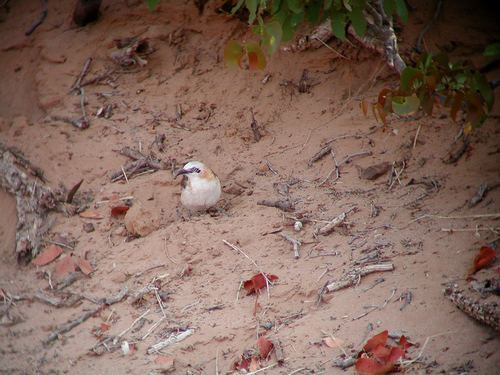
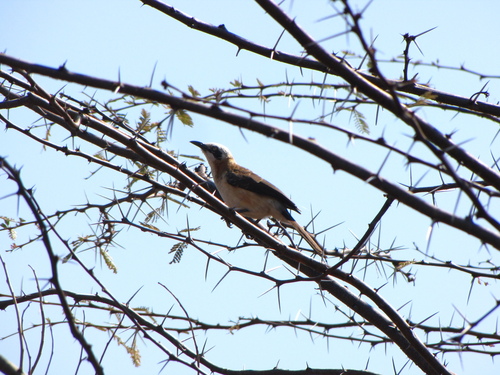
Adults measure 23–25 cm (9–10 in) in length and weigh roughly 60–70 g (2.1–2.5 oz). Their upperparts are a medium brown, have gray or white underparts, and a light gray crown. The bare bluish gray facial skin on the cheeks and the yellow eyes are the most distinctive features. They have a bill that is dark and slightly curved for searching through litter and soil. The sexes hold a similar appearance. The juveniles have duller colors and less prominent facial skin patches than that of the adults.
Text from Wikipedia, licensed CC BY-SA 4.0.
When to see the Bare-cheeked Babbler
One bar for each month. Filled bars are the 11 months with records; pale bars are months with none. The wide bar is September, the month with the most records.
Where to see the Bare-cheeked Babbler
The map shades 2 countries with regular records. Everything unshaded has no records. Countries are listed below the map.
About the Bare-cheeked Babbler
The bare-cheeked babbler is a passerine bird in the family Leiothrichidae and is native to arid savannas of southwestern Africa, specifically northwestern Namibia and southwestern Angola. It is known for its brown feathers and the bare skin on its cheeks. The species is listed as Least Concern by the International Union for Conservation of Nature and is a commonly found local bird.
Text adapted from Wikipedia, licensed CC BY-SA 4.0.
Easily confused with
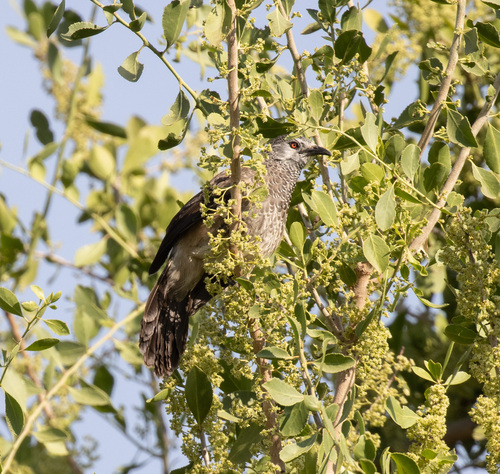 White-rumped BabblerTurdoides leucopygiaThe white-rumped babbler is a species of bird in the family Leiothrichidae.
Scaly BabblerTurdoides squamulataThe scaly babbler is a species of bird in the family Leiothrichidae.
White-rumped BabblerTurdoides leucopygiaThe white-rumped babbler is a species of bird in the family Leiothrichidae.
Scaly BabblerTurdoides squamulataThe scaly babbler is a species of bird in the family Leiothrichidae.
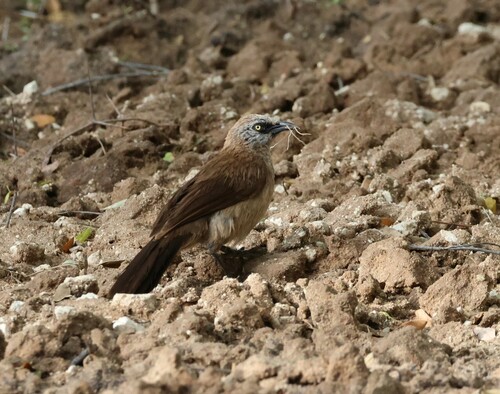 Black-faced BabblerTurdoides melanopsBlack-faced babblers are 21 to 25 cm (8.5 to 10 in) long.
Learn the Bare-cheeked Babbler in the BeakBrain App
Photo and call practice. Coming soon to iPhone and Android.
Play today's Daily BirdEvery photo and recording on this page is credited to its author under the licence shown. Spotted a problem with this page, or have a better photo? Contribute.