Learn what every symbol on the card means.Full credits and sources at beakbrain.com/symbols
 ShrublandCup nestTiny · 9 g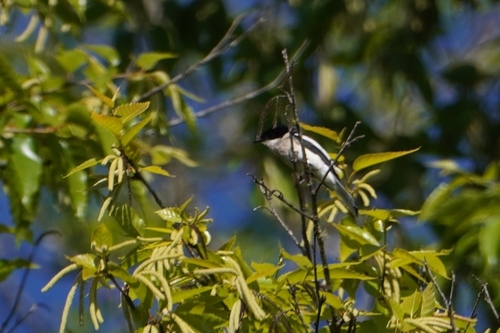
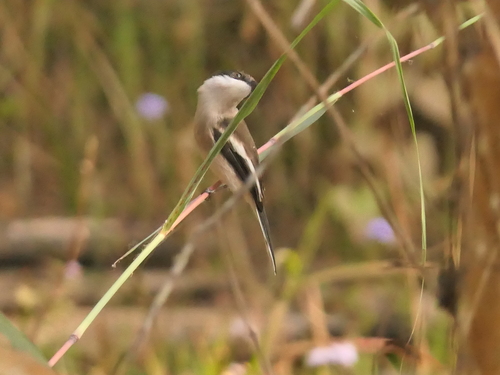
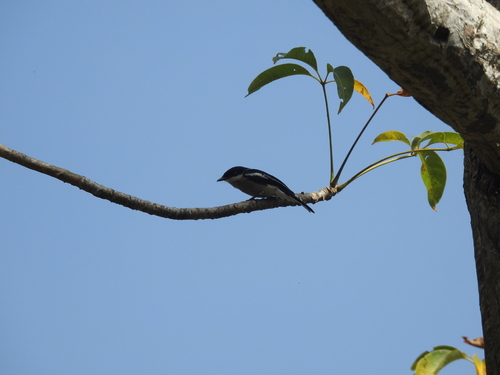
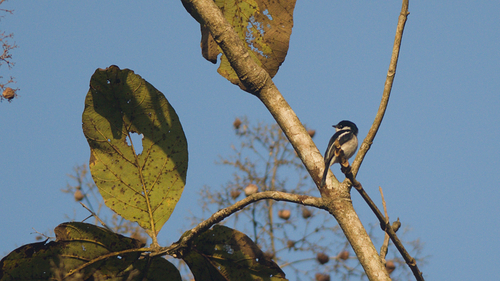


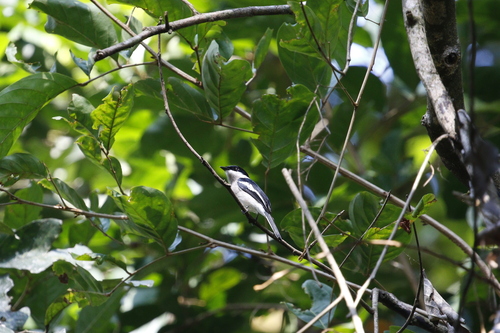
ID tip
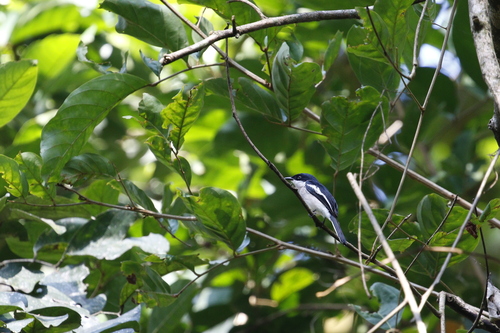
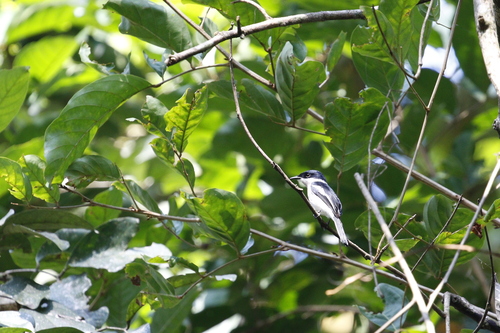
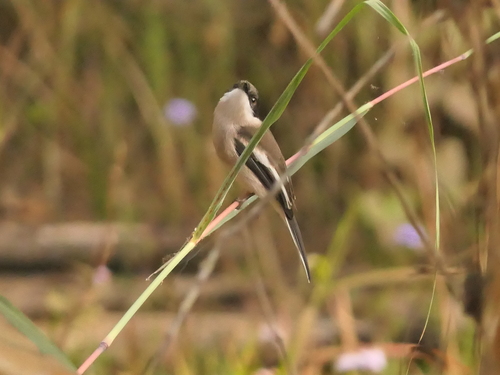
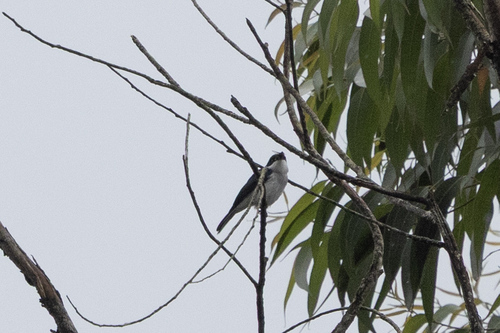
The bar-winged flycatcher-shrike is black capped with black wings that contrast with the white of the body. A white slash across the wing and a white rump stand out in contrast. They sit upright on branches, flying around to glean insects. The nostril is hidden by hairs and the upper mandible of the beak has a curved tip. Males are velvety black while females tend to be greyish brown but the pattern varies across the geographic populations. Both males and females of the Himalayan H. p. capitalis have a brown back but the males have a black head.
Text from Wikipedia, licensed CC BY-SA 4.0.
When to see the Bar-winged Flycatcher-shrike
One bar for each month. Filled bars are the 8 months with records; pale bars are months with none. The wide bar is February, the month with the most records.
Where to see the Bar-winged Flycatcher-shrike
The map shades 14 countries with regular records. Everything unshaded has no records. Countries are listed below the map.
About the Bar-winged Flycatcher-shrike
The bar-winged flycatcher-shrike is a small passerine bird usually placed in the Vangidae. It is found in the forests of tropical southern Asia from the Himalayas and hills of southern India to Indonesia. Mainly insectivorous it is found hunting in the mid-canopy of forests, often joining mixed-species foraging flocks. They perch upright and have a distinctive pattern of black and white, males being more shiny black than the females. In some populations the colour of the back is brownish while others have a dark wash on the underside.
Text adapted from Wikipedia, licensed CC BY-SA 4.0.
Easily confused with
Side by side: Bar-winged Flycatcher-shrike vs Black-winged Flycatcher-shrike
Learn the Bar-winged Flycatcher-shrike in the BeakBrain App
Photo and call practice. Coming soon to iPhone and Android.
Play today's Daily BirdEvery photo and recording on this page is credited to its author under the licence shown. Spotted a problem with this page, or have a better photo? Contribute.