Learn what every symbol on the card means.Full credits and sources at beakbrain.com/symbols
 ForestCavity nestMedium · 97 g


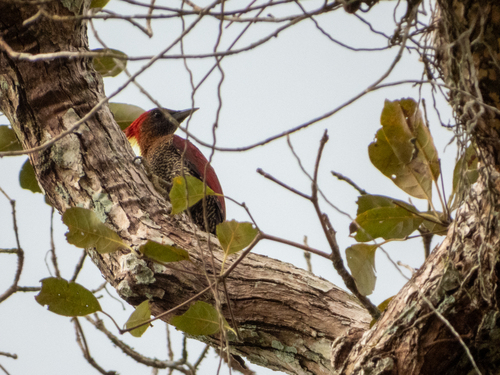
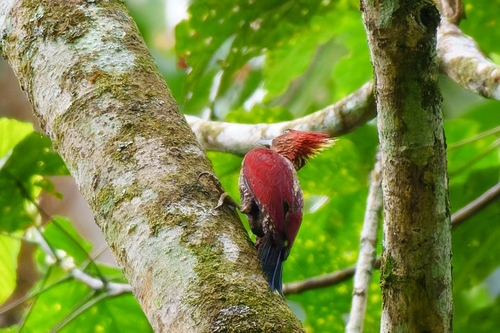
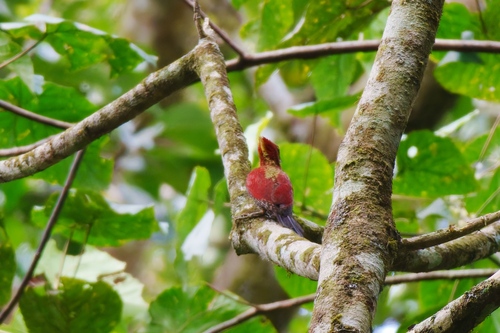

ID tip
The upper parts of the banded woodpecker are predominantly rufous-brown. The mantle is dull olive scaled with buff and the rump is yellow. The tail is chocolate-brown. The head is mostly rufous-brown with a shaggy yellowish nape. The chin, neck and throat are reddish-brown, the breast reddish barred with olive and the belly whitish, heavily barred with brownish-black. The sexes differ slightly; the male has a redder face and throat while the female's face and throat are browner, flecked with white. Both sexes have a dark beak, a chestnut eye with a bluish orbital ring, and greenish legs.
Text from Wikipedia, licensed CC BY-SA 4.0.
When to see the Banded Woodpecker
One bar for each month, and every month is filled: this bird is recorded here in all twelve. The wide bar is March, the month with the most records.
Where to see the Banded Woodpecker
The map shades 6 countries with regular records. Everything unshaded has no records. Countries are listed below the map.
About the Banded Woodpecker
The banded woodpecker or the banded red woodpecker is a species of bird in the family Picidae. It is found in Brunei, Indonesia, Malaysia, Myanmar, Singapore, and Thailand. Its natural habitats are subtropical or tropical moist lowland forests and subtropical or tropical mangrove forests.
Text adapted from Wikipedia, licensed CC BY-SA 4.0.
Easily confused with
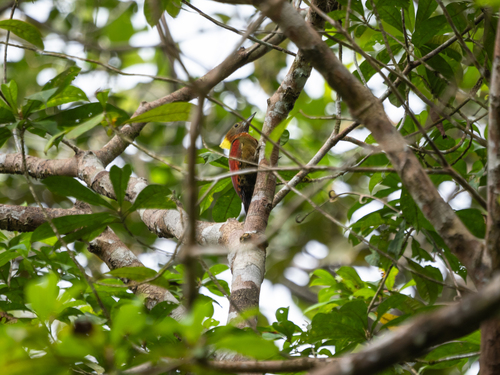 Checker-throated WoodpeckerChrysophlegma mentaleThe checker-throated woodpecker, checker-throated yellownape, or Javan yellownape is a species of bird in the family Picidae native to Southeast Asia.
 Greater YellownapeChrysophlegma flavinuchaLarge, olive green woodpecker with prominent yellow-crested nape and throat.
Side by side: Banded Woodpecker vs Greater Yellownape
Learn the Banded Woodpecker in the BeakBrain App
Photo and call practice. Coming soon to iPhone and Android.
Play today's Daily BirdEvery photo and recording on this page is credited to its author under the licence shown. Spotted a problem with this page, or have a better photo? Contribute.