Learn what every symbol on the card means.Full credits and sources at beakbrain.com/symbols
 ShrublandMedium · 130 g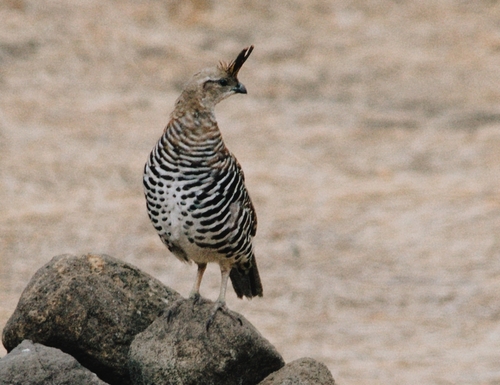

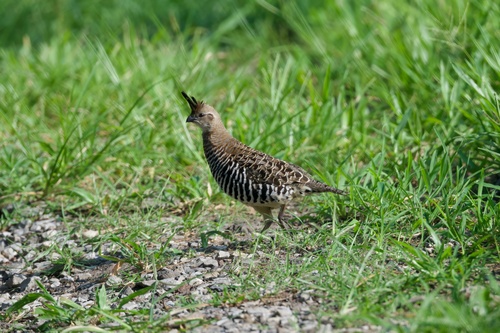
ID tip
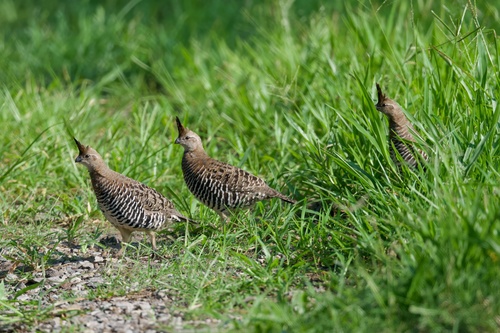
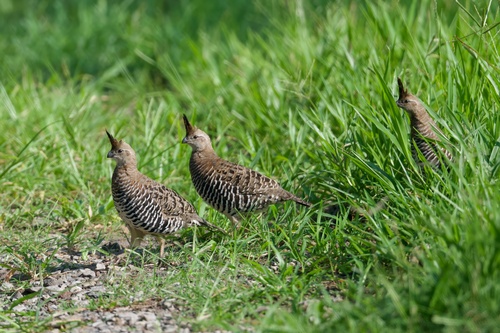
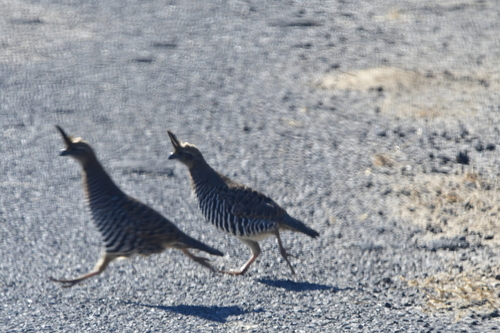
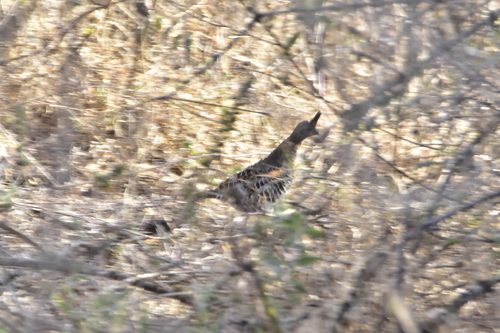
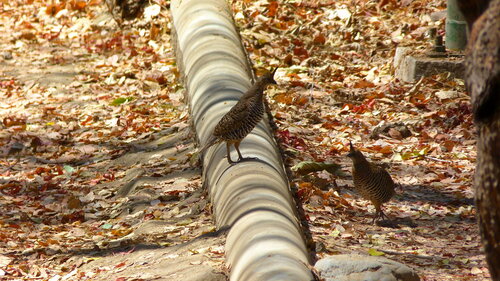
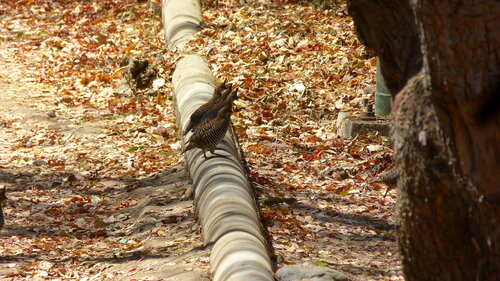
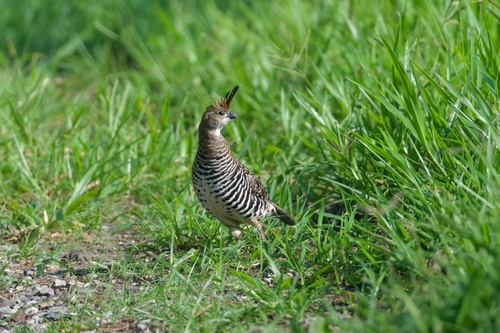
The banded quail is an inconspicuous brown bird with a comparatively long tail. It has a dark crest on its head, its throat is pale and its under tail-coverts are barred in black and white. The juvenile plumage is streaked with white at first but after a moult at eight to twelve weeks the plumage is similar to that of the adults apart from a nearly black face and throat. The full adult plumage develops at sixteen to twenty weeks.
Text from Wikipedia, licensed CC BY-SA 4.0.
When to see the Banded Quail
One bar for each month, and every month is filled: this bird is recorded here in all twelve. The wide bar is May, the month with the most records.
Where to see the Banded Quail
The map shades 1 country with regular records. Everything unshaded has no records. Countries are listed below the map.
About the Banded Quail
The banded quail is a species of bird in the family Odontophoridae. It is found only in Mexico where its natural habitats are subtropical or tropical dry forests, subtropical or tropical dry shrubland, subtropical or tropical high-altitude shrubland, and heavily degraded former forest.
Text adapted from Wikipedia, licensed CC BY-SA 4.0.
Easily confused with
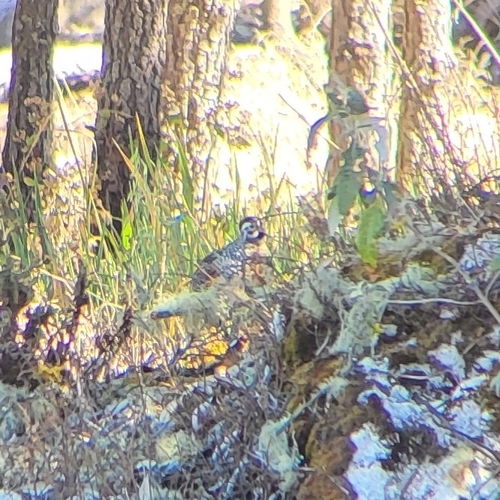 Ocellated QuailCyrtonyx ocellatusThe ocellated quail is 20.5 to 23 cm (8.1 to 9.1 in) long.
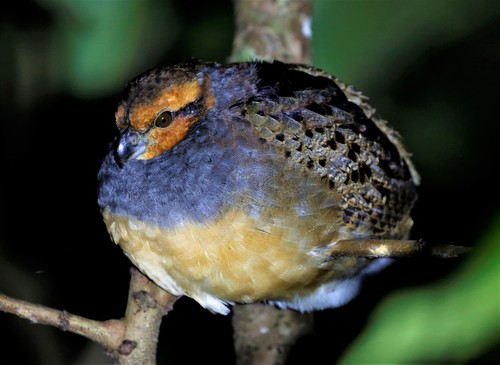 Tawny-faced QuailRhynchortyx cinctusThe tawny-faced quail is 17 to 20 cm (6.7 to 7.9 in) long.
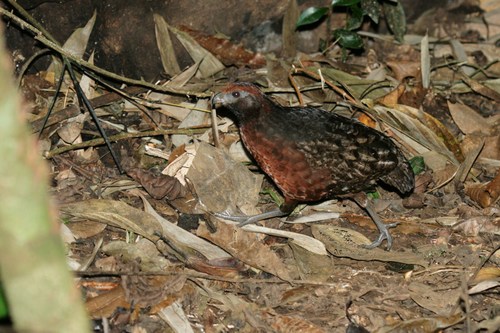 Black-eared Wood QuailOdontophorus melanotisThe black-eared wood quail (Odontophorus melanotis) is a gallinaceous bird found in Central America.
Learn the Banded Quail in the BeakBrain App
Photo and call practice. Coming soon to iPhone and Android.
Play today's Daily BirdEvery photo and recording on this page is credited to its author under the licence shown. Spotted a problem with this page, or have a better photo? Contribute.